
You walk in for bread and milk. You walk out with two bags of things you didn't plan to buy, and a receipt that makes you wince a little. Sound familiar? Grocery stores are incredibly well-designed machines, and most of us have absolutely no idea just how many subtle triggers are working on us the moment we step through those sliding doors.
Almost nine out of ten U.S. consumers are frustrated with escalating grocery prices, yet most people keep falling for the same in-store tricks week after week. The gap between frustration and knowledge is exactly where supermarkets thrive. So let's pull back the curtain, because what former employees know, you deserve to know too. Let's dive in.
1. The FIFO Method: Reach to the Back and Get Fresher Products
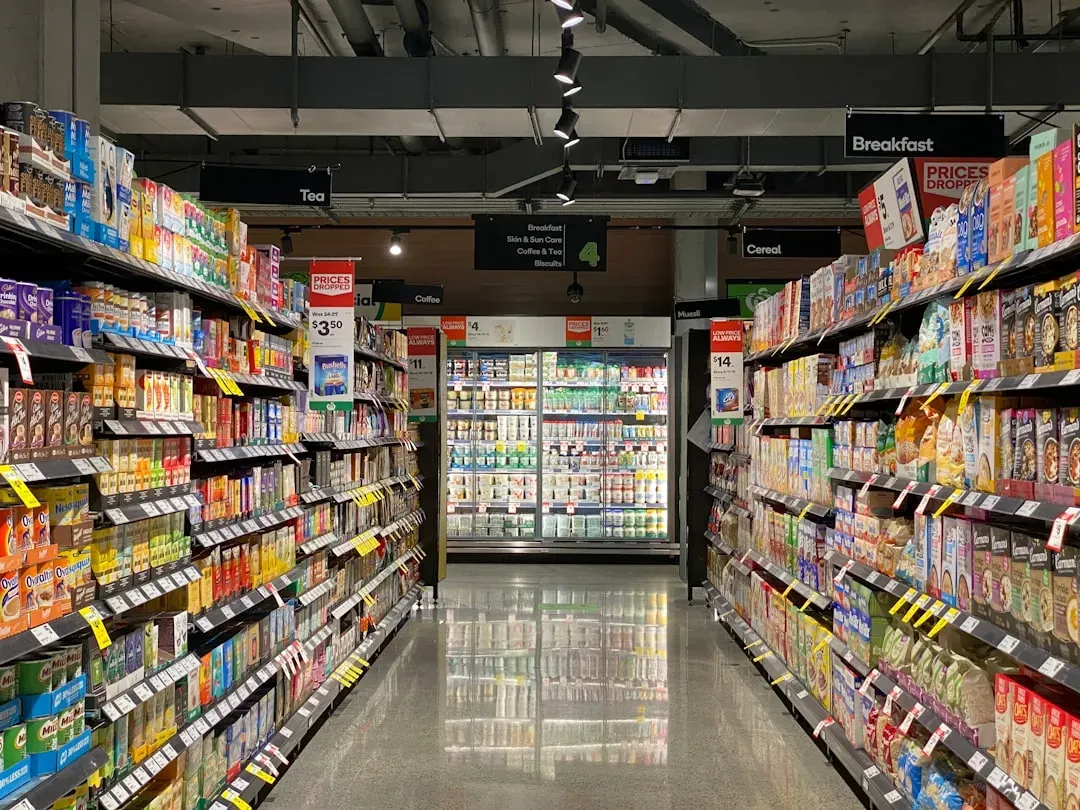
There is a stocking system that every grocery employee learns on day one, and it is the reason your produce always seems to go bad faster than it should. In retail and especially with produce, there is a practice called F.I.F.O or "First In First Out." When restocking a shelf, employees are supposed to place the newer product behind the older product, because shoppers will most likely grab the closest item first and not check the best-buy dates.
Reaching into the back to avoid the F.I.F.O method will help get around that. So if you're doing a long-term shop and don't want to worry about best-by dates, reach into the way back. Honestly, this one trick alone can save you from tossing half your groceries mid-week. Think of it like reaching past the front row of seats at the movie theater to find the one that hasn't been sat in a hundred times.
2. Slow Music Is Playing for a Very Specific Reason
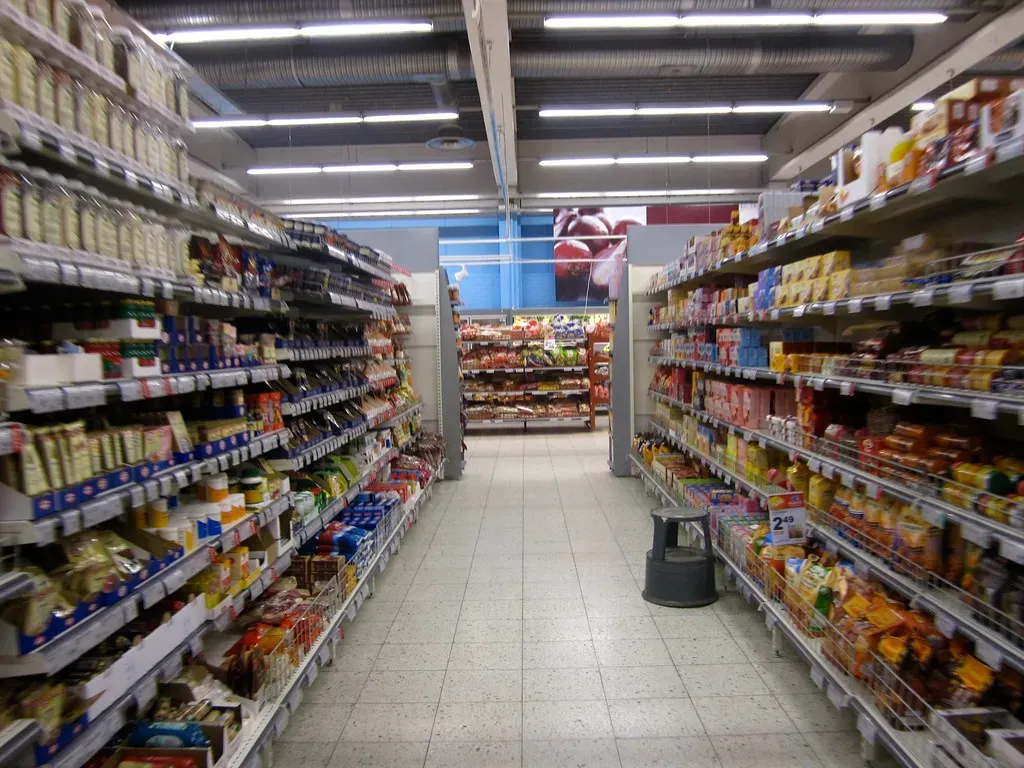
That calm, unhurried background music floating through the aisles? It is not random. It is strategy. Research by prominent sensory marketing researcher Ronald Milliman demonstrated that consumers spend roughly 38 percent more time in the grocery store when the background music is slow, which inevitably results in greater spending.
Research confirms that the arousal induced by music and aroma results in increased pleasure levels, which in turn positively influence shopper behaviors, including time and money spent. The slower you move, the more you browse. The more you browse, the more things end up in your cart that were never on your list. Next time you notice the pace of the music, you'll understand exactly what's happening.
3. The Bakery Smell Is Engineered to Get You Spending
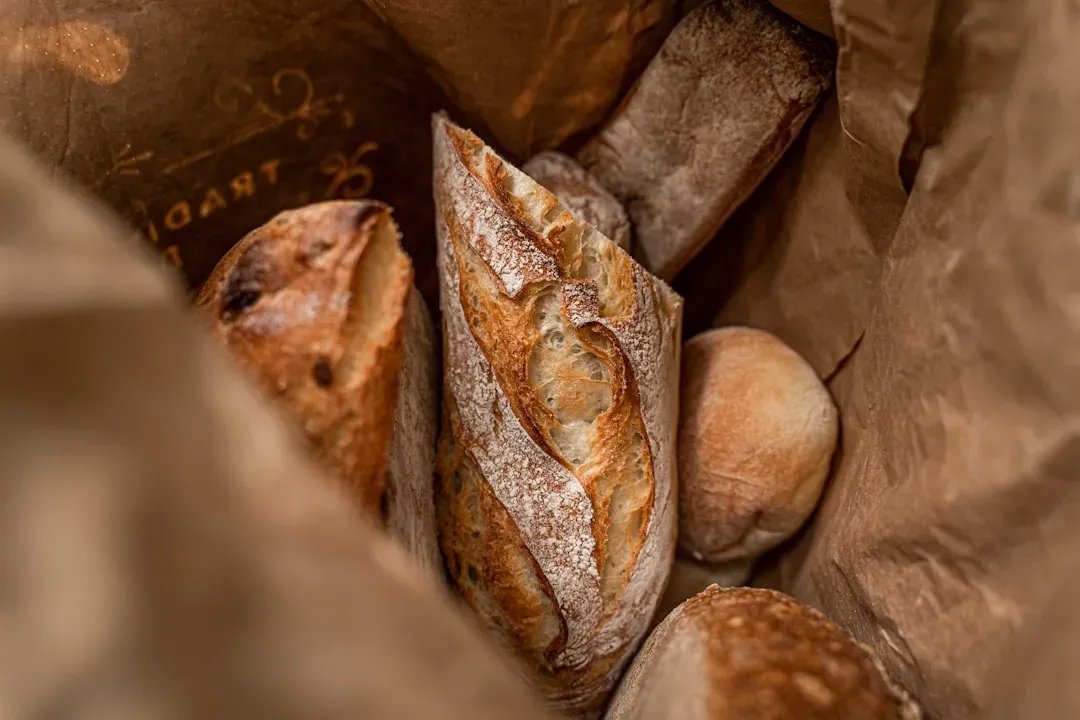
Grocery stores deliberately position their bakery sections to spread enticing aromas throughout the aisles, but many of those "freshly baked" goods aren't made from scratch on site. These items often arrive as frozen, pre-made dough or par-baked products that employees simply bake off in ovens. While technically baked fresh onsite, they aren't created from scratch like most shoppers assume.
Customers entering the store are greeted with mood-lifting scents and vibrant colors, a strategy that primes them for spending because happier shoppers tend to spend more money. It's essentially a mood manipulation tool positioned right near the entrance. Your nose is doing the marketing team's job for them, and it works shockingly well.
4. Your Shopping Cart Is Deliberately Oversized
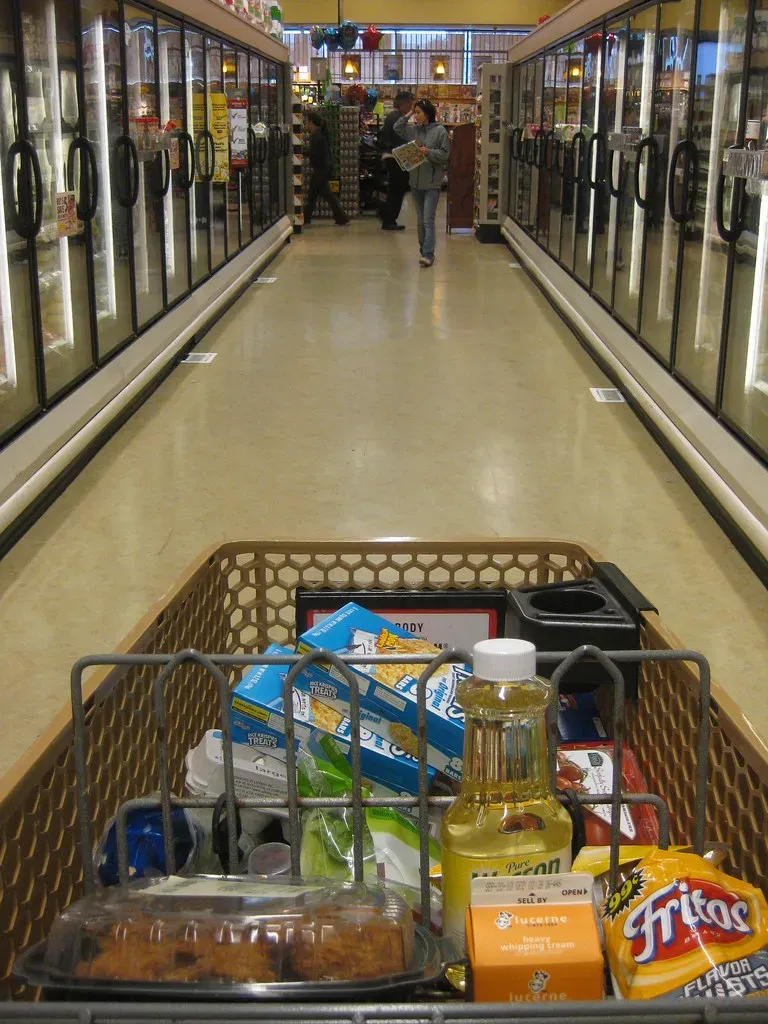
Here's the thing about those giant metal carts you grab without thinking. Carts have grown significantly in size, and they're still growing. According to marketing expert Martin Lindstrom, larger shopping carts can lead shoppers to buy significantly more. It's one of the most invisible tricks in the store because it feels so mundane.
Shopping carts are getting bigger deliberately; the larger your cart, the more likely you are to impulse-purchase foods to fill it up. Those with the bigger shopping carts bought roughly 40 percent more than those with the smaller ones. This is because your cart looks emptier, meaning you're more likely to fill it up with impulse buys. Think of it like serving food on a massive plate. The same portion suddenly looks insufficient, and you reach for more.
5. Eye Level Is Literally Designed to Be "Buy Level"
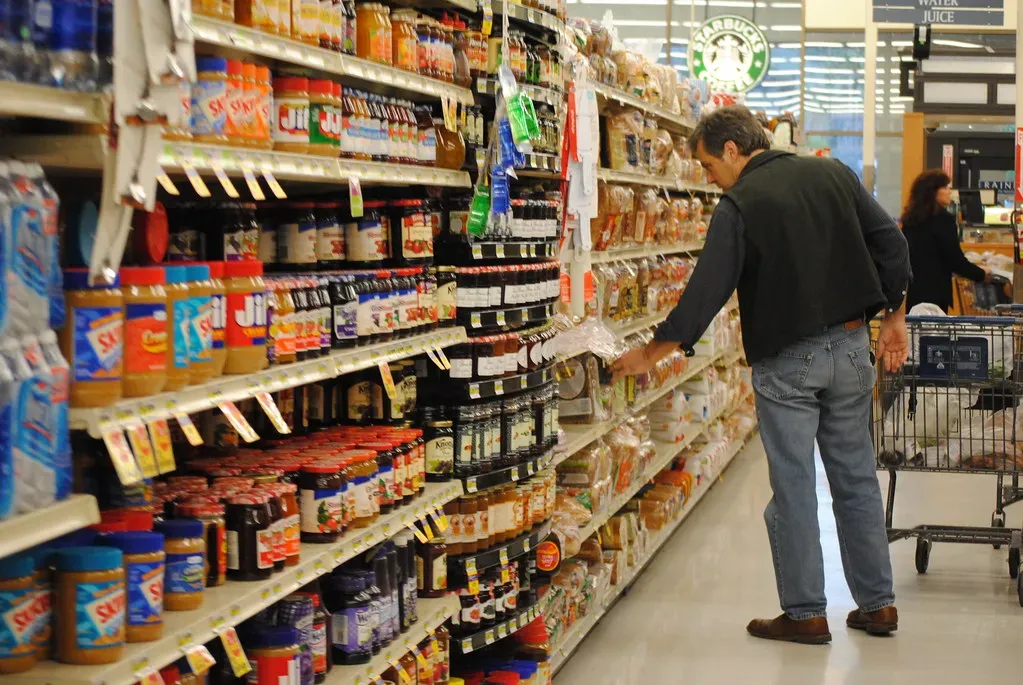
Grocery shelves are designed so that you need to look high or low to find less-expensive brands. Pricey name brands are usually placed at the average shopper's eye level, since more people look left and right when shopping, while cheaper options such as store brands and generics are placed out of sight on higher and lower shelves.
In a study, the Cornell University Food and Brand Lab examined 65 cereals in 10 different grocery stores. Researchers found that cereals marketed to kids are placed at roughly half as high on market shelves as adult cereals. Additionally, the average angle of the gaze of box characters marketed to kids is downward at a 9.6 degrees, whereas characters on adult cereal boxes look nearly straight ahead. So it's not just you they're targeting. They're targeting your kids too.
6. Dairy and Essentials Are Hidden at the Back on Purpose
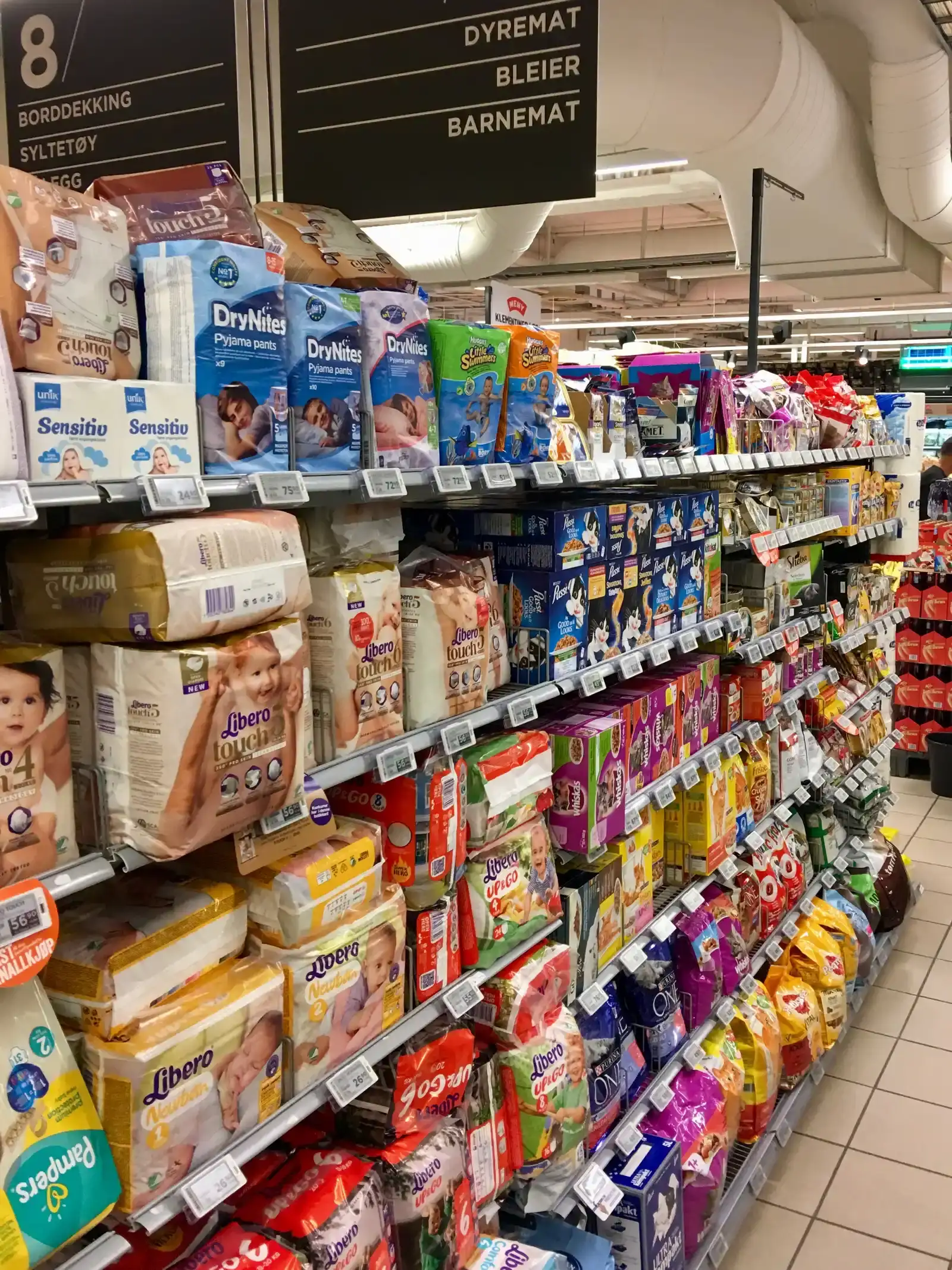
Essential groceries most commonly placed on shopping lists, such as eggs, milk, fruit, and vegetables, are separated and strategically set around the store to force the customer into a full-length walk of the supermarket, leading shoppers to pick up higher-margin items. Dairy sections are located as far away as possible from the entrance, giving shoppers time to discover additional items they may not have intended on buying.
This is not accidental store design. It is a calculated maze. This isn't accidental laziness in store design. It's a calculated move to extend your time wandering through tempting aisles. If you've ever gone in just for milk and come out with a full cart, now you know exactly who to blame.
7. End Cap Displays Are Paid Prime Real Estate
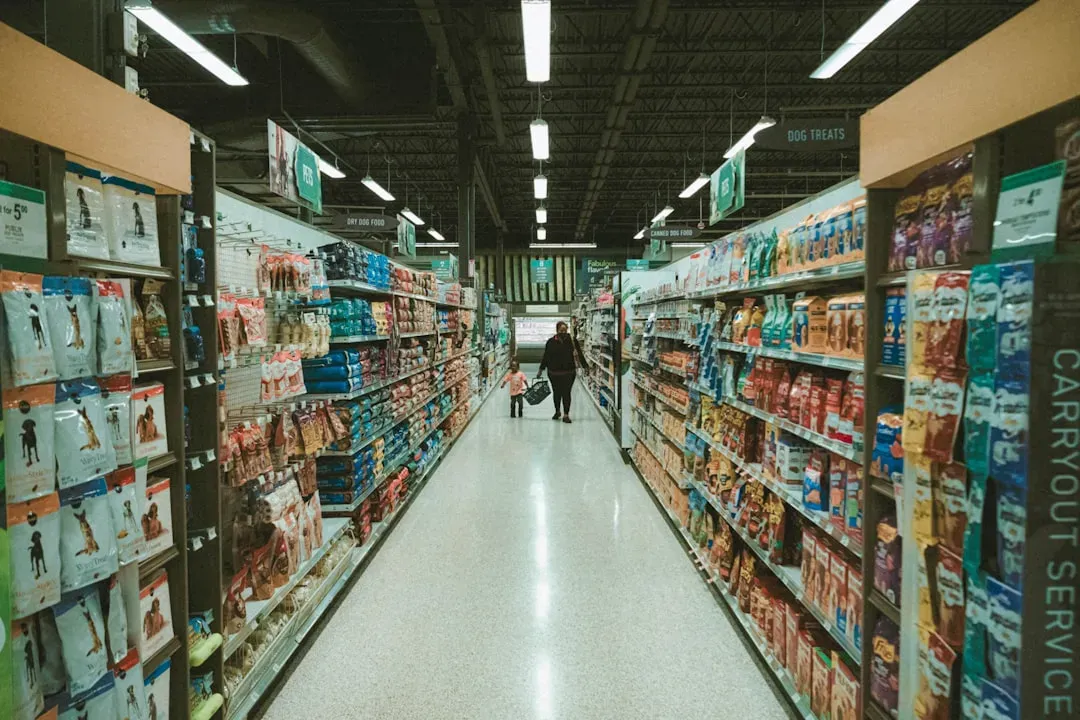
The displays at the ends of the aisles, known in the supermarket business as end caps, are astute shopper traps. Companies pay high prices to display their products there, since these are hot spots for impulse buying. Industry sources suggest that products at end caps can sell significantly faster than the same product shelved elsewhere on the aisle.
The end caps might feature cookies and snacks marked with special prices. Here's the kicker: in many cases, we will pay the same price per item whether we buy one package or five. Read the fine print, though. You might actually pay less if you buy five. The display looks like a sale. Sometimes it is. Often it is not. Former employees know the difference, and now you do too.
8. There Are No Clocks or Windows for a Very Good Reason
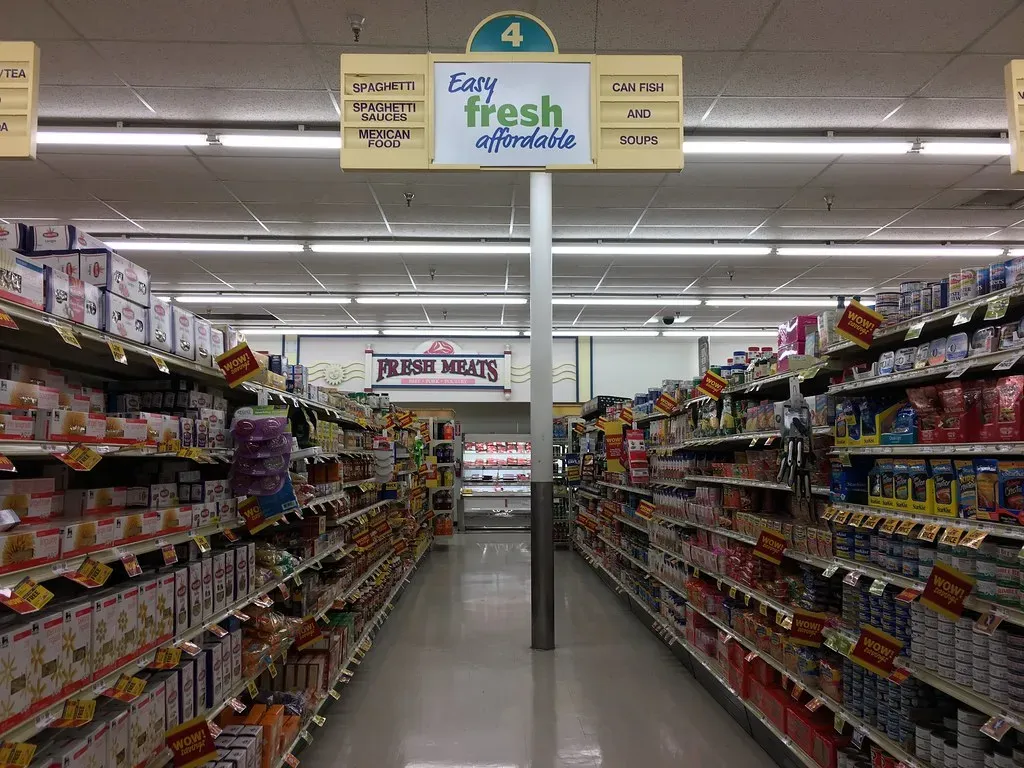
The lack of windows and clocks in supermarkets is a deliberate design choice that influences consumer behavior and increases sales. Without windows or clocks, shoppers lose track of time and may spend more time in the store than they intended, which may mean more impulse buys. It's the same trick casinos use, and it works just as well in the cereal aisle.
Research by Dr. Paul Mullins and his team at Bangor University using brain-scanning technology found that after around 23 minutes, customers began to make choices with the emotional part of their brain, rather than the cognitive part of the brain. So your grocery run crosses an invisible line after about twenty minutes. After that, you stop thinking and start feeling. And feelings buy things.
9. Markdowns Follow a Hidden Weekly Schedule
Most grocery stores mark down meat three to five days before the sell-by date, typically in the early morning or evening. Markdowns often happen on specific days of the week depending on the store, with many chains offering the best discounts on Mondays, Wednesdays, and Sundays. These markdown schedules help stores minimize waste while offering shoppers significant savings of 30 to 50 percent on quality meat products.
If you shop early, you'll get first dibs on markdowns, particularly on dairy, bakery, and meat items that are near expiration but still good to use for several days. According to Andy Harig, vice president at the Food Industry Association, stores mark down prices as products approach their best-by dates to ensure inventory is rotated out and to help mitigate food waste. Knowing your store's schedule is like finding the cheat code for your grocery bill.
10. The Unit Price Label Is the Most Ignored Number in the Store
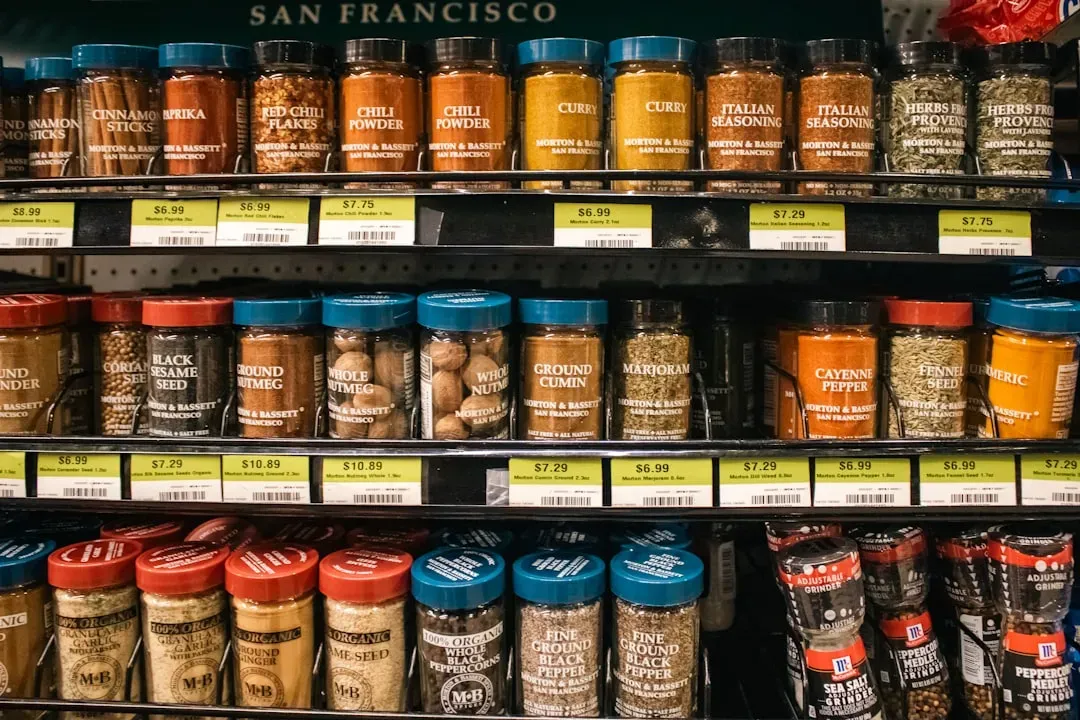
A smaller number on shelf tags tells you the price per ounce, pound, liter, or unit you'll pay when you buy that package, and this unit price helps you compare products when they come in different-sized packages. Most shoppers ignore this completely. I think it's one of the most actionable pieces of information in the entire store, and it's just sitting there, unread.
In one example, the big box costs more per pound while the smaller box costs less per pound, making the smaller box the better buy, showing that many people believe larger sizes are always the best value, but that's not always the case. It's hard to say for sure how much money gets wasted this way, but if nearly half of all shoppers never look at unit pricing, the numbers add up fast. Start looking at the tiny print. It changes everything.
11. Loyalty Programs Are Collecting More Data Than You Realize

Many grocery store chains have loyalty programs where customers can receive exclusive discounts on certain in-store purchases. Experts warn that these programs come at the expense of your data collection. The deal you're getting on cereal is essentially a trade, and the currency is your shopping behavior.
Customers who sign up for supermarket loyalty programs may also receive offers that appear to be good deals but in fact are just tailored to look like deals on items that they would normally buy, with the purpose of getting shoppers in the door. Roughly half of all shoppers now use digital coupons, surpassing the share who use physical coupons. Additionally, about 37 percent of grocery shoppers use their mobile phones to compare prices across stores, a 28-point increase from 2016. Using the loyalty app for savings is smart. Just understand the full picture of what you're agreeing to.
12. Self-Checkout Actually Helps You Stick to Your List
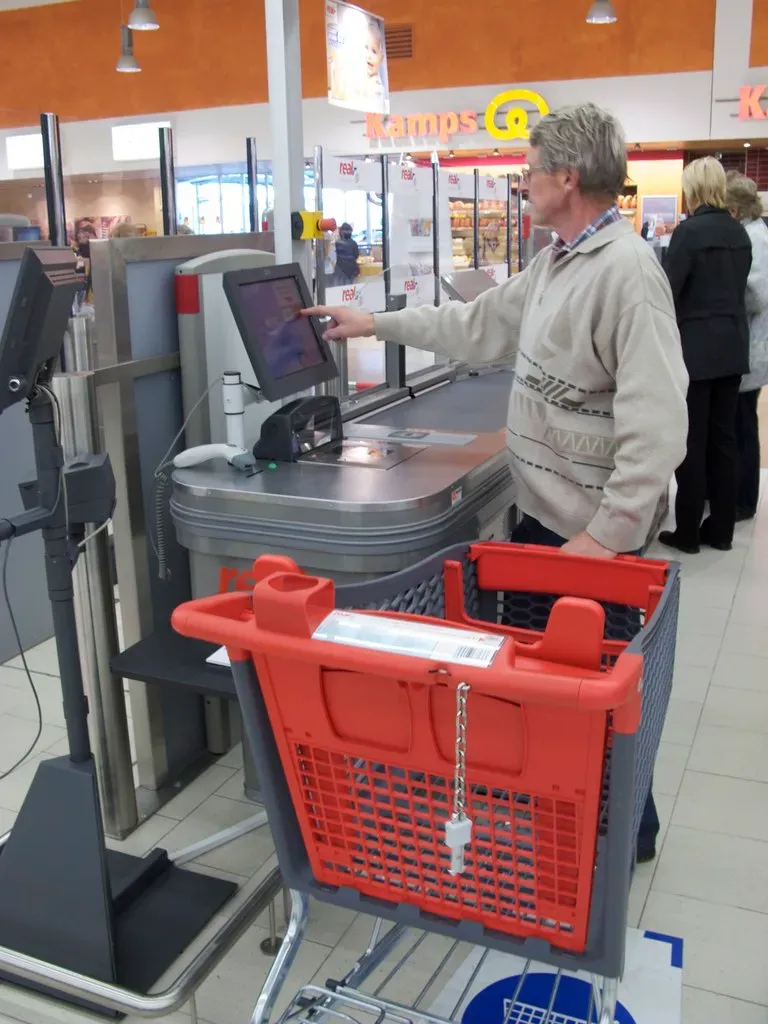
Research shows shoppers who use self-checkout lanes are more likely to stick to their shopping list and make fewer impulse purchases. One study found that women made around 32 percent fewer impulse purchases and men around 17 percent fewer impulse purchases when using self-checkout instead of staffed lanes. That is a genuinely surprising result, especially given how much friction self-checkout sometimes causes.
Let's be real, most of us assume a chatty cashier or a long queue is just an inconvenience. But it turns out, the social pressure of the staffed lane nudges us to add more things, keep the conveyor belt full, and say yes to last-minute add-ons near the register. On top of making it hard to concentrate, being hungry while grocery shopping can potentially cause an increase in spending. Research has proved that shopping for food on an empty stomach is a pricey risk. Hungry shoppers have the potential to buy items they don't need or to fill their cart with unhealthy snacks. Combine self-checkout with a full stomach, and you're suddenly a much smarter shopper.
Grocery stores are masterworks of behavioral psychology, and that's not necessarily sinister. It's business. A survey found that the vast majority of respondents identified rising food prices as their top concern. This reality is reshaping how people shop, from seeking out discount stores to comparing prices more carefully and leveraging sales and coupons. Knowing these tricks doesn't make grocery shopping less convenient. It just makes you the one with the advantage. What would you have guessed about how many of these were deliberate? Let us know in the comments.

Leave a Reply