
There's something almost poetic about opening a grandmother's cabinet and discovering that what she considered an ordinary pot or dish is now worth more than a month's rent. Vintage kitchenware is having an extraordinary moment, and not just in the world of dedicated antique collectors. Millennials, Gen Z thrifters, and savvy investors are all scouring estate sales, flea markets, and online platforms in search of the same pieces. The kitchenware collecting market is growing fast, and the prices being commanded in 2025 and 2026 are nothing short of jaw-dropping.
The real kicker? Most people have no idea what's hiding in their own cupboards. A casserole dish you'd overlook at a garage sale could pay for a vacation. A skillet gathering rust in the basement might fund a used car. Let's dive into the eight vintage kitchen items that are sending collectors into a quiet frenzy right now.
1. Griswold Cast Iron Skillets: The $8,000 Pan You Might Own
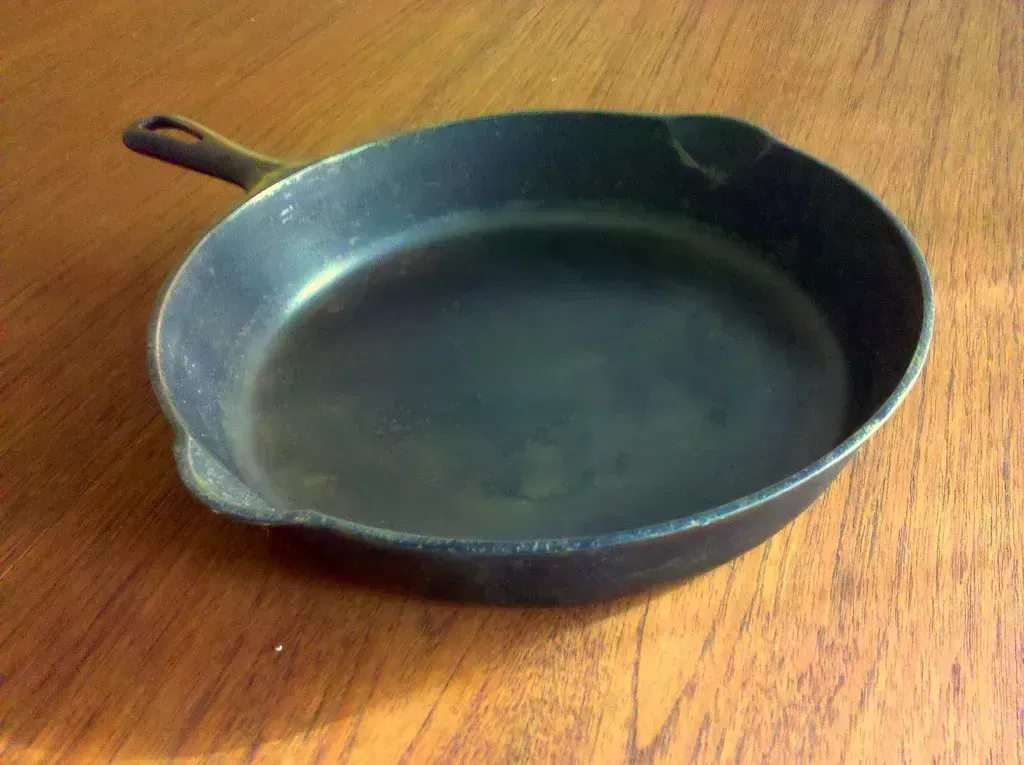
Let's be real, when most people think of cast iron, they picture a basic pan they might grab for camping. Among serious collectors and cooks, though, two brands stand far above the rest: Griswold and Wagner. Griswold Manufacturing was founded in 1865 in Erie, Pennsylvania, originally producing hardware like hinges before moving into cast iron cookware. What made its skillets truly special was exceptional quality - they're far lighter than modern cast iron and have a silky-smooth surface that can fry an egg without sticking at all.
Pieces marked "ERIE, PA" were made before 1957 at the company's original factory and are especially valuable. Larger logos typically mean higher prices, and a rare No. 2 skillet with a slanted logo recently sold for $1,200 on eBay. The most coveted Griswold piece of all is a skillet with a spider emblem on the bottom - one of these "spider skillets" was listed on eBay for $8,000.
Wagner, founded in 1891 in Sidney, Ohio, is considered a close second to Griswold but just as valuable to many collectors. Their cast iron was known for high quality and craftsmanship, and the company produced cookware well into the 1950s. A vintage Wagner skillet recently sold on eBay for $999. Honestly, finding one of these at a thrift store feels like winning a very practical lottery.
2. Vintage Pyrex: When a Casserole Dish Sells for Nearly $6,000
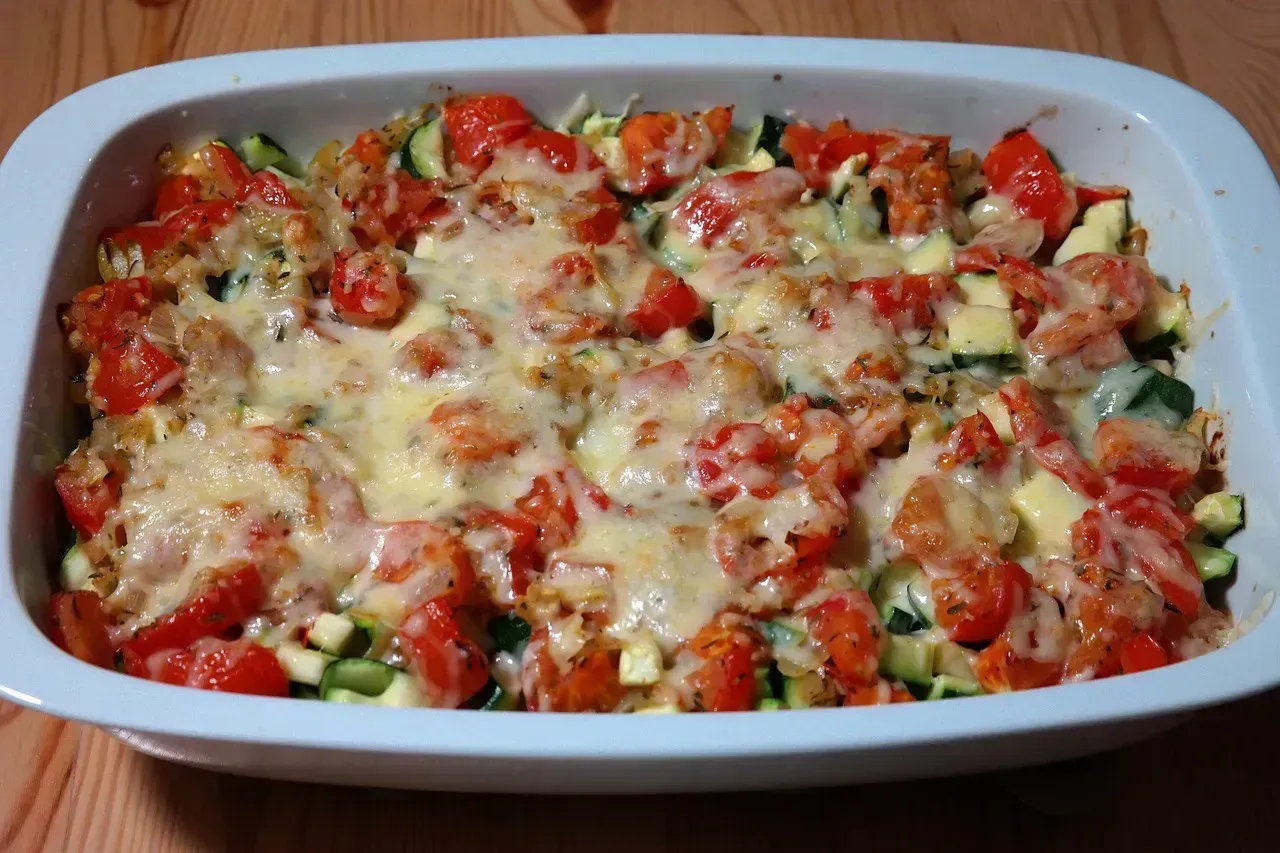
Vintage Pyrex has made a major comeback in recent years, especially among millennials and Gen Z collectors on TikTok, and it's easy to see why. With its cheery colors, whimsical patterns, and durable designs, it's the kind of vintage item that looks great on a shelf and still works perfectly in the kitchen. Think of it as functional art that also holds your leftover lasagna.
Pyrex became truly iconic in 1945 with the release of its Color Ware line. Over the next 40 years, Pyrex introduced more than 150 patterns. The holy grail is the "Lucky in Love" pattern from 1959, which features a design of shamrocks and hearts. One casserole dish with this pattern sold for $5,994 in a Goodwill auction.
Sets like the Golden Sunflower Daisy and Bluebelle Delphite bowls have sold for thousands of dollars on auction sites, while rare divided plates and Cinderella mixing bowls regularly bring in big money. The Blue Dianthus pattern is one of the most coveted by collectors, with one single mixing bowl selling for $3,600 on eBay. The pattern features blue flowers on white glass, and a 2014 estate sale of a former Corning employee revealed it was produced as a sales test in 1963. The idea that a test pattern nobody was supposed to see is now worth thousands says everything about this market.
3. Vintage CorningWare: The Thrift Store Treasure Worth $13,000
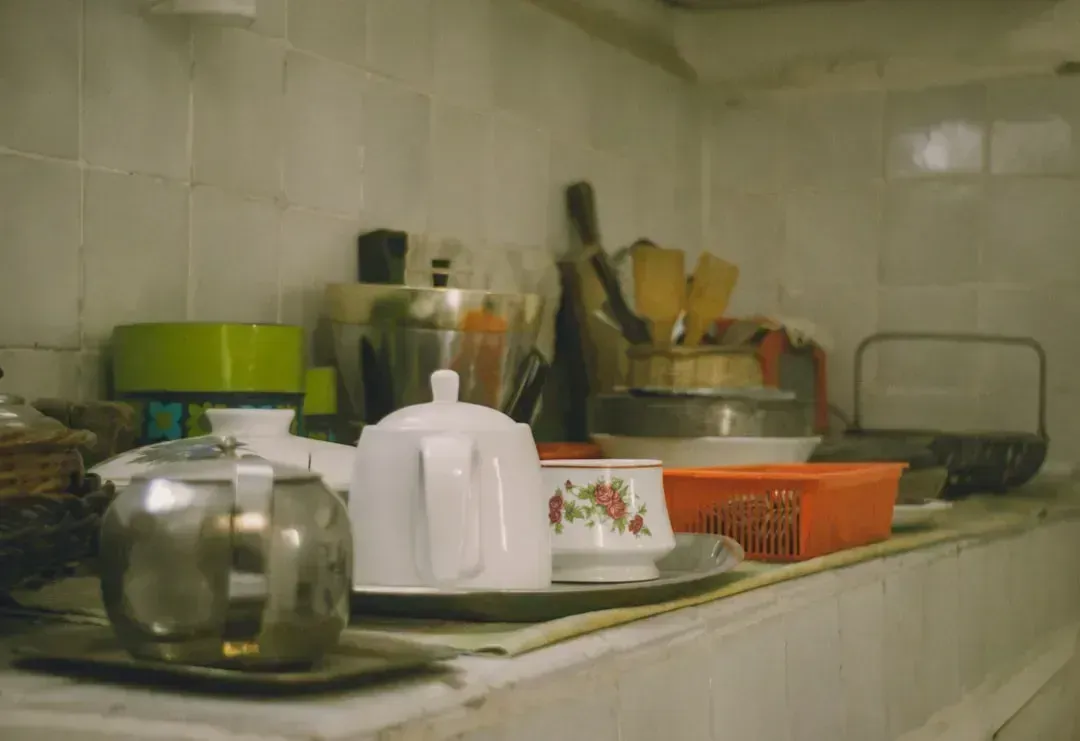
Of all the various vintage cooking vessels that could be hiding in plain sight in your kitchen, vintage CorningWare pieces are especially valuable. In particular, you want to keep your eyes peeled for "Spice of Life" patterned pieces. Common rare model names, generally inscribed below the patterns, include "L'echalote La Marjolaine" and "Le Romarin." One "Spice of Life" set is currently listed for sale on Etsy for over $13,000.
Sets and even individual dishes that had unique and limited-edition designs instead of the standard blue cornflower can be very valuable. A 1970s piece with a pattern that didn't sell well on initial release fetched $7,000 in an eBay auction. Even some cornflower dishes, if they're old enough and in good enough condition, can command a high price.
While many may have thought that the explosive resurgence in vintage kitchenware items, especially from brands like CorningWare, may have come and gone, according to numbers from the online auction site HiBid, nothing could be further from the truth. The demand has simply not cooled down. If anything, it keeps climbing.
4. Vintage KitchenAid Stand Mixers: Living History at $5,000
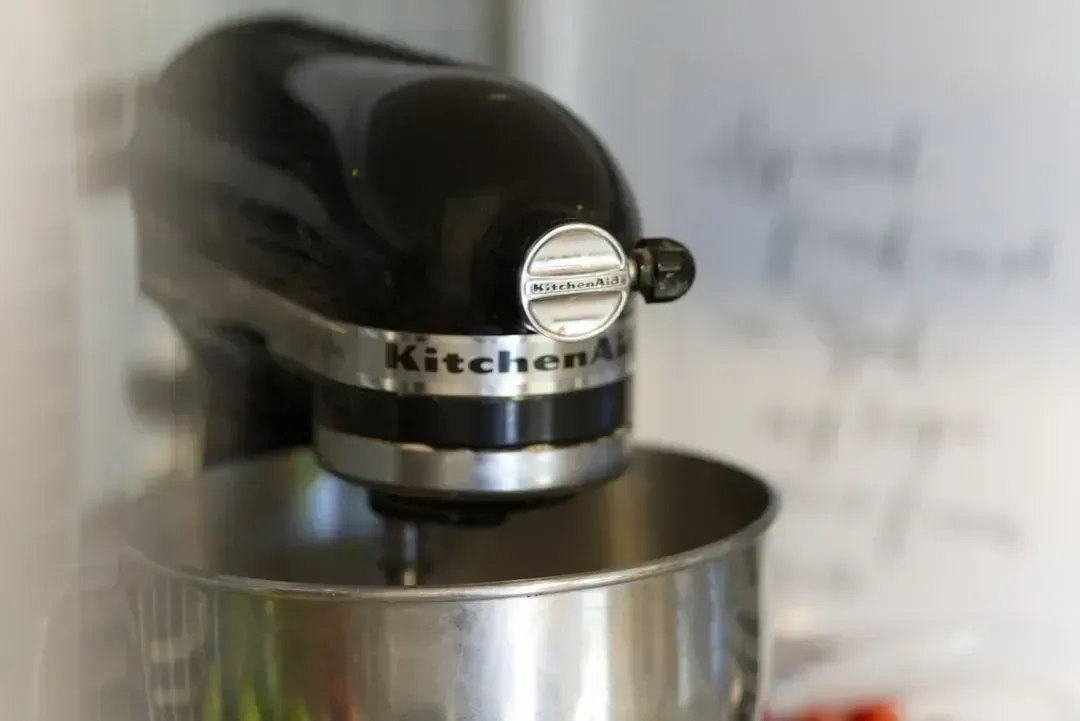
KitchenAid stand mixers are arguably the cream of the crop of home appliances, and there's a reason your grandmother probably had one: KitchenAid was the first consumer mixer made for the home kitchen. The Hobart Manufacturing Company unveiled the first KitchenAid stand mixer in 1919 as an aid to domestic cooks, fashioned after the original 80-quart commercial version.
The holy grail for many collectors are KitchenAid Model K mixers made between 1937 and the early 1950s, known as the workhorse models, which were built to last generations and came in colors like Petal Pink, Sunset Yellow, and Island Green, with pristine examples easily reaching $4,000 to $5,000 at auction. In 1986, Hobart sold the KitchenAid mixer to Whirlpool. Anything pre-1986 is definitely vintage, and if you can find the Hobart name stamp on the mixer, the value increases.
Research conducted by Global Market Insights shows that in 2023, the kitchenware market was valued at $70.1 billion and is expected to grow to $103 billion by 2032. This reflects the growing interest popularized by social media and cooking shows. When it comes to vintage markets specifically, Grand View Research found that vintage sales made up over 40% of revenues in the collectibles market in 2023. That is a staggering figure that puts the skyrocketing value of these old mixers into sharp perspective.
5. Jadeite Glassware: The Mint-Green Million-Dollar Hobby
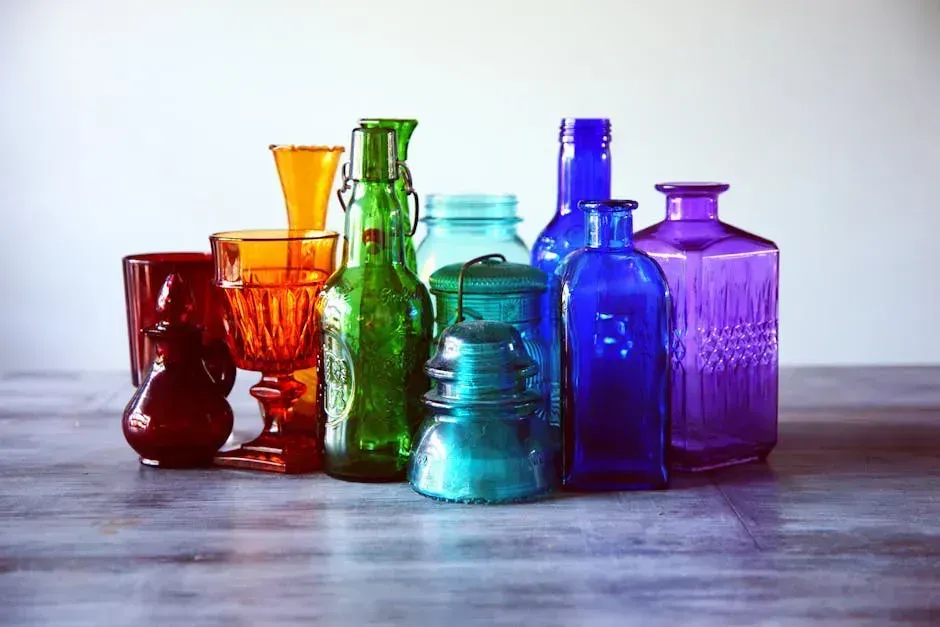
Jadeite, a mint-green milk glass that shares its name with the mineral, caught on as a popular material for American cookware during the Great Depression. Initially used for cooking tools, jadeite items were eventually turned into a popular line of dinnerware during World War II. This brand of jadeite, made by Anchor Hocking under its Fire King label, reached the zenith of its popularity during the 1950s and was manufactured until 1974.
The condition of the dishes wildly affects their price. Fire King jadeite can sell for as little as $5 or as much as $1,000, and pristine limited-manufacture pieces can go north of $5,000. Jadeite dishware in general can range from $5 to over $5,000, depending on its condition and rarity. That's a staggering price range for something that once sat on a Depression-era dinner table.
Collectors and owners looking to sell can distinguish older jadeite by the manufacturer's mark, embossed patterns, and, for pre-war jadeite, a black-light glow due to the uranium present in the glass. I know that sounds alarming, but in these amounts, it's completely safe and just adds a weird, glowing layer of historical intrigue to what is already a fascinating collectible.
6. Vintage French Copper Cookware: The Chef's Secret Worth Thousands
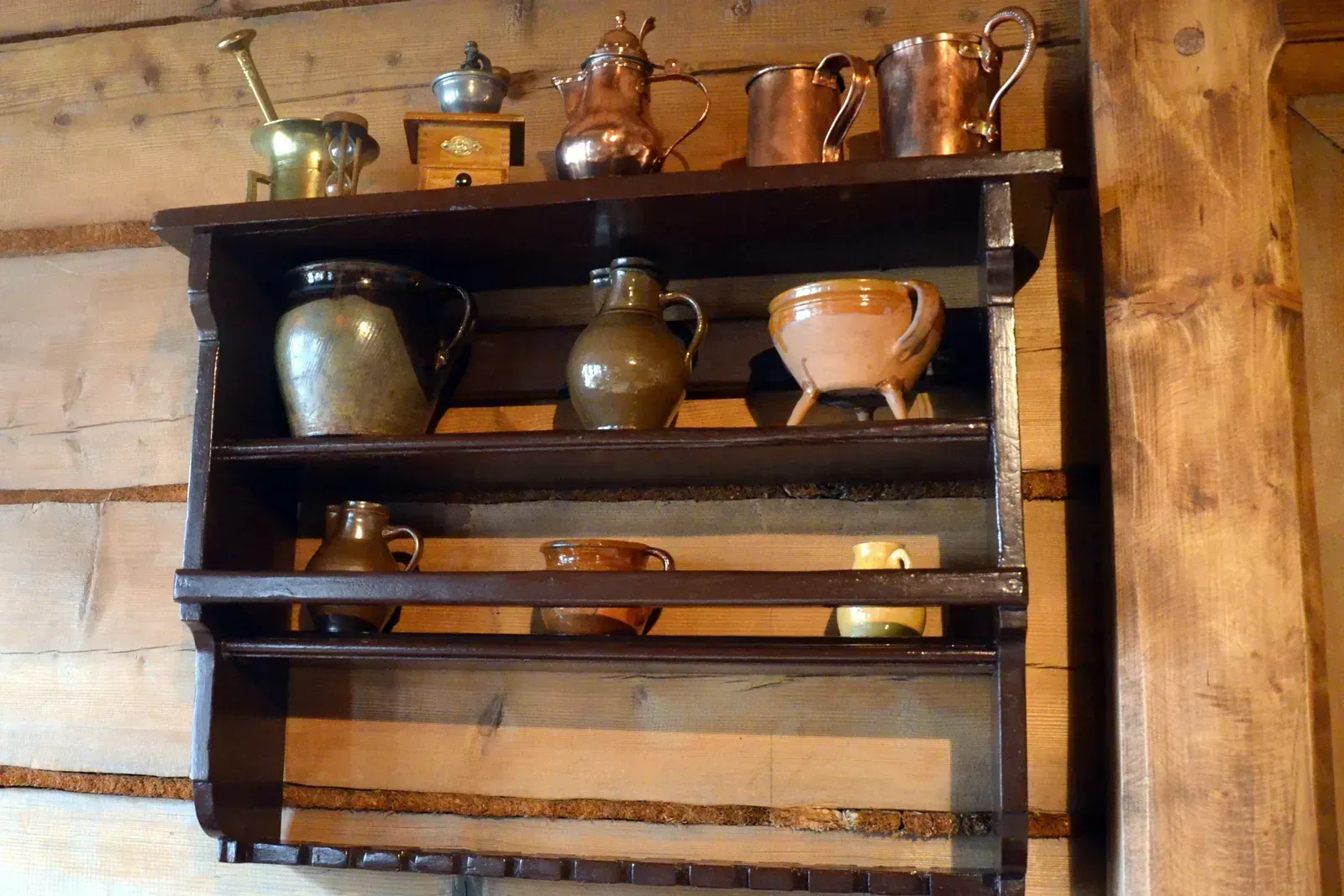
Vintage French copper cookware has recently risen in desirability and value, notably because of its age rather than in spite of it. Copper cooking vessels garner devotion from professional and home-kitchen chefs alike, not only for their golden-glow beauty but for superior thermal conduction, which facilitates quick, even heating and temperature control. It's the kind of cookware that makes modern nonstick pans look like a sad compromise.
While most modern copper pots are less than 2.5 millimeters thick, vintage French copper cookware is often 3 to 5 millimeters thick, which means temperature changes more slowly and holds onto heat longer. These older pots require a bit of care, as their tin linings can wear down over time, but they can be relined by professionals for continued use.
One set of 13 matching copper pans and lids plus a roasting pan dating back to the 19th century can be listed for over $5,000. Stamped words and symbols can reveal the maker or details about when the piece was made. A singular French copper mixing bowl from the 1880s is listed at over $600, while a large copper pot is valued at close to $800. It helps to seek specific French brands like Dehillerin or Mauviel in Normandy, which was producing elegant, heavy-gauge, high-performance copper cookware for grand Parisian restaurants almost 200 years ago.
7. Vintage Le Creuset Enamelware: The Discontinued Colors That Command a Premium
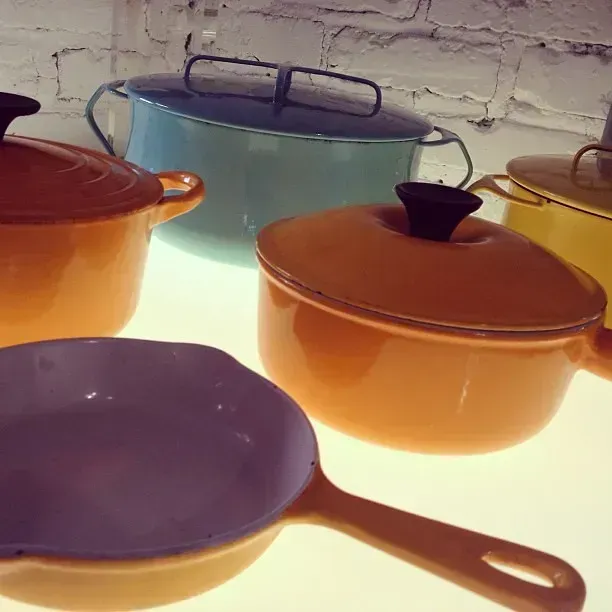
Le Creuset has been around since 1925, and their signature color, Flame, is a bright orange-red that many people recognize. Over the years they introduced many other colors, making them a stylish addition to any kitchen. Here's the thing: those discontinued colors are now where the real money lives.
Age doesn't always knock down the value of Le Creuset. The company has gone through a lot of colors in its time, some of which have been discontinued, making them rare and collectible. Design changes have also moved the handle from an integrated part of the lid to a separate black knob. A vintage piece, even with a bit of damage, can sell for around as much as brand-new Le Creuset at auctions and vintage shops.
Cathrineholm enamelware, a close cousin in the collectible enamelware world, is celebrated for its striking designs, particularly the iconic lotus flower pattern. Produced in Norway from the 1950s to the 1970s, this enamel cookware features vibrant colors, most notably the signature green and white lotus motif on a glossy background, making it a highly sought-after collectible among vintage enthusiasts. Think of it as the Scandinavian sibling to Le Creuset that collectors are quietly going wild over.
8. Sterling Silver Flatware Sets: The Forgotten Fortune in Your Drawer
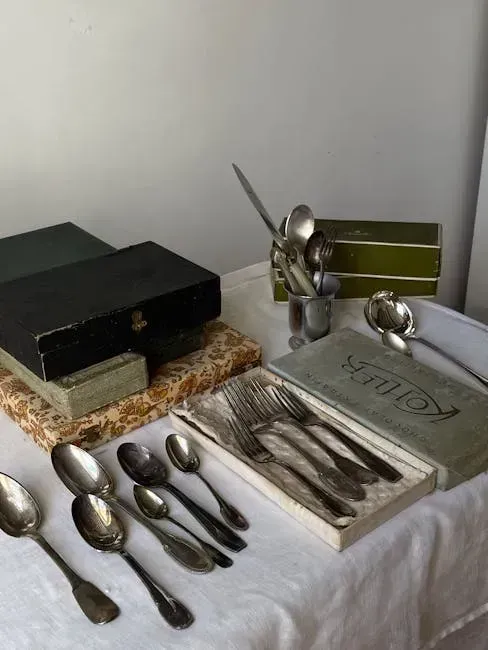
Sixty years ago, good silverware was considered a very valuable wedding gift. Today, people are more likely to ask for an air fryer or a Vitamix blender. Yet that antique silverware holds its value for collectors in a way that few other kitchen items can match.
Gorham, Reed and Barton, Georg Jensen, and Towle are some of the highly collectible flatware brands that can fetch thousands. For instance, one 220-piece Gorham Mythologic Sterling Flatware set sold for an eye-popping price of almost $18,000. Some popular patterns, like Gorham's "Chantilly" or Wallace's "Grand Baroque," can also sell for $1,000 to $5,000, depending on the number of pieces and overall condition.
A Victorian spirit kettle that could easily fit within a sterling silver antique tea set is listed on eBay for $5,845, and a Victorian Georg Jensen tea kettle is listed on 1stDibs for $19,143. The resale price of antique silverware is linked not only to the price of silver itself, but also to the originality of the utensil, its functionality, and the finesse of its construction. If there's a dusty velvet-lined box of silverware in your attic right now, it might be time to stop ignoring it.



Leave a Reply