
Most people never think twice about vitamin B12 until something feels off. Persistent tiredness, strange tingling in the fingers, sudden mood dips - these things are easy to brush off as stress or a rough week. Yet for a surprising number of people, these are actually early warning signals from the body.
Vitamin B12, also known as cobalamin, is a water-soluble vitamin derived primarily from animal products such as red meat, dairy, and eggs. Once absorbed, it is used as a cofactor for enzymes involved in the synthesis of DNA, fatty acids, and myelin - which means it literally keeps your brain, blood, and nervous system running. The tricky part? The symptoms of vitamin B12 deficiency can take several years to appear. That delay is exactly what makes it so easy to miss. Let's dive in.
1. Persistent, Unexplained Fatigue

Feeling tired after a bad night's sleep is one thing. Waking up exhausted every single day despite a full night of rest - that's a different story entirely. It's one of the most overlooked red flags for low B12.
If you're low or deficient in B12, you'll likely feel fatigued. Your body's cells need B12 to function properly, and having inadequate B12 levels can decrease normal red blood cell production, which can impair oxygen delivery. Think of it like a bus system running with half the drivers - things slow down everywhere.
Vitamin B12 aids in transforming the food you eat into fuel for your body, significantly impacting how refreshed or fatigued you feel throughout the day. Its influence supports brain and spinal cord function and mood, promoting mental clarity and focus. B12 also drives the production of red blood cells, which transport oxygen throughout the body, making it vital in the prevention of anemia and persistent exhaustion.
Foods to consider: Beef liver is one of the richest sources. A three-ounce serving of cooked beef liver has 70.7 micrograms of vitamin B12, a massive portion of your recommended daily allowance. In general, organ meats like kidneys or livers from animals are very high in B12. Salmon and tuna are also excellent, more palatable choices.
2. Tingling or Numbness in Hands and Feet

That pins-and-needles feeling in your hands or feet, the kind that doesn't go away after you shift position, could be a neurological signal worth taking seriously. Honestly, many people chalk it up to sitting wrong or poor circulation and never dig deeper.
A lack of B12 damages the myelin sheath that surrounds and protects nerves. Without this protection, nerves cease to function properly, and conditions such as peripheral neuropathy occur. It's a bit like a fraying electrical cable - the signal gets garbled or stops transmitting altogether.
Many adults and kids who have B12 deficiency report experiencing paresthesia, a burning or pins-and-needles sensation in certain areas of the body like the hands and feet. The nerve damage caused by a lack of B12 may become permanently debilitating if the underlying condition is not treated. Early attention really matters here.
Foods that help: If you're not a fan of organ meats, clams are a top alternative. Three ounces of cooked clams without shells provide 17 micrograms, which is a significant portion of your recommended daily allowance of B12. Fortified cereals and nutritional yeast are strong plant-based options worth adding to your rotation too.
3. Memory Problems and Brain Fog

Walking into a room and forgetting why you're there. Losing your train of thought mid-sentence. Struggling to focus on a task you've done a hundred times. These cognitive hiccups can feel alarming - and sometimes, they're directly linked to B12 levels.
Deficiency may impair cognitive functions such as memory, processing speed, and reasoning abilities. Evidence suggests a strong association between vitamin B12 deficiency and conditions like mild cognitive impairment and Alzheimer's disease.
Because a deficiency in B12 negatively impacts the central nervous system, people with low or deficient B12 levels may feel foggy-headed and have difficulty concentrating and completing tasks. A 2020 study gave 202 people with mild mental impairment and low or low-normal B12 levels B12 replacement therapy for three months. After the treatment, roughly four in five of the participants reported significant improvements in symptoms like poor focus, memory decline, and forgetfulness. That's a striking result.
Eggs and dairy products like milk, cheese, and yogurt can make a meaningful contribution to daily B12 intake and are easy to incorporate across meals. Fortified foods like cereals, breads, plant-based milks, and nutritional yeast are also viable sources.
4. Pale or Slightly Yellow Skin

Your skin can sometimes tell a story your blood test hasn't confirmed yet. People with low B12 often notice a paleness to their complexion, or in more pronounced cases, a subtle yellowish tint that seems to have appeared from nowhere.
Anemia related to B12 deficiency may make your skin pale due to a lack of fully matured, healthy red blood cells in the body. B12 deficiency can also cause a condition called jaundice, which makes your skin and the whites of your eyes take on a yellowish color due to high levels of bilirubin.
A shortage of B12 affects the body's ability to produce healthy red blood cells, which leads to anemia. With fewer mature cells circulating, skin tone can look pale. In cases of severe deficiency, the breakdown of red blood cells releases bilirubin, causing a yellowish tint in the skin, similar to jaundice.
Salmon, sardines, trout, and other oily fish are excellent B12 sources and are considered heart-healthy options as well. Clams, liver, oysters, salmon, tuna, and beef are among the top seafood and meat sources of B12. Incorporating even a few servings each week can have a meaningful impact.
5. Mood Changes, Depression, and Anxiety

Here's the thing - low B12 doesn't just affect the body. It gets into your head, sometimes literally. If you've been feeling uncharacteristically down, irritable, or anxious without a clear reason, it's worth exploring your nutritional status.
Low or deficient B12 levels may contribute to the development of depression by increasing oxidative stress, DNA damage, and cell death in the body. A 2020 study with 132 children and teens found that participants with depression had lower B12 levels and higher levels of homocysteine compared with those without depression.
Low B12 levels can affect mood and mental function. People with a deficiency often report feelings of irritability, anxiety, or depression. Some patients notice memory loss, difficulty concentrating, or overall cognitive decline. B12 deficiency impacts the brain's chemistry, affecting neurotransmitters responsible for regulating mood and cognition.
Mental health conditions including depression, mood disorders, and psychosis are also associated with B12 deficiency. Dairy products, eggs, and meat remain the most bioavailable sources. For those following plant-based diets, fortified nutritional yeast is a particularly practical way to supplement intake through food.
6. Headaches and Migraines

If you're a frequent headache sufferer and haven't considered your B12 status, you might want to. The connection between this vitamin and head pain is more established than most people realize, and it's one of those signs that flies under the radar completely.
Headaches are among the most commonly reported symptoms related to B12 deficiency in both adults and kids. A 2019 study with 140 people, half of whom experienced migraine, found that blood levels of B12 were significantly lower in the participants with migraine.
Those with the highest B12 levels were 80% less likely to have migraine compared with participants with the lowest B12 levels. Research continues to investigate if treatment with B12 may improve migraine headache symptoms in some people. That's a pretty compelling statistic to sit with for a moment.
Tuna, sardines, beef, and fortified breakfast cereals can all contribute meaningfully to B12 levels over time. Adults need around 2.4 micrograms of vitamin B12 a day, a quantity that's achievable through regular, varied dietary intake for most non-vegan individuals.
7. Inflamed Tongue and Mouth Sores

Your mouth might be sending signals that your doctor hasn't connected to B12 yet. A sore, swollen, or unusually smooth and shiny tongue can look like a simple dental issue, but it's actually a recognized clinical sign of this deficiency.
Vitamin B12 deficiency can manifest through various oral manifestations such as glossitis, glossodynia, recurrent ulcers, cheilitis, dysgeusia, lingual paresthesia, and burning sensations. These oral signs can serve as early indicators of systemic conditions such as pernicious anemia.
Glossitis, an inflammation of the tongue, may cause swelling, redness, or a smooth, shiny appearance. Your tongue may also feel sore, making it uncomfortable to eat or speak. Patients with B12 deficiency might also experience sores or ulcers in the mouth, which can be painful and slow to heal.
Even though glossitis and stomatitis are common in people with B12 deficiency-related anemia, they can also occur without anemia and can be a sign of an early B12 deficiency. Boosting B12 intake through animal proteins, dairy, eggs, or fortified plant foods may support oral tissue recovery over time. Always consult a healthcare professional if symptoms persist.
8. Shortness of Breath and Dizziness

Feeling lightheaded when you stand up too fast, or getting winded climbing a single flight of stairs - these seem like signs of poor fitness or low blood pressure. Sometimes they are. Sometimes, it points directly at your B12 levels and the state of your red blood cells.
B12 deficiency can manifest as macrocytic anemia, and thus the presenting symptoms often include signs of anemia such as fatigue and pallor. Megaloblastic anemia caused by vitamin B12 deficiency is characterized by red blood cells that are larger than normal and are unable to deliver oxygen to the body's organs.
Anemia caused by B12 deficiency can result in shortness of breath, dizziness, or lightheadedness, especially during physical activity. It's a downstream effect - without enough healthy red blood cells, oxygen delivery throughout the body becomes inefficient. The whole system labors just to keep you going.
Fatty fish like mackerel, trout, and salmon are excellent B12 sources, as are eggs and dairy. You can get vitamin B12 from animal products, which have it naturally, or from foods that have been fortified with it. For those at risk, regular monitoring and dietary adjustment can make a real difference.
9. Difficulty Walking or Problems with Balance

This one tends to appear in more advanced or longer-standing deficiency, but it's genuinely alarming when it does. Problems with coordination, unsteady walking, or a sense of imbalance can signal serious neurological involvement that needs prompt attention.
Subacute combined degeneration of the spinal cord, a hallmark of B12 deficiency, presents with symptoms like numbness, weakness, and gait disturbances. In severe cases, nerve damage from B12 deficiency can result in difficulty walking or maintaining balance.
The most important symptoms and findings of severe vitamin B12 deficiency are anemia and neurological problems. Vitamin B12 deficiency is one of the most common causes of macrocytic anemia. If it is not treated, anemia symptoms and neurological disturbances resulting in spinal cord and cerebral cortex demyelination may emerge. That is not a minor complication - this is the kind of damage that may not fully reverse.
Neurological complications can also arise from malabsorption conditions such as pernicious anemia or prolonged nitrous oxide exposure. Timely recognition and treatment are essential to prevent irreversible neurological damage. For dietary support, clams, liver, oysters, salmon, tuna, beef, turkey, fortified cereals, soy milk, and nutritional yeast are all recognized sources of vitamin B12.
Who Is Most at Risk?
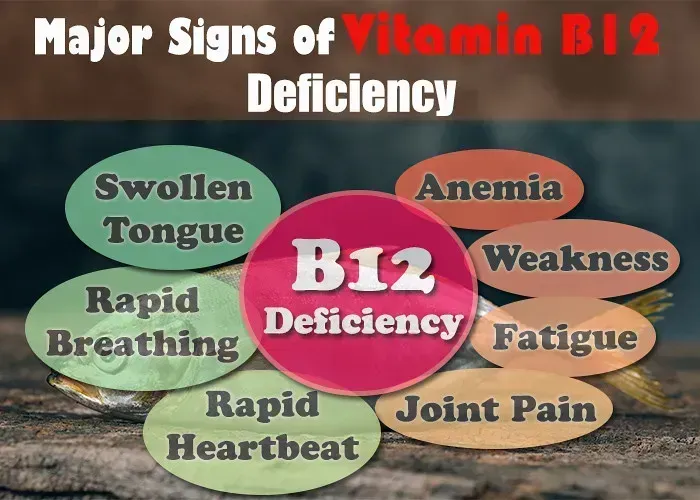
It's worth pausing to understand just how widespread this problem actually is. Low or marginal vitamin B12 status without overt symptoms is much more common, affecting up to roughly two in five people in Western populations, especially those with low intakes of vitamin B12-rich foods.
Vitamin B12 deficiency occurs in approximately two to three percent of adults in the United States. Risk factors include malabsorptive processes, limited dietary intake of vitamin B12, use of certain medications such as metformin and proton pump inhibitors, and older age. Studies suggest that up to about one in five people over the age of 60 in the United States and the United Kingdom are deficient in the vitamin, often due to limited dietary intake, malabsorption, medical conditions, or the use of B12-depleting medications. Because the ability to absorb B12 from food declines with age, deficiency is more common in older adults.
Vitamin B12 deficiency has been found to be very common in specific groups of the population, and there is a high risk among vegetarians, infants, pregnant and breastfeeding mothers, and the elderly. Better awareness regarding when to suspect and initiate testing for vitamin B12 deficiency would reduce delayed and missed diagnosis and help reduce complications. If any of the nine signs in this article sound familiar, the smartest next step is a simple blood test with your doctor. What do you think - were any of these signs something you've experienced without knowing the cause? Tell us in the comments.




Leave a Reply