
Every professional chef has a version of the same story. A brand-new cook arrives in the kitchen, finishes the prep work, and casually drops a beautifully crafted chef's knife into the dishwasher rack. What follows is a cringe felt across the entire kitchen. "I never put my knives in the dishwasher," says Lynn Vita, the executive chef of Poetry Inn in Napa, California. "The high heat and some detergents can damage your knives and eventually dull the blades." This is not a niche opinion held by a few obsessive culinary professionals. It is a universal rule, and understanding why could save you from replacing expensive tools far sooner than you should.
The Dishwasher's Brutal Effect on Your Blade's Edge
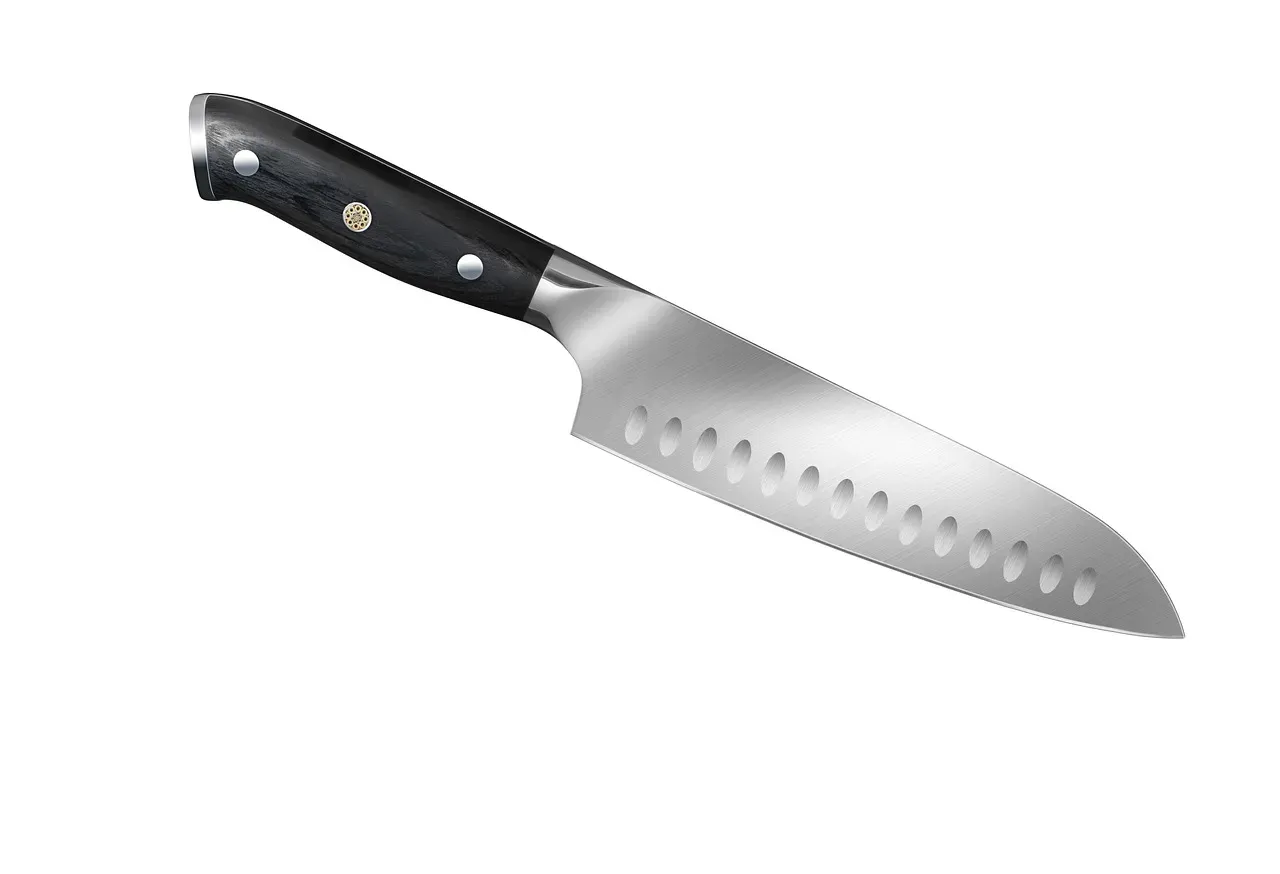
The first major problem with washing knives in the dishwasher is that it quickly dulls the blades. As knives tumble around during the wash cycle, they bump against dishes, the racks, and each other. This constant blunt force contact chips away at the sharp cutting edges, especially on knives made from softer grades of steel. Over time, this erosion wears down the blades until regular sharpening can no longer restore the fine edge.
The mechanical force inside your dishwasher is similar to repeatedly hitting your knife against hard surfaces - edge damage from blades hitting metal utensils creates tiny nicks, the delicate tip can bend or break from impact, and contact with plates or dishwasher racks leaves permanent marks. In just one wash cycle, your blade experiences hundreds of tiny impacts. Premium knives with harder steel, like Japanese Damascus blades with 60+ HRC hardness, are at even greater risk. Their increased hardness makes them more prone to chipping when exposed to mechanical stress.
Harsh Detergents Attack the Steel From the Inside Out

Aggressive dishwasher detergents are far stronger than regular dishwashing liquids - they can literally eat the knife blade. The alkali and salt compounds they contain attack the steel, damaging the microscopic cutting edge and the protective anti-corrosion layer of stainless steel. As a result, the knife gradually loses its sharpness and becomes more susceptible to rust.
What's worse, many of these defects are initially invisible to the naked eye. The blade looks fine, but under a magnifying glass you can see micro-cracks and pitting. After just a few washes, the knife becomes harder to cut because the chemicals and pressurized water jets have dulled the edge. The combination of hot water and abrasive detergents can penetrate the chromium oxide layer that gives stainless steel its corrosion resistance. Damascus steel knives, with their distinctive layered patterns, suffer irreversible damage as detergents eat away at the softer steel layers.
Heat and Moisture Warp Blades and Destroy Handles
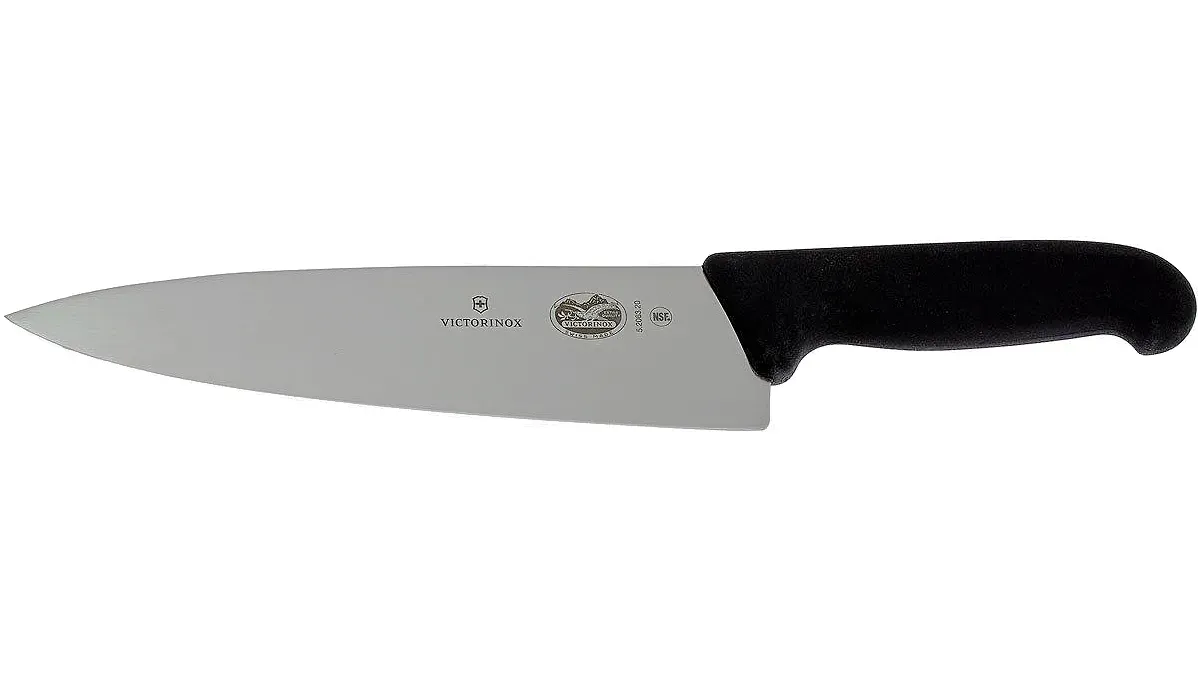
Dishwashers operate at high temperatures to sanitize dishes, but these extreme heat cycles cause the metal in your knife to expand and contract. Over time, this can lead to warping, micro-fractures, and a loss of edge retention. If you put a chef's knife in the dishwasher, the heat and humidity can lead to rust, corrosion, and even warping. The type of material your knife is made from will vary the impact, but ultimately it's bad news whatever you're washing.
Degraded handles are probably the most noticeable effect of a knife in the dishwasher, according to Kyle Cooper of Bernal Cutlery in San Francisco. "Uni-bodied rubber and plastic handles are usually fine, but the Western-style riveted handles and wooden Japanese-style handles will eventually fall apart." The aggressive detergents and salts, and the high temperature in the dishwasher, make the cutting edge porous and blunt, and more susceptible to rust. The moisture also causes wooden handles to swell and become brittle.
Carbon Steel Knives Face Accelerated Destruction
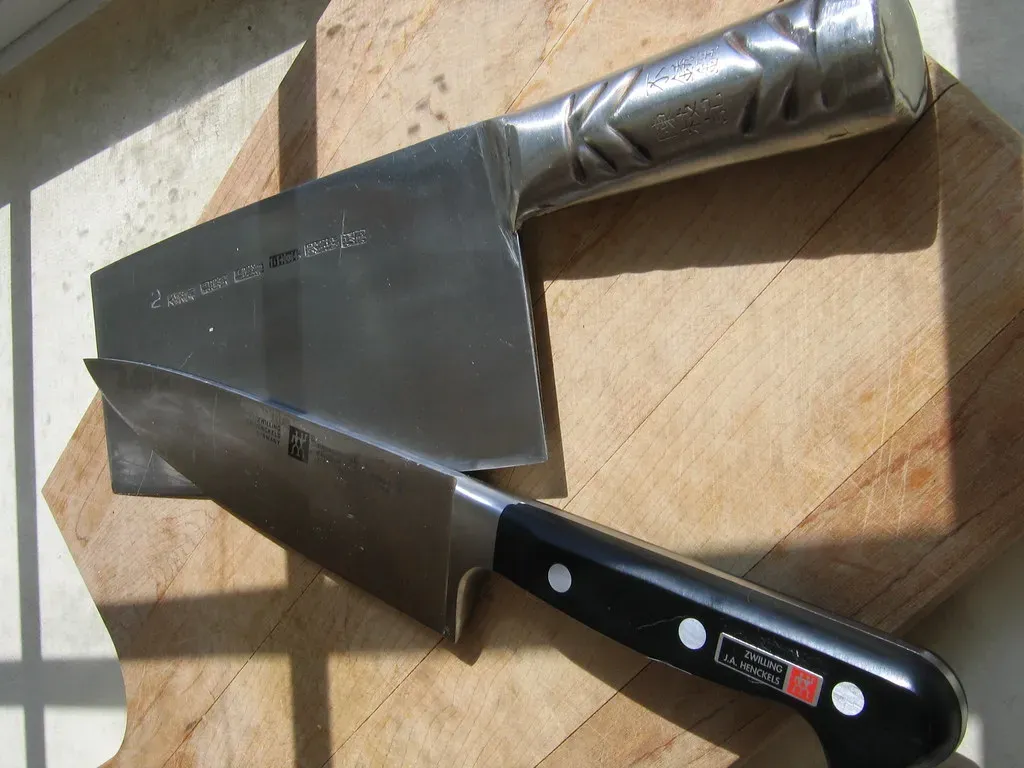
Carbon-steel blades are in serious danger according to cutlery experts. "The main problem is the long-term or repeated exposure to moisture. For carbon-steel blades, 'long-term' can be as little as 10 minutes, so a full cycle in a dishwasher will do fairly significant damage in the form of corrosion. Most knives can be buffed back to life, but repeated instances of this will dramatically limit the usability of a carbon-steel blade."
Michael J. Tarkanian, senior lecturer at MIT's Department of Materials Science and Engineering whose specialties include metallurgy and the fatigue and failure of materials, warned: "The temperature and pressure of the water, the potential corrosivity of the detergent, and movement of the knife in the dishwasher - collisions with other objects - could all contribute to dulling of the edge, or a changing of the patina in the case of a carbon-steel knife." Blades made from carbon steel are particularly vulnerable to rust, and wooden handles are also a bad idea - wood will splinter and break when exposed to heat and moisture.
The Hidden Safety Risk Nobody Talks About
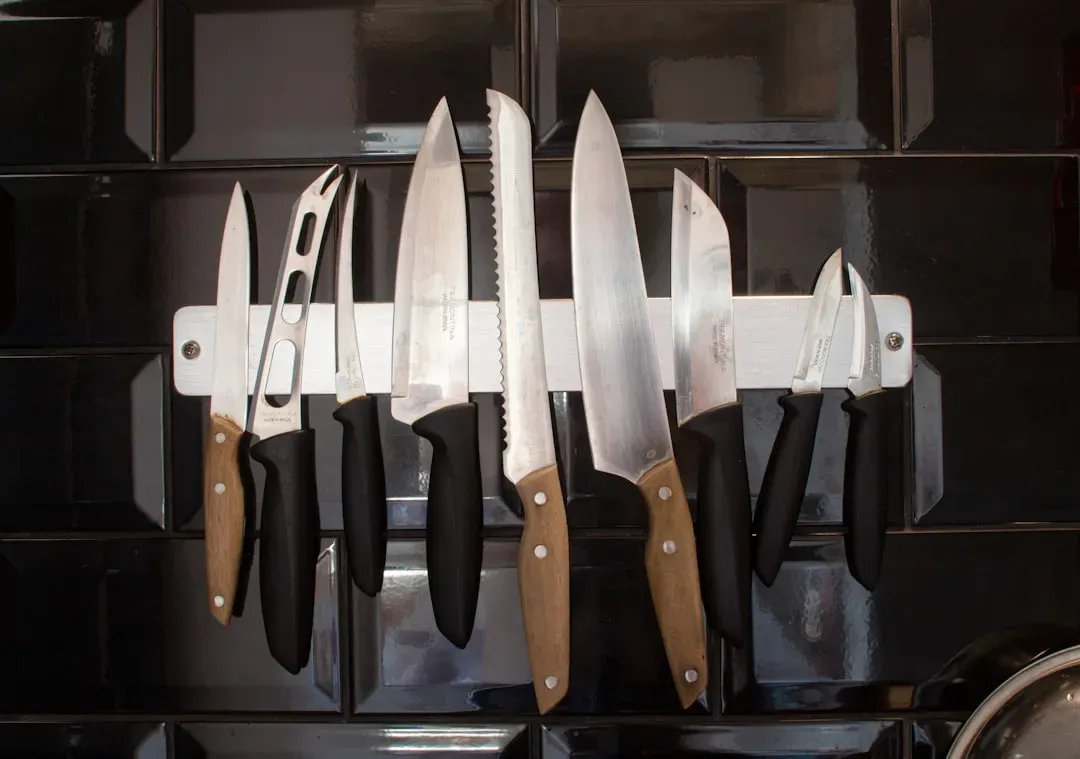
Sharp knives and the dishwasher environment form an unpredictable, hazardous combination. Reaching into the steamy appliance interior brings the possibility of accidental cuts from hidden blades lying among dishes and utensils. Lower visibility and slippery conditions heighten risks. Knives falling from racks or loose blade covers can also cause injuries.
Published research confirms the danger is real. A survey on dishwasher-related injuries found that the incidence of related injuries was 12.5% among adults and 5% among children, and young children are at risk of sharp injuries in households with dishwashers. The dangerous loading and unloading of sharp objects and the direct involvement of toddlers should be discouraged. Kitchen knife injuries affect roughly 350,000 people each year in the United States alone, and placing sharp knives in the dishwasher compounds that risk every time someone reaches in to unload.
What Even Knife Manufacturers Admit - and What to Do Instead
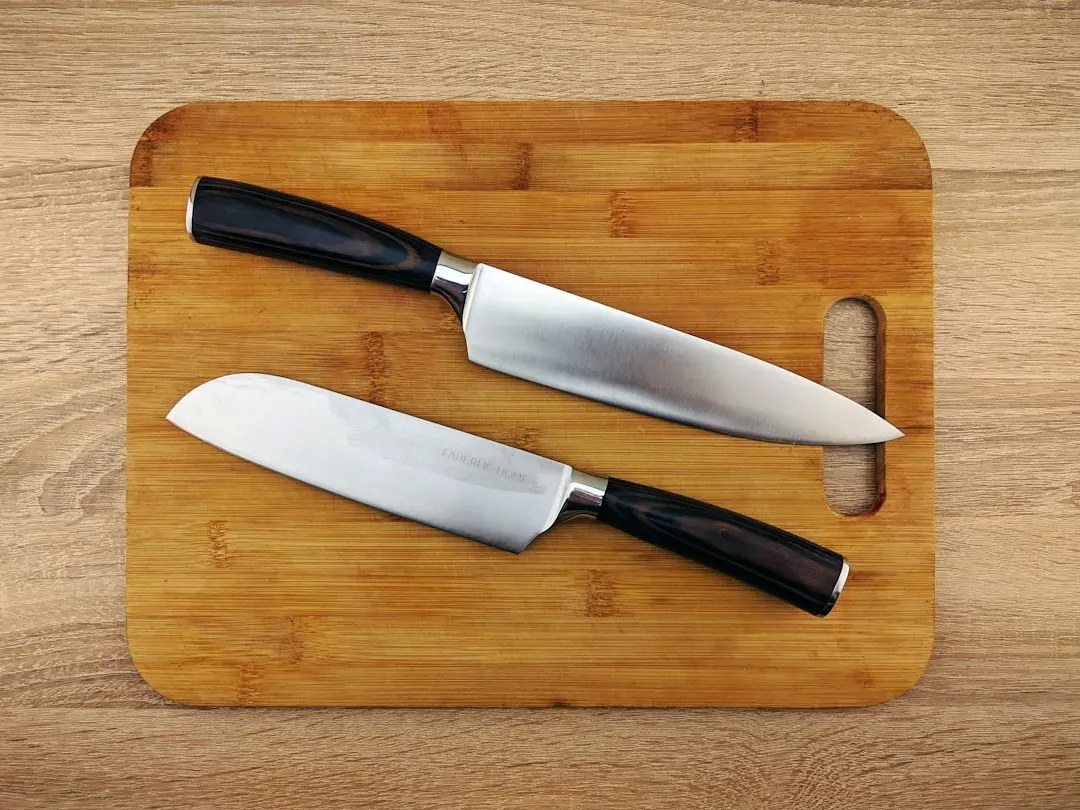
Though some manufacturers say their knives can be put in the dishwasher, there are often caveats. Zwilling, for example, says that knives made of special formula steel are dishwasher-safe, but then adds that "washing knives in a dishwasher can therefore shorten their lifespan and cutting edge retention." That's why the advice from consumer experts is to play it safe with all kitchen knives and wash them by hand.
Even for knives marked as dishwasher-safe, everything indicates that using the dishwasher is not a good idea, unless your kitchen is kitted out with a special industrial one. The aggressive chemicals, high temperatures, and contact with other objects in standard household dishwashers, not to mention the wash cycles which often last for hours, are not conducive to the lifespan of your knives. To safely clean your knives, hand wash them in warm water with a sponge or dishcloth and dish soap if needed, then rinse and dry them immediately with a clean kitchen towel. It's best to clean your knives sooner rather than later - and always dry them straight away. Don't soak them or let them sit in water all day, because too much contact with water can cause the blade or handle to rust.



Leave a Reply