
Pick up nearly any packaged food in your local grocery store and scan the ingredient list. Chances are, somewhere near the bottom, you'll spot two words: "natural flavors." It sounds wholesome, even reassuring. The problem is, those two words can hide a surprisingly complex chemical world that most consumers never see. Understanding what "natural flavors" really means, legally and in practice, is something far too few people bother to investigate.
The Official Definition Is Broader Than You Think
Under U.S. federal law, the term "natural flavor or natural flavoring" means the essential oil, oleoresin, essence or extractive, protein hydrolysate, distillate, or any product of roasting, heating or enzymolysis, which contains the flavoring constituents derived from a spice, fruit or fruit juice, vegetable or vegetable juice, edible yeast, herb, bark, bud, root, leaf or similar plant material, meat, seafood, poultry, eggs, dairy products, or fermentation products thereof, whose significant function in food is flavoring rather than nutritional. That is the definition laid out by the FDA under 21 CFR § 101.22. In plain terms, the source must be natural - plant, animal, or microbial - and its purpose must be flavor, not nutrition.
Within that definition, there's a wide range of substances that can legally be called "natural flavors." The regulation is intentionally broad. It's worth pointing out that the CFR, like many parts of U.S. law, is open to interpretation. The FDA provides a framework, but companies and flavor houses often rely on internal policies, industry guidance, and legal counsel to decide how a product gets labeled. This means the same regulation can be applied in slightly different ways from brand to brand. What one company calls "natural lemon flavor" may be chemically quite different from another's.
Natural Flavors Are the Fourth Most Common Food Ingredient in America
Natural flavors are currently the fourth most common food ingredient listed on food labels. That ranking puts them ahead of countless other additives and preservatives that get far more public attention. The fourth most common ingredient in packaged food is natural flavors, which fall under the GRAS category. GRAS stands for "Generally Recognized as Safe," a designation that carries its own significant set of problems, as discussed later.
Natural flavors commanded a 22.2% share of the clean-label food additives market in 2024 and are projected to expand at a compound annual growth rate of 5.8% through 2034. Claims of natural flavor ingredients are on the rise with a positive 5% compound annual growth rate, reflecting brands' positively framing labeling to align with increasing interest in natural products. The market is growing precisely because the label is trusted, making the reality behind it all the more worth examining.
What's Actually Inside "Natural Flavors"
Even though they come from natural sources, artificial and synthetic chemicals often get added in during the manufacturing process. In fact, these flavor mixtures can be made up of over 100 chemicals, according to the Environmental Working Group. Things like solvents, emulsifiers, flavor enhancers, and preservatives can make up 80% to 90% of natural flavors. So the "natural" part of natural flavors may actually be the smallest portion of the product.
Natural flavors are complex mixtures created by specially trained food chemists known as flavorists. Some of the specific compounds permitted are genuinely surprising. Castoreum, a slightly sweet substance found in the anal secretions of beavers, is sometimes used as a substitute for vanilla, although this is rare due to its high cost. Processing "natural flavors" also involves solvents like propylene glycol or preservatives like BHA, which can have health risks. While these compounds are deemed "safe in small quantities," their cumulative effect over time, especially when consumed in multiple products, is less understood.
The Hidden Allergen Problem
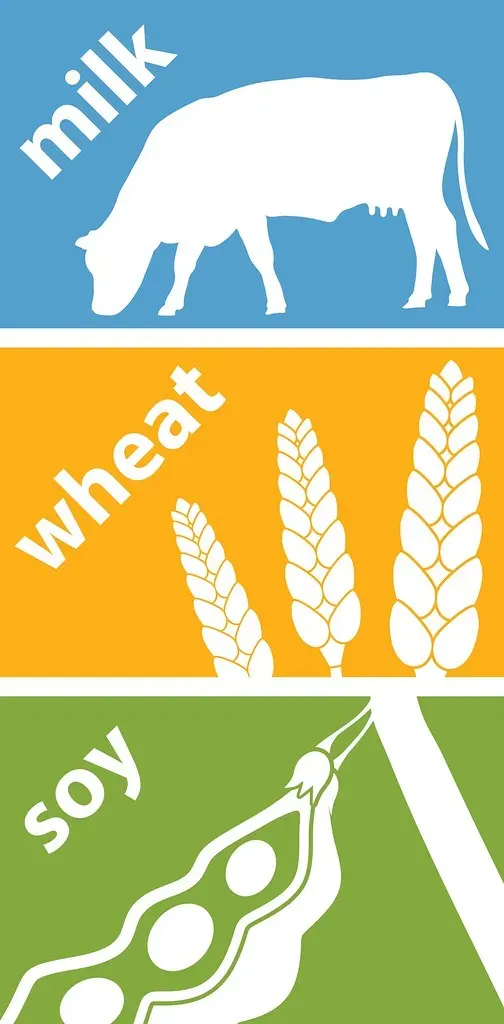
Current labeling laws deprive consumers of the information they need to protect themselves from food allergens or identify products aligned with their ethical beliefs. Federal law requires allergen labeling for only nine "major allergens," but at least 59 foods can cause life-threatening allergic reactions. Each of these substances can legally be hidden behind the terms "spice" or "natural flavor." That is not a regulatory gray area - it is a documented gap with real consequences for real people.
Natural flavors can contain milk, soy, gluten, or other allergens that may not be clearly labeled. "Natural" flavorings can also be animal-derived, making them unsuitable for vegetarians, vegans, or those following religious dietary laws. Individuals following kosher, halal, or other religiously guided eating practices cannot make informed decisions about food products when natural flavor sources remain undisclosed. The issue isn't just chemical safety - it's also about the basic right to know what you're consuming.
The GRAS Loophole and Industry Self-Regulation
Food and flavor companies leverage a legal loophole that allows anyone, including companies themselves or industry-paid experts, to declare that a substance is "generally recognized as safe," or GRAS, and in effect bypass FDA approval for new food chemicals. Food companies do not even have to notify the FDA of their GRAS determinations before adding the substances to our foods. As a result, nearly 99% of all food chemicals that entered the food marketplace since 2000 were only reviewed and tested by the food and chemical companies manufacturing them.
Flavor and food companies closely guard their flavor blends as "trade secrets" to prevent competitors from making copycats of their popular foods. Those companies choose to protect their bottom line at the expense of transparency and public health. While FEMA claims to limit conflicts of interest by its experts, the organization itself is paid by its members, and therefore has a strong interest to provide positive reviews to secure repeat business, which may bias the process in ways that are difficult to document. Critics argue this creates a system where the industry grades its own homework.
Reform Efforts Are Finally Gaining Ground in 2025
In a significant shift aimed at bolstering food safety and consumer trust, U.S. Health and Human Services Secretary Robert F. Kennedy Jr. directed the Food and Drug Administration to revise its "Generally Recognized as Safe" (GRAS) rule. This move targets long-standing concerns over the self-affirmation process that allows food companies to introduce new ingredients without public disclosure or FDA oversight. Under the proposed changes, food companies will no longer be able to self-affirm GRAS status behind closed doors. Instead, they must notify the FDA before marketing foods with new ingredients, submit safety data for FDA review, and publicly disclose information about GRAS determinations.
A piece of legislation under consideration in the New York State legislature, bill S8615/A9295, would require companies that sell, distribute, or market food products in New York to report all secret GRAS substances to the New York Department of Agriculture - including those hiding inside "natural flavor," "artificial flavor," and "spices." If the bill becomes law, those ingredients and the safety information submitted by the food and beverage industry will be published in a public database. On the state level, at least 108 bills have been introduced in 17 states in 2025 regarding ingredients, nutrition education, ultra-processed foods, and physical activity in schools. Seven bills have already been enacted in five states. The regulatory landscape around natural flavors is shifting, and the direction is clearly toward greater accountability.



Leave a Reply