
Eating well without emptying your wallet is one of those goals that sounds simple but feels impossibly complicated at the checkout line. Food prices have climbed sharply since 2020, household budgets are tighter than ever, and the gap between what people actually spend and what nutrition experts say they should spend has become a source of real confusion. The good news is that concrete benchmarks exist, and both government data and financial experts offer a surprisingly clear picture of what a realistic, nutritious grocery budget looks like right now in 2025 and 2026.
What Americans Are Actually Spending Right Now

U.S. households were spending around $165 per week on groceries as of 2024, and between 2019 and 2024 that average weekly expenditure grew exponentially, driven first by the 2020 pandemic and then by sustained inflation. Survey data paints an even steeper picture. A recent survey from Popmenu found that Americans spend $235 per week on groceries, or roughly $940 per month. Those two figures may seem at odds, but they reflect different methodologies and population samples, so the real average likely falls somewhere in between.
The average American household spends $6,224 a year on groceries, according to the Bureau of Labor Statistics Consumer Expenditure Survey from 2024 - that works out to $519 a month. On average, grocery bills account for roughly 8 to 11 percent of a household's monthly expenses, including housing, transportation, healthcare, utilities, taxes, childcare, and other necessities. Understanding this baseline is the first step to knowing whether your own spending is reasonable or if something needs to change.
The Official Benchmarks: What the USDA Says You Should Spend

The USDA produces four food plans at successively higher cost levels - the Thrifty, Low-Cost, Moderate-Cost, and Liberal Food Plans - each specifying quantities of foods and beverages that could be purchased and prepared to make healthy meals and snacks at home, with costs based on average prices and adjusted monthly for inflation using the Consumer Price Index. These are the closest thing America has to an official answer for how much a nutritious diet actually costs. For 2025 to 2026, the USDA's four grocery budget tiers per single adult run from approximately $247 to $309 per month on the Thrifty plan, $323 to $371 on the Low-Cost plan, $392 to $465 on the Moderate plan, and $499 to $566 on the Liberal plan.
The Thrifty plan is what SNAP benefits are based on, and for a single adult it breaks down to roughly $71 per week for men and $57 for women - which means cooking almost everything from scratch, buying store brands, and wasting essentially nothing. Families need to account for household size when applying these numbers. The costs given are for individuals in four-person households, and for those in other size households, adjustments are suggested: single-person households should add 20 percent, two-person households add 10 percent, and three-person households add 5 percent.
The Real Cost of Eating Well as a Family

The USDA estimates a monthly food budget of $299 to $569 for one person, $617 to $981 for a couple, and $1,002 to $1,631 for a family of four. That range is wide, and where your household lands depends heavily on which plan you follow and where you live. For a family of four with two kids, the USDA Moderate-Cost plan comes to around $1,250 to $1,400 per month. For many families, that figure alone is a genuine shock - and underscores why so many households feel squeezed even when they try to be careful shoppers.
Residents in the Kahului-Wailuku-Lahaina area of Hawaii pay the most for food every month, at $536 per person, while people living in Butler County, Kentucky pay the least at $285 per person. Location makes a dramatic difference, and no single national average can capture the full range of American grocery experiences. Your ideal budget also depends on factors like location, since urban areas typically cost 15 to 20 percent more, as well as dietary restrictions, shopping habits, and whether you cook from scratch or buy convenience foods.
How Income Should Shape Your Food Budget

Financial experts recommend spending 10 to 15 percent of your after-tax income on groceries and food eaten at home - for a household earning $5,000 monthly after taxes, that means $500 to $750 for groceries. This guideline is not a hard rule, but it serves as a practical sanity check. Lower-income households may spend up to 20 percent of their income on food due to limited purchasing power, while higher-income households often spend less than 10 percent proportionally.
In 2024, U.S. consumers spent an average of 10.4 percent of their disposable personal incomes on food, a decrease from 10.6 percent in 2023. That slight decline is encouraging, but it masks a harsher reality for lower earners. In 2023, households in the lowest income quintile spent an average of $5,278 on food, representing 32.6 percent of after-tax income. For those families, the concept of a "budget" is not a financial optimization exercise - it's a daily survival calculation.
Why Food Prices Are Still Rising and What Categories Cost the Most
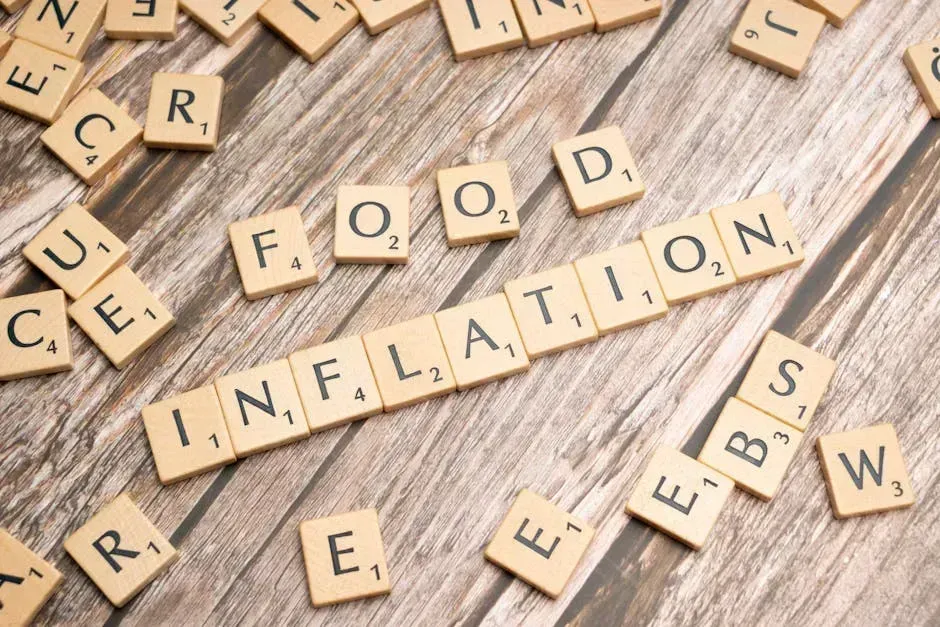
Food prices rose by 2.3 percent in 2024 and 2.9 percent in 2025, slower than during 2020 to 2023, with food-at-home prices specifically increasing by 1.2 percent in 2024 and 2.3 percent in 2025, below the historical average pace of growth. The moderation is real, but it doesn't erase the cumulative damage. Food prices are up 29.5 percent since December 2019, which remains very recent memory for the public, and consumers continue to be frustrated by prices and affordability. Beef and veal have been one of the hardest-hit categories. Beef and veal prices were 14.4 percent higher in February 2026 than in February 2025.
In 2026, overall food prices are predicted to rise 3.6 percent, with food-away-from-home prices forecast to rise 3.9 percent and food-at-home prices predicted to climb 3.1 percent, both faster than their respective 20-year historical averages. That's a meaningful signal for anyone trying to plan a grocery budget into the coming year. Among the reasons groceries keep rising: ongoing supply chain disruptions involving transportation, labor shortages, and global conflicts; droughts, floods, and heatwaves damaging crops and reducing supply; and farmers and food producers paying more for essentials like fertilizer, fuel, and animal feed, all of which get passed on to consumers.
The Hidden Budget Killer: Food Waste and Smart Strategies to Save

According to the EPA's 2025 findings, a family of four throws away $2,913 worth of food per year - that's $243 a month going straight into the trash. That staggering figure means that for many households, the problem is not how much they spend at the register but how little of what they buy actually gets eaten. Consumer food waste accounts for nearly 50 percent of surplus food in the U.S. at a cost of $261 billion, with enormous consequences both for the climate and household wallets.
Research shows that shoppers can save up to 30 percent just by opting for store-brand goods and shopping based on weekly promotions. Meal planning is consistently cited by experts as the single most powerful tool in a budget shopper's arsenal. A survey of 2,568 meal planners found they reduced food costs by $47 per person per month - or $564 per year - with savings coming from less food waste, fewer impulse purchases, and fewer delivery orders. Nearly half of Americans are now buying more frozen foods because they last longer, and 64 percent say frozen foods help them manage their grocery budgets. Small behavioral shifts like these - choosing frozen vegetables, cooking from a pantry-first strategy, and building meals around weekly sales - consistently move the needle far more than any single coupon ever could.



Leave a Reply