
Your grocery cart tells a story. At 60, 70, and beyond, what you spend on food each week isn't just about nutrition - it's one of the clearest indicators of whether your retirement is financially comfortable or quietly strained. The numbers matter, and so does the context behind them. With food prices still climbing and fixed incomes under pressure, understanding what a healthy, realistic grocery budget actually looks like for older Americans has never been more important.
What the Data Actually Says About Senior Food Spending
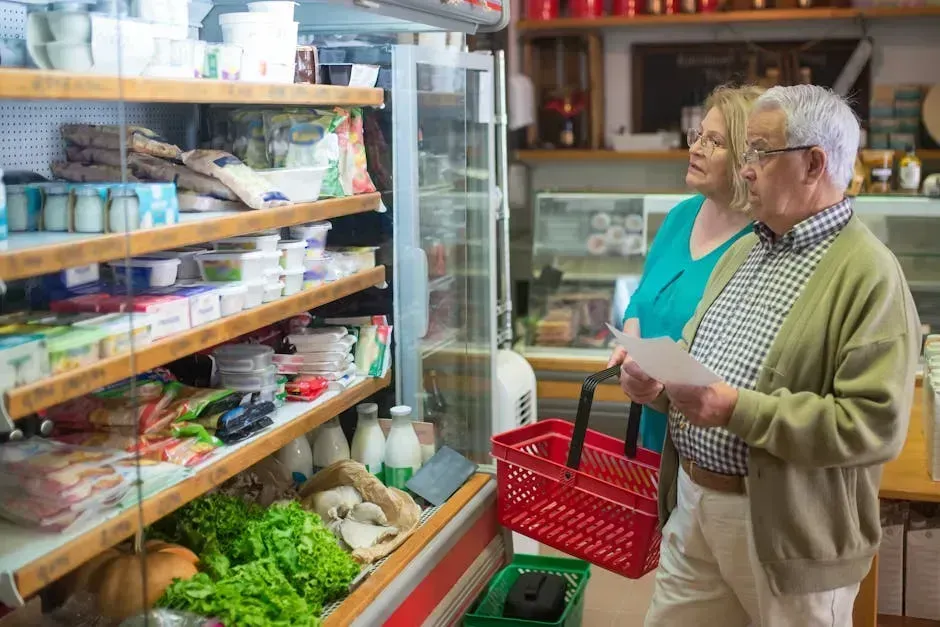
In 2023, people between 55 and 65 spent roughly $10,069 on food annually. Once they hit their late 60s and early 70s, that figure dropped to around $8,566. That's a meaningful shift, and it reflects a pattern seen consistently across age groups. Food was the most common fastest-growing expense reported by seniors, and roughly three quarters of the average food budget for people ages 65 and older was spent on food at home, with the remaining portion going toward eating out.
On average, retirees reported that roughly a quarter of their monthly spending went toward food expenses in 2022. That proportion is significant - it means food isn't a minor line item in retirement. It's one of the top competing priorities alongside housing and healthcare. Average annual expenditures for all consumer units in 2024 were $78,535, according to the Bureau of Labor Statistics Consumer Expenditure Surveys. Older adults, naturally spending less overall, are directing a disproportionately large share of their budgets toward the grocery store.
The USDA Benchmarks: What "Low-Cost" Actually Means

According to the USDA's Official Food Plans, in August 2025, the Low-Cost weekly food budget for older adults aged 51 to 70 was $67.00 for a man and $60.10 for a woman. These figures are published by the federal government and represent a real, nutritionally adequate baseline. They aren't lavish, but they're not bare-bones either. Costs may vary widely based on what region of the country you live in, where you shop, and whether you shop online or in person - however, the USDA budget samples can provide a helpful benchmark when determining what you can expect to spend on groceries.
The USDA Food Plans are broken down into four different budget levels: Thrifty, Low-Cost, Moderate-Cost, and Liberal. A senior living comfortably tends to fall somewhere between the Low-Cost and Moderate-Cost tiers. In 2025, you spent between $400 and $500 per month on groceries for one person, with the exact number depending on your dietary preferences, location, family size, and where you shop. For a couple in their late 60s or early 70s, a combined monthly grocery budget in the range of $700 to $900 is increasingly being treated as the "comfortable" signal.
Food Inflation Is Relentlessly Reshaping Retirement Budgets
According to the USDA's latest Food Price Outlook, food prices were 3.2% higher in August 2025 compared to the same month the prior year. Overall prices for food at home rose 2.7% over August 2024, while restaurant purchases were 3.9% higher than in August 2024. These aren't abstract statistics. For seniors on fixed incomes, every percentage point of food inflation translates directly into tighter weekly decisions at the register. The USDA predicts that food inflation will slow slightly, but prices still increase by nearly 3% in 2026.
According to a GOBankingRates survey conducted in early 2025, nearly half of seniors aged 65 and over stated they were paying significantly more in groceries compared to 2024. Besides inflation, reasons include global conflict, corporate greed, transportation costs and fuel, fair labor wages, animal disease, and bad weather, according to the Center for Science in the Public Interest. The pressure is real, it is multi-layered, and it is showing no signs of easing in the near term.
Fixed Income vs. Rising Prices: The Widening Gap

In 2025, Social Security benefits increased with a cost-of-living adjustment of 2.5%, translating to an average increase of around $50 to $60 per month for most beneficiaries. While any increase helps, it's falling short of matching the true rise in costs for essentials like rent, food, and healthcare. For many retirees, that mismatch between income adjustments and actual cost increases is the defining financial tension of this stage of life. While Social Security includes annual cost-of-living adjustments, those increases often lag behind actual inflation. The 2025 COLA clocked in at only 2.5%, but key expenses for seniors - like housing, medical care, and energy - have risen far more than that.
For seniors relying on Social Security or modest pensions, rising food prices create impossible choices. A $50 increase in monthly grocery bills may force retirees to cut back on healthcare, utilities, or transportation. Many seniors report skipping meals, buying cheaper but less nutritious food, or relying on food banks. The comfort signal, then, isn't just the dollar amount being spent - it's whether that spending is happening without forcing painful trade-offs in other essential categories.
How Spending Shifts as You Move From 60 to 70 to 80-Plus

In 2023, people between 55 and 65 spent about $10,069 on food annually. Once they hit their late 60s and early 70s, those expenditures decreased to $8,566. By 75 and beyond, spending in all three categories - food, entertainment, and apparel - declined. This pattern makes intuitive sense. Appetites change, households shrink, and energy levels for preparing elaborate meals often decrease with age. Yet it's important not to confuse lower spending with financial hardship - many seniors in their 80s simply eat less and cook more at home.
Food spending went from around $4,698 for the under-25 group to roughly $7,900 for both the 35 to 44 and 45 to 54 age groups, and then declined to $4,144 for the 75 and older group, according to BLS data. The trajectory is clear, but the key takeaway is that those who maintain spending at the moderate-to-liberal USDA plan level well into their 70s are generally those with enough financial cushion to prioritize quality food consistently. In 2025, U.S. households faced higher food prices, with the typical family now spending around $504 per month - about a 2.7% increase from last year, according to the Bureau of Labor Statistics.
Programs, Benefits, and Safety Nets That Affect the Budget Picture

Millions of older adults are eligible for food assistance from SNAP but often don't apply. The National Council on Aging offers a tool to help determine eligibility and get help paying for groceries. This gap between eligibility and enrollment is one of the most significant underutilized resources in senior financial planning. For fiscal year 2026, SNAP maximum monthly benefits in the 48 states and Washington, D.C. are $298 for one person and $546 for two people. That's a meaningful sum for a senior couple navigating a tight grocery budget.
Some Medicare Advantage plans, often Special Needs Plans, include a grocery allowance benefit, with amounts varying by plan and location, often ranging from $25 to $200 per month. Few seniors know these benefits exist, and even fewer actively shop for plans that include them. Over 15 million older adults aged 65 and older are financially insecure, living at or below 200% of the federal poverty level. For this population, programs like SNAP, the Senior Farmers' Market Nutrition Program, and commodity food box distributions aren't supplements to comfort - they are the foundation of it.



Leave a Reply