
Remember when you could walk into any corner store and find yourself staring at a wall of sodas you'd never even heard of? Some bubbled with promise, others fizzled almost immediately. The soda industry has never been afraid to experiment, and while giants like Coke and Pepsi continue to dominate shelves, there's an entire graveyard of brands that came, captured hearts, and then vanished without much fanfare. Here's the thing about these forgotten fizzy drinks. They're not just discontinued products; they're time capsules. Each one represents a moment when marketers thought they'd cracked the code. Each one tells a story about what we wanted, what we believed, or what we were told we needed. Let's be real, some of these failures are absolutely legendary.
Crystal Pepsi: The Clear Cola That Couldn't See Its Way Forward
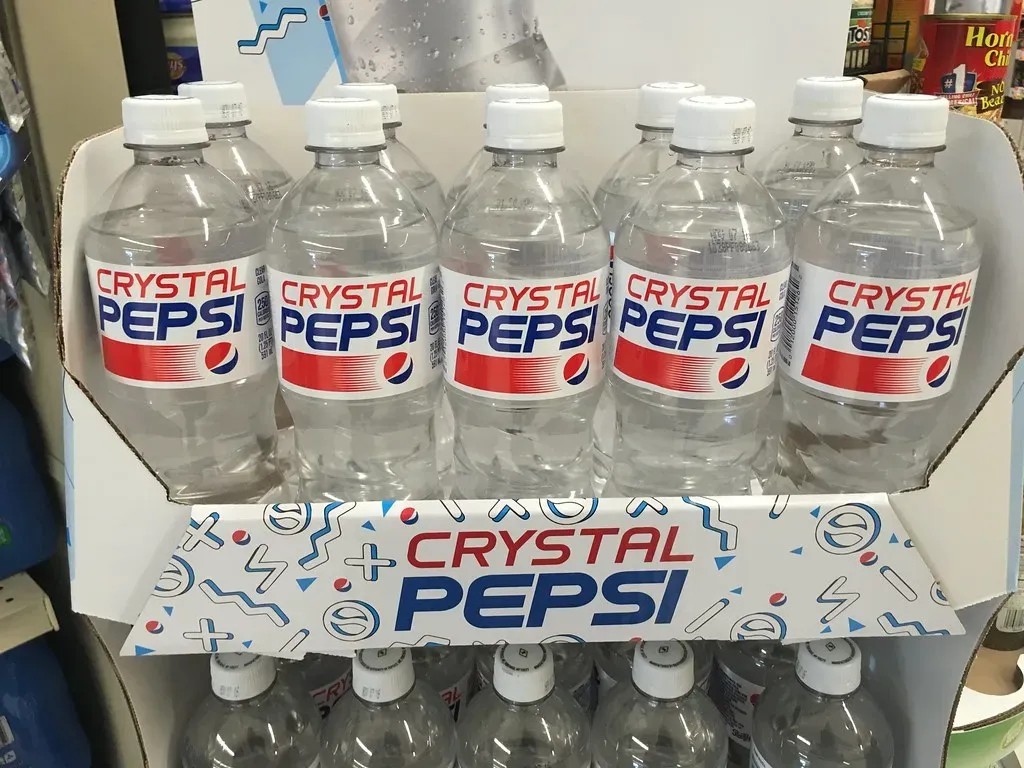
Crystal Pepsi was launched in 1992 with a huge marketing campaign and to great success, capturing a 1% soft drink market share worth US$474 million in its first year. Think about that for a second. Nearly half a billion dollars. That's not small potatoes.
The transparent soda was supposed to tap into early nineties purity obsessions. Clear meant clean, right? Crystal Pepsi was marketed as a caffeine-free "clear alternative" to normal colas with its official slogan: "You've never seen a taste like this."
Fans were initially drawn to its clean, crisp look and familiar flavor, but its confusing marketing and lack of differentiation from regular Pepsi led to poor sales. Here's the wild part. Coca-Cola hastily formulated its own clear cola named Tab Clear to sabotage PepsiCo's upstart offering, marketing it as an intentional "kamikaze product" to undermine demand for Crystal Pepsi while accepting collateral damage to Tab's already struggling brand identity. The ingenious strategy effectively shut down both product lines within six months.
By late 1993, Crystal Pepsi was discontinued, and the final batches were delivered to retailers during the first few months of 1994. I think the lesson here is pretty clear: you can't just slap transparency on an existing product and call it innovation. People wanted substance, not just see-through syrup.
Tab: The Diet Soda That Got Pushed Aside
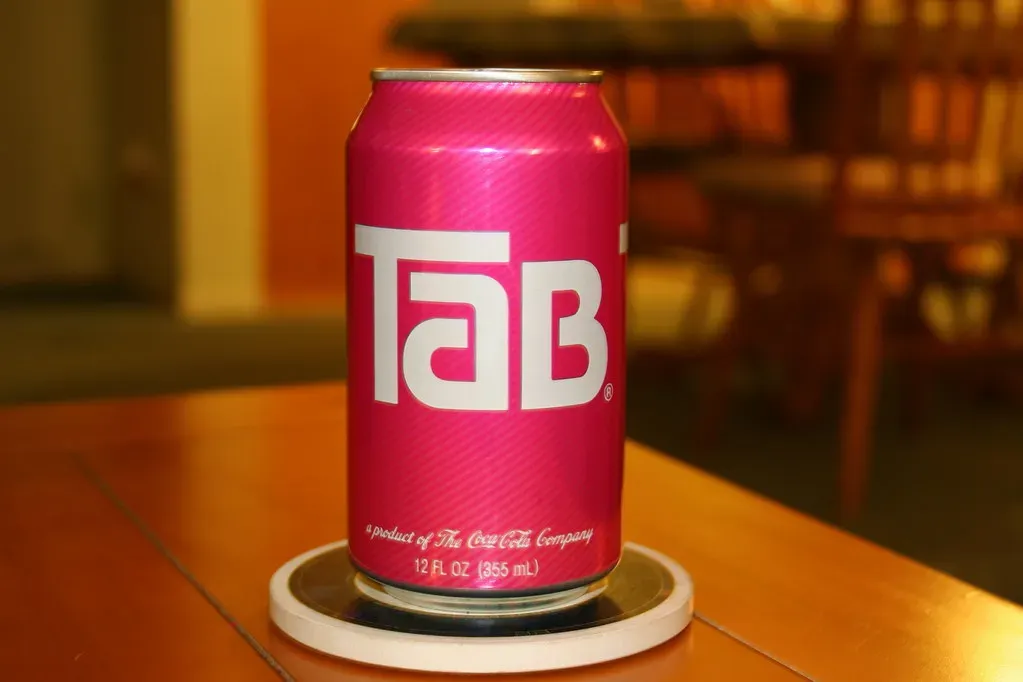
Tab was one of those drinks Boomers still remember with a strange fondness. Tab was introduced in 1963 as an alternative for calorie-conscious consumers, sold in a pink can and targeted specifically at women concerned about their weight. The marketing was unbelievably dated. Ads literally told women Tab could help them "stay in his mind."
For a while, it worked. Tab carved out a niche. It was extremely popular throughout the 1980s when it was re-branded as pink and an hourglass-shaped glass was released as part of its promotional effort for women, but Coca Cola shot itself in the foot in the '80s by creating its direct competitor due to the idea that men needed a more "masculine" drink.
The arrival of Diet Coke basically sealed Tab's fate. With Diet Coke available, Tab was relegated to an afterthought, falling from 4 percent of Coke's overall market share to just 1 percent. Tab was discontinued in 2020 after being left far behind by Diet Coke's sales.
Yet somehow, decades later, people are still nostalgic for it. A group of superfans has been calling for its comeback tour using the hashtag #SaveTabSoda, garnering thousands of views on Facebook and TikTok. Honestly, I get it. Sometimes you just want what you can't have anymore.
Slice: The Fruit Juice Soda That Lost Its Fizz
Slice was a line of fruit-flavored soft drinks originally manufactured by PepsiCo and introduced in 1984 but discontinued by PepsiCo in North America in the late 2000s. The big selling point? Its distinguishing characteristic at the time was that it contained 10% fruit juice. That doesn't sound like much now, but back then it felt revolutionary.
Slice was a big success upon release, inspiring other juice-infused drinks based on already existing juice brands, and by May 1987, Slice held 3.2 percent of the soft drink market, but one year later, it had fallen to 2.1 percent.
What went wrong? By 1988, the juice content had been reduced, the slogan was changed, and the Apple and Cherry Cola flavors had been discontinued, and by 1990, the packaging had been redesigned, and the juice content dropped entirely. Wait, what? They literally removed the one thing that made Slice special. Retail analysts attribute Slice soda's demise, in part, to its diversification into 15 fruit flavors, paving the way for other more recognizably-branded juice-infused drinks to steal its thunder (such as Minute Maid and Sunkist).
Its sales dwindled, and it was eventually discontinued in 2005, much to the chagrin of devoted fans, but now, after years of silence, Slice is back and better than ever. Though let's be honest, it's not the same Slice.
OK Soda: The Drink That Was Just "OK" With Failure
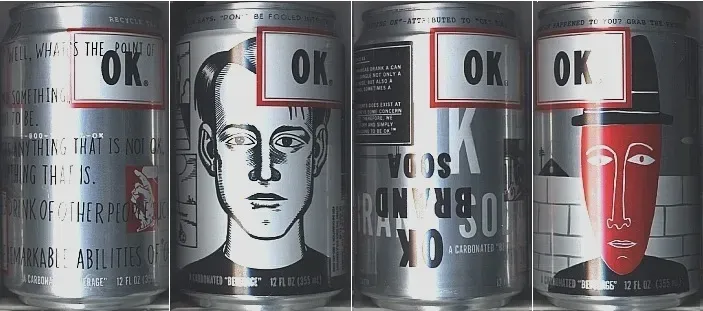
This one is honestly bizarre. OK Soda is a discontinued soft drink created in 1993 that courted the American Generation X demographic with unusual advertising tactics, including neo-noir design, chain letters and deliberately negative publicity, and after the soda did not sell well in select test markets, it was officially declared out of production in 1995.
OK Soda was intentionally marketed at the difficult Generation X markets, and attempted to cash in on the group's existing cynicism, disillusionment and disaffection with standard advertising campaigns with the concept that the youth market was already aware that they were being manipulated by mass-media marketing, so this advertising campaign would just be more transparent about it.
The cans featured art from alternative comic book creators, and the slogans were ridiculously bleak. Their cans featured grayscale art and slogans like "What's the point of OK? Well, what's the point of anything?" Grim, right?
OK Soda never captured more than 3% of the beverage market in any of the target locations, failing to match Zyman's hype, and the project was canceled by Coca-Cola just seven months after its kickoff. Distributors began pulling it from shelves over poor sales; one Minneapolis-area retailer told The Washington Post he had failed to sell even a single 12-pack, and by fall 1995, Coca-Cola was ready to throw in the towel.
Selling disillusionment can be a difficult task, especially to an entire generation known for its skepticism. It's hard to say for sure, but I'd argue trying to market apathy to teens was never going to work. You can't fake authenticity.
Jolt Cola: All the Caffeine, Twice the Downfall
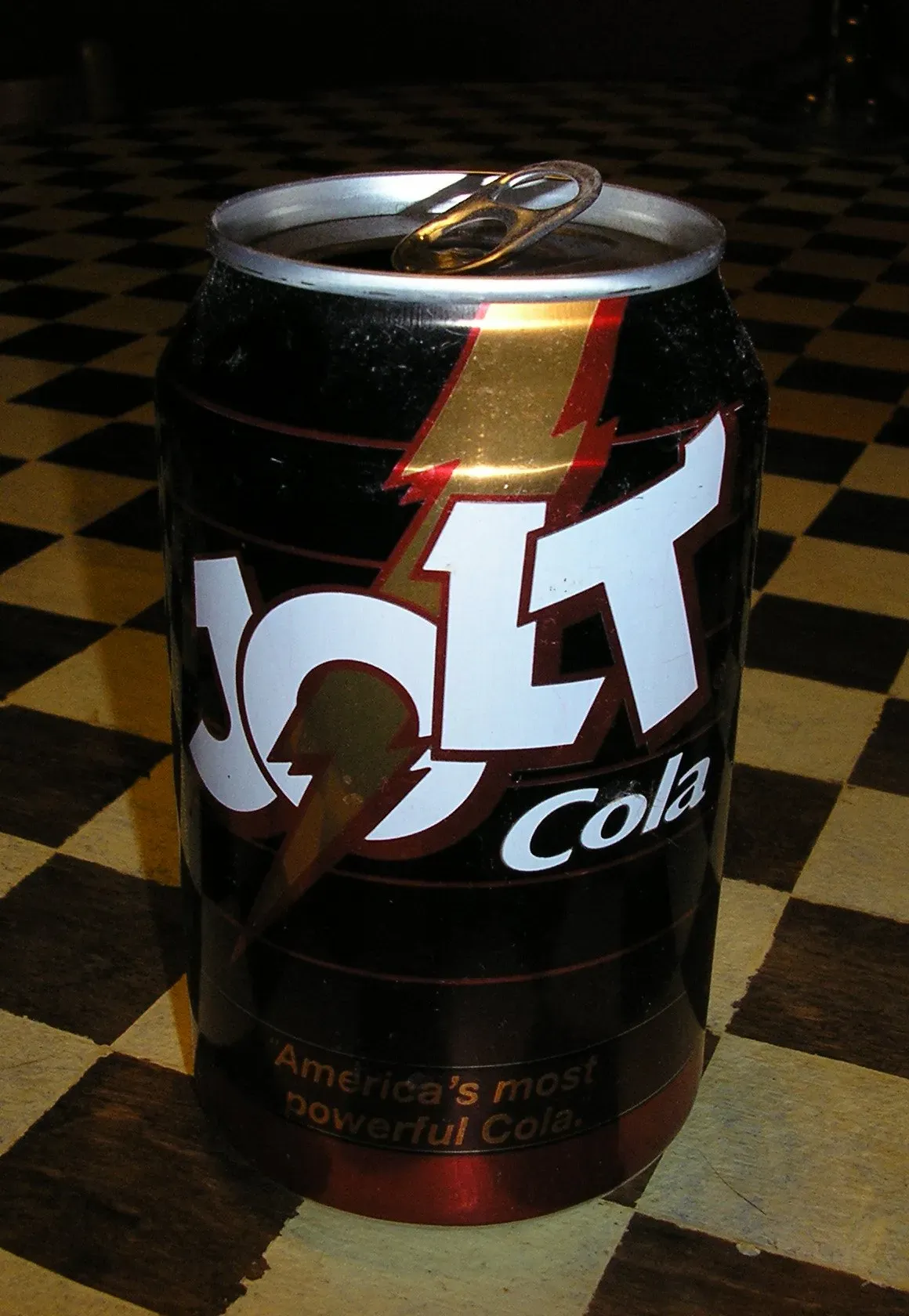
Launched in 1985, Jolt Cola was marketed as the ultimate energy drink before energy drinks were even a trend, famous for its slogan "All the sugar and twice the caffeine," and was a favorite among students, gamers, and anyone needing a significant caffeine boost, despite its initial popularity, health concerns and changing consumer tastes led to its decline.
C.J. Rapp created Jolt Cola with 70mg of caffeine per serving (over twice that of Coca-Cola or Pepsi). It gained a cult following fast. College kids loved it. Gamers swore by it.
Red Bull entered the US in 1997 with marketing that targeted sophisticated branding, superior distribution, and a more refined product, with Red Bull's success coming from positioning itself as a lifestyle brand through strategic sponsorships and marketing. Jolt couldn't compete with that.
Jolt filed for bankruptcy in 2009 after being unable to pay for an order of custom cans, as the company went to a manufacturer to create a new resealable bottle that looked like a battery requiring Jolt to pay for 90 million cans, and competition from energy drinks combined with the late 2000s recession drove down what was left of Jolt's sales, with the cost of the cans being too much for the faltering company to handle.
Jolt Cola would briefly resurface on shelves at Dollar General stores in 2017 before the chain stopped selling it in 2019. It's crazy how a brand that once seemed unstoppable could fall so hard. Jolt's problem? It stayed stuck in the past while the world moved forward.

Leave a Reply