
Ever wonder what your great-grandmother was serving at Sunday supper? Southern cuisine has always been this beautiful, chaotic blend of necessity and celebration, but some of the dishes that once anchored family tables have quietly disappeared from our everyday menus. These recipes weren't just food. They were stories, wrapped in puff pastry or set in gelatin, passed down through whispered kitchen instructions.
Some of these vanished dishes sound downright bizarre to modern ears. Others just fell victim to convenience culture and shifting tastes. Let's dig into the Southern pantry of yesteryear and rediscover what we've been missing.
Tomato Aspic
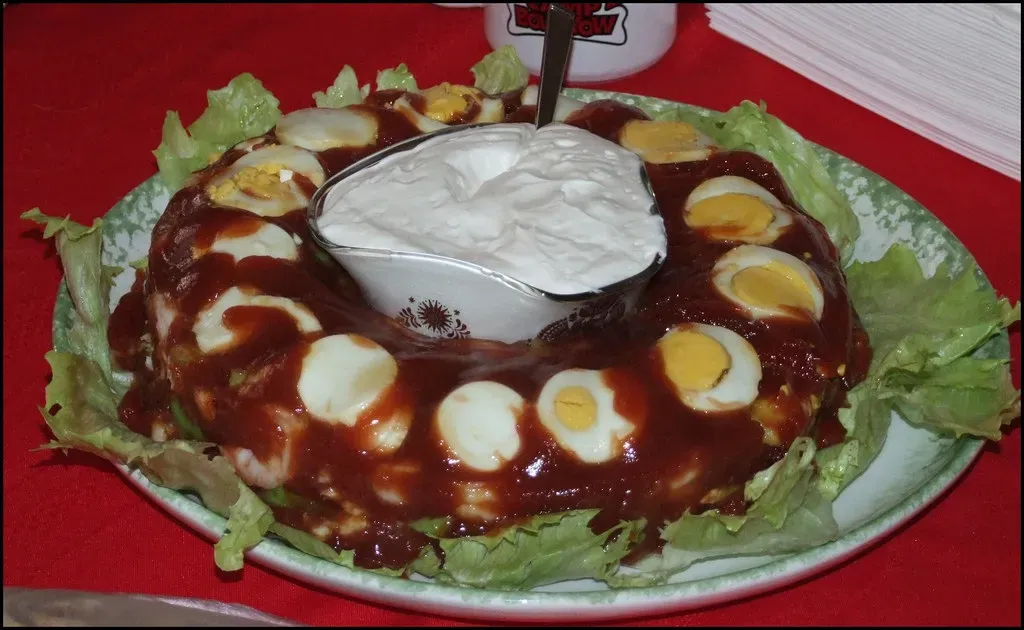
This old fashioned tomato aspic is a classic dish that was served at so many luncheons back in the day. Picture a shimmering, ruby-red gelatin mold filled with tomato juice, celery, and seasonings, unmolded onto a bed of crisp lettuce leaves with a dollop of mayonnaise on the side. Sounds weird? Maybe. This ruby-red, glossy jelly usually made in a beautiful mold stands out from every other dish on the dinner table and tastes a bit like a Bloody Mary cocktail.
The earliest known mention of the salad is in the 1867 cookbook Dixie Cookery by Maria Massey Barringer, so it's been around for more than a century and a half. By the late 1950s and early 1960s, tomato aspic paired with shrimp salad was something you would find at most gatherings, especially ladies' luncheons. The dish practically disappeared from Southern tables by the end of the twentieth century, though it still pops up occasionally at nostalgic dinner parties. Let's be real, savory gelatin just doesn't have the same appeal it once did.
Ambrosia Salad
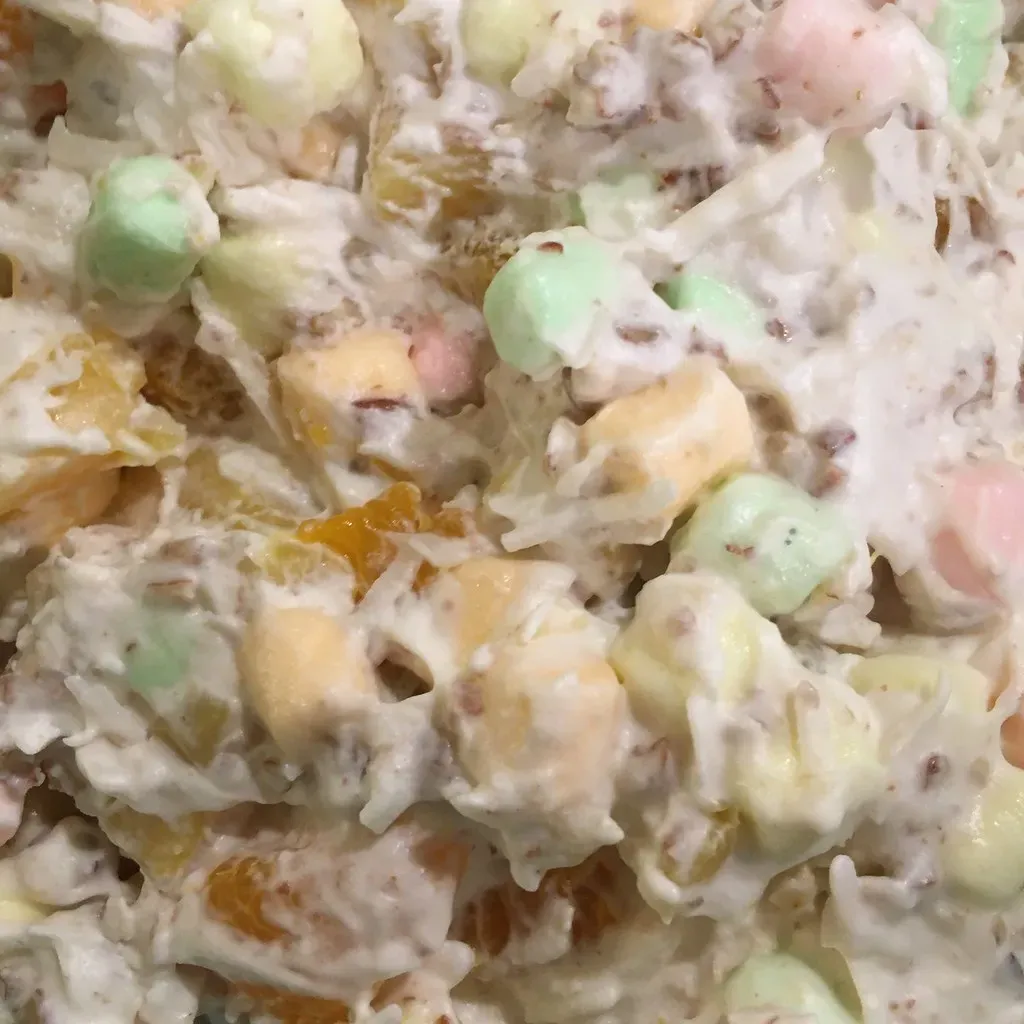
Don't let the word "salad" fool you. This traditional dish doesn't contain any lettuce or veggies and is typically made with Cool Whip, canned fruit, and shredded coconut, topped with maraschino cherries. Ambrosia was first officially mentioned in 1867 in the book Dixie Cookery by Maria Massey Barringer, the same cookbook that documented tomato aspic.
The first reported recipe for ambrosia contained just three ingredients: Oranges with the pulp removed, fresh grated coconut, and sugar. In the late 1800s everyone in the country was enjoying the sweet coconut and orange salad because it was the perfect way to enjoy the recent accessibility of tropical fruits, and after the Civil War, orange production went up 400%. Though still clinging to life at holiday potlucks, ambrosia has lost much of its former glory. Younger generations don't quite understand why anyone would call this marshmallow-laden concoction a salad.
Chess Pie
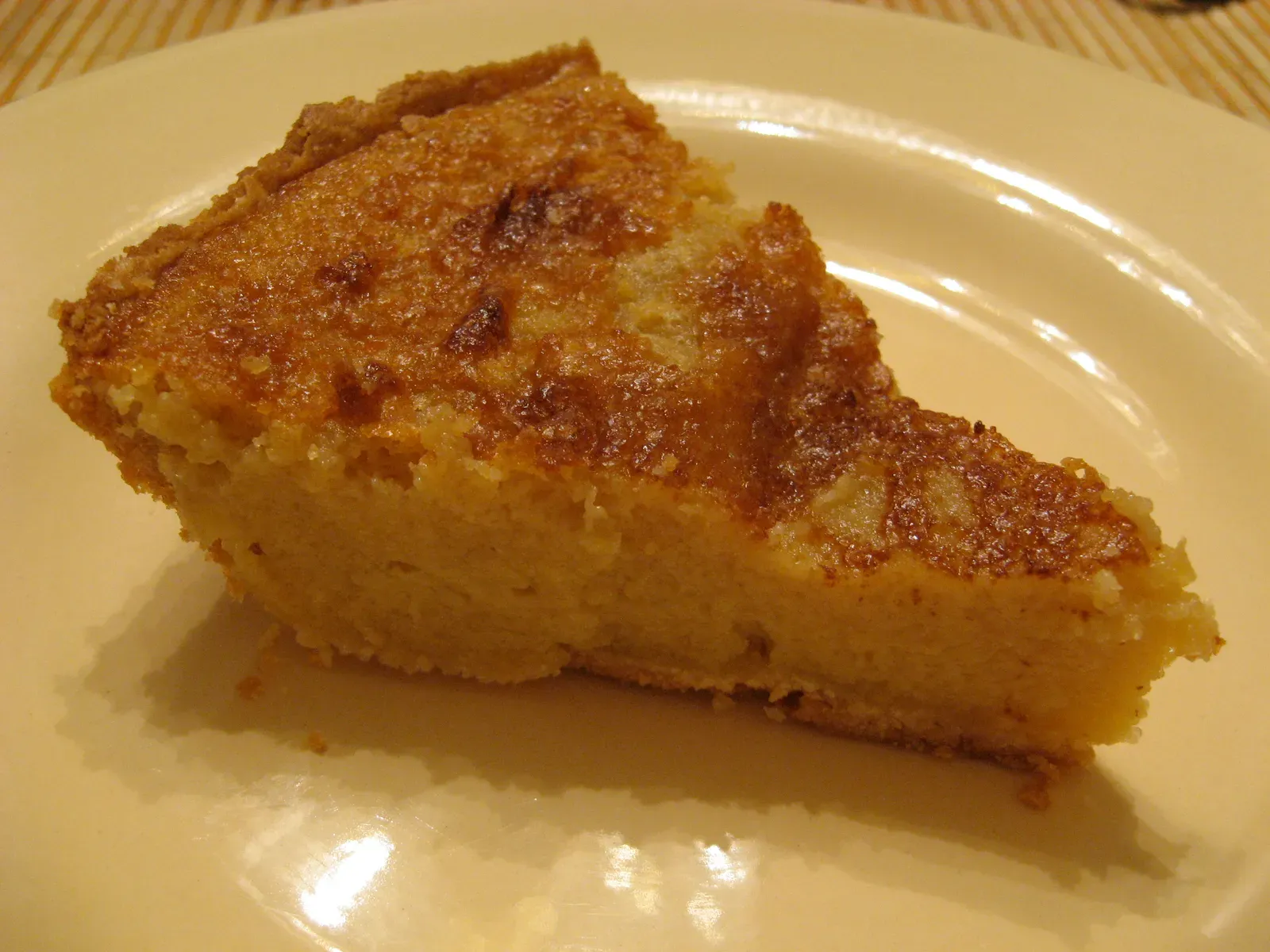
Chess pie was a pantry pie that could be made from staples most cooks kept on hand, and that didn't cost much in time or money. It's a dessert with a filling composed mainly of flour, butter, sugar, eggs, and sometimes milk, characteristic of Southern United States cuisine. Honestly, it's shockingly sweet in the best possible way.
Chess pie is the South's most searched-for Thanksgiving pie, yet many younger Southerners have never tasted one. While it may not be as popular as it once was, chess pie represents Southern food traditions handed down through generations, and with its ingredients including plenty of sugar, it has a long shelf life. It's the kind of dessert that tells you exactly what the South was working with, butter, eggs, and enough sugar to last through lean times without refrigeration.
Chicken Bog
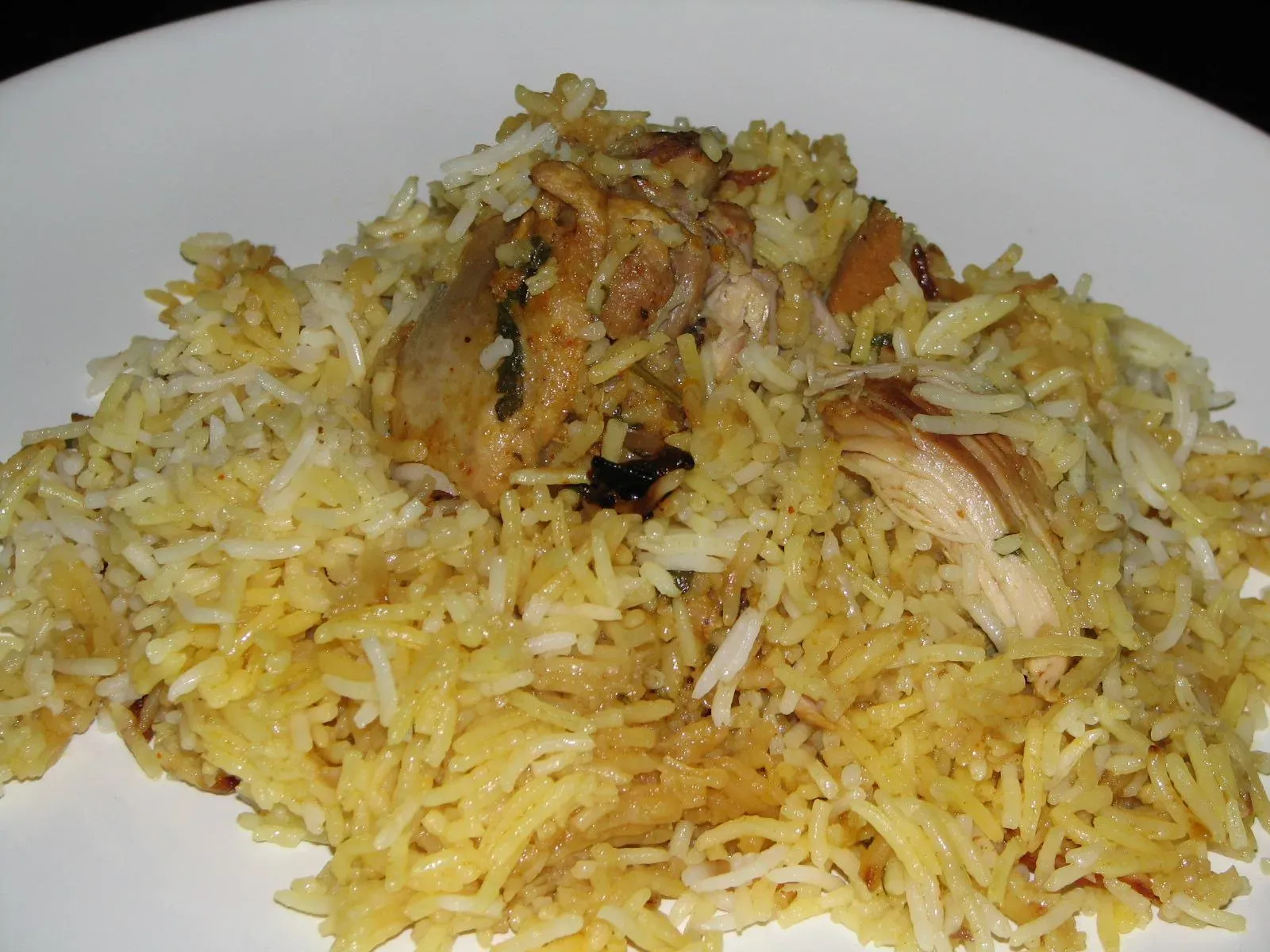
Despite its name, chicken bog is neither muddy nor swampy and is a beloved Southern comfort food made with chicken, rice, and smoked sausage, originating in the Lowcountry and Pee Dee regions of South Carolina. It's a one-pot meal where everything simmers together until the flavors meld into something rich and savory. Think of it like a Southern cousin to jambalaya, but with its own distinct personality.
Chicken bog is best-known in South Carolina's Horry County, which includes Myrtle Beach, and each year locals and visitors gather to celebrate the pilaf-style dish at the Loris Bog-Off Festival, launched in 1980 as a local chicken bog cooking competition. The dish has faded from most restaurant menus and home kitchens outside of its South Carolina stronghold, though die-hard fans still keep the tradition alive.
Hoppin' John
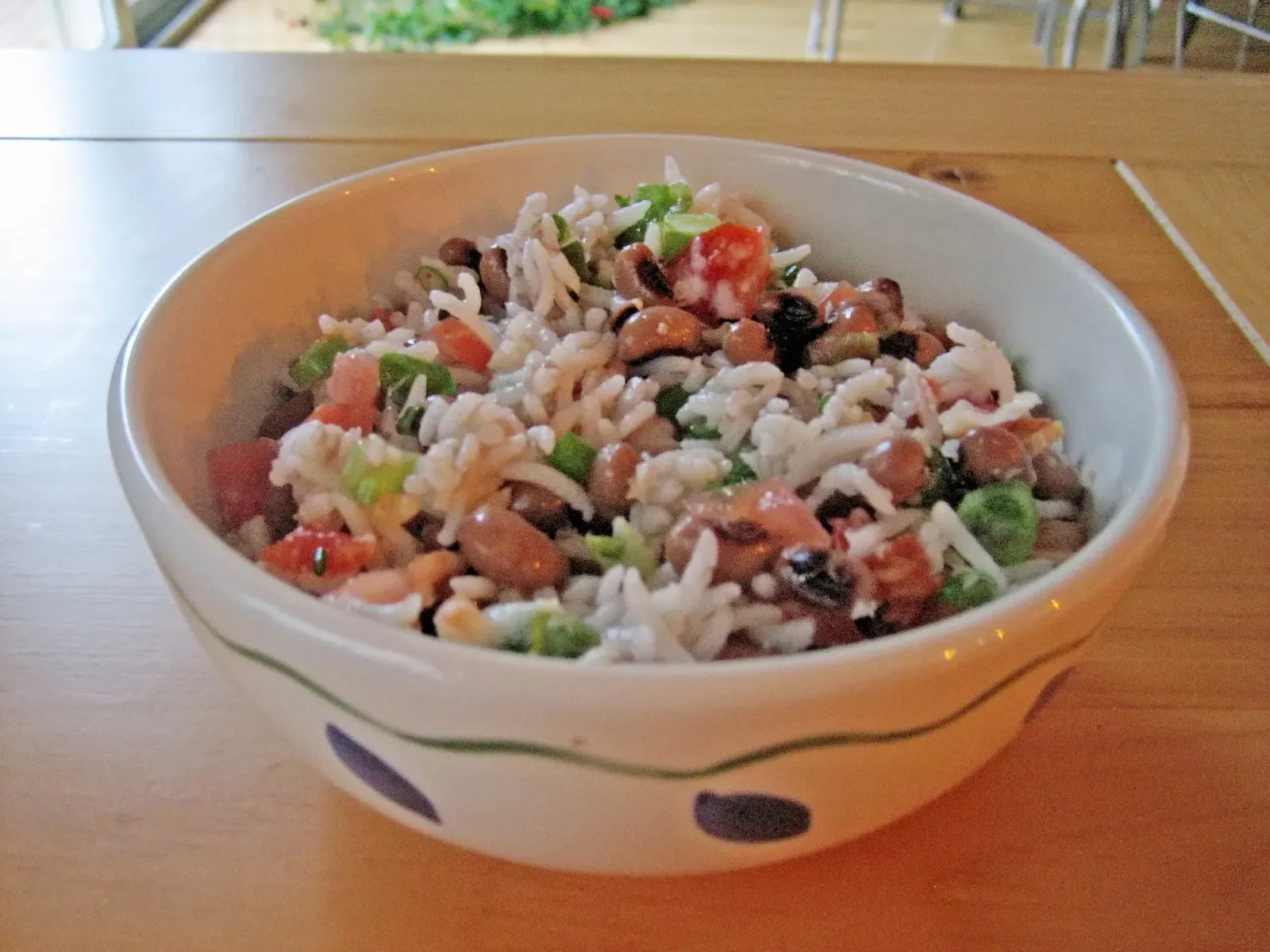
Hoppin' John is a Southern dish with roots in African culinary traditions, introduced to the American South by enslaved Africans, and originated as a one-pot meal of rice, black-eyed peas, and pork. The dish was a popular mainstay of Gullah Geechee cuisine that originated in the Lowcountry of South Carolina, and it didn't take long for this dish to be adopted by broader Southern society, as evidenced by its inclusion in Sarah Rutledge's 1847 cookbook, Carolina Housewife.
Traditionally eaten on New Year's Day, black-eyed peas are believed to bring good luck and prosperity for the year ahead, a custom that dates back to the Civil War and Reconstruction era. While still served on New Year's in some households, Hoppin' John has largely disappeared from everyday Southern cooking. Many families have simplified the tradition or abandoned it altogether.
Red-Eye Gravy
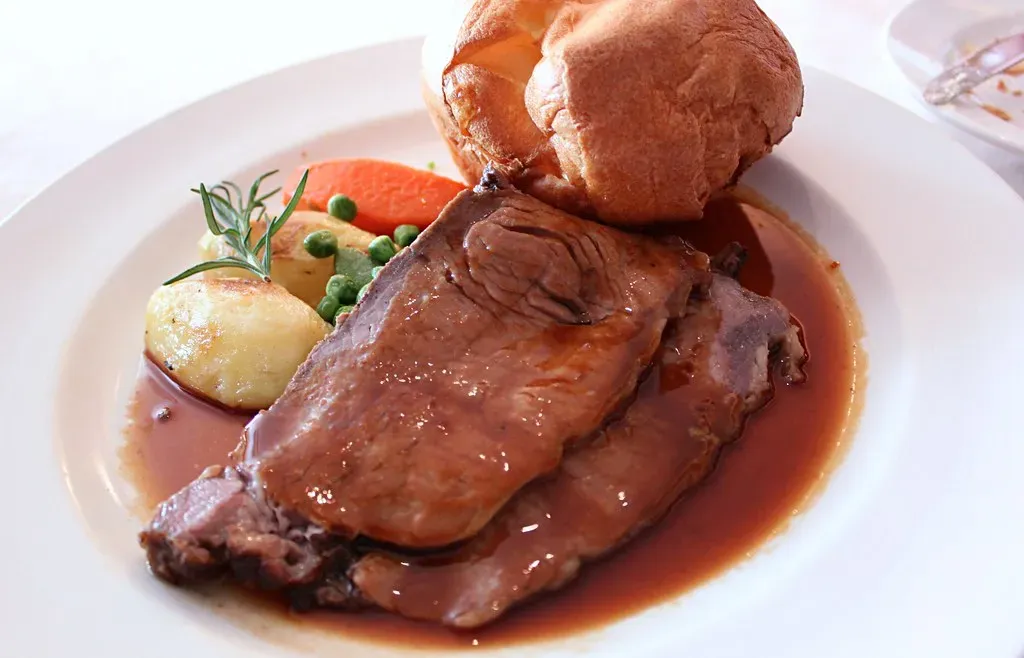
Here's the thing about red-eye gravy: it's made with just two ingredients, country ham drippings and black coffee. Red-eye gravy is made with black coffee and meat drippings, usually ham, typically served with country ham and grits. The result is this thin, slightly bitter, deeply savory sauce that older Southerners remember ladled over biscuits or grits for breakfast.
It's a dish born from necessity and resourcefulness, using what was already in the skillet and the coffeepot. Red-eye gravy has all but vanished from modern breakfast tables, partly because fewer people cook country ham at home anymore and partly because the combination of coffee and pork fat just sounds bizarre to anyone who didn't grow up with it. I know it sounds crazy, but trust the grandmas on this one.
Chitterlings
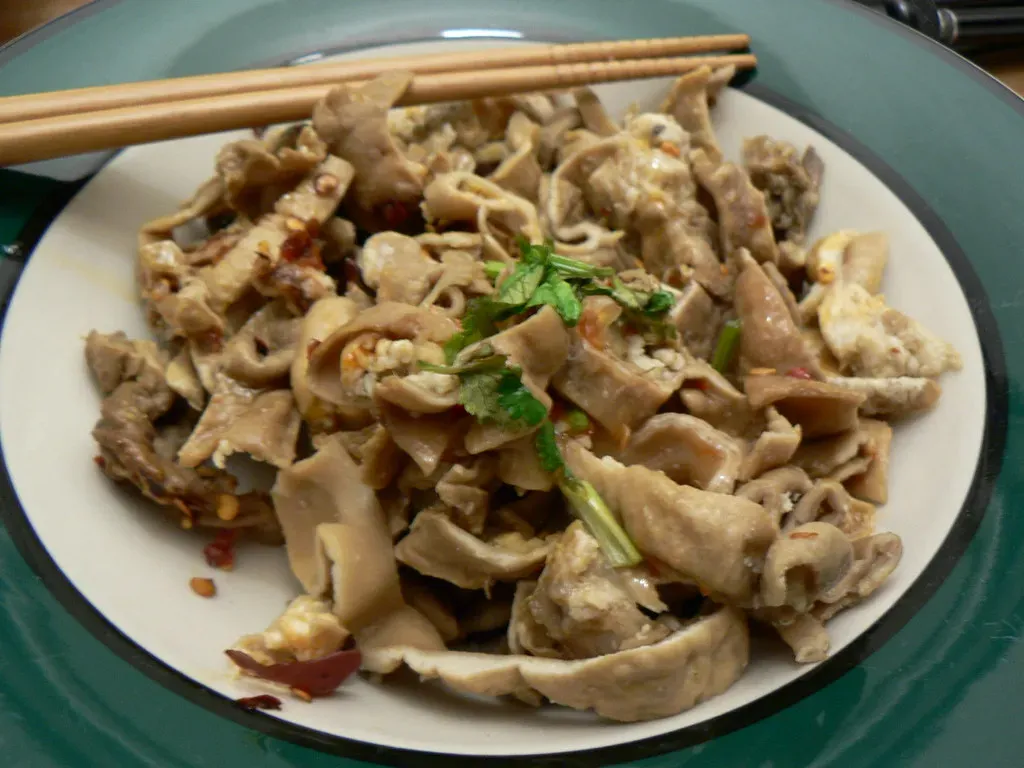
Chitterlings, affectionately known as Chitlins, are a dish that requires an acquired taste and a strong stomach, as these cleaned and prepared hog intestines are slow-cooked to perfection, often enjoyed with a splash of vinegar and hot sauce, and while the aroma may be challenging for some, the unique, rich flavor makes it a Southern delicacy. Let's not sugarcoat it: this is one of those dishes that divides people instantly.
Chitterlings represent a profound piece of African American culinary history, born from making use of every part of the animal during slavery and Reconstruction. The preparation is labor intensive and the smell during cooking is, well, memorable. For these reasons and shifting food preferences, chitlins have mostly retreated to specialty soul food restaurants and the kitchens of older generations who remember them as a cherished tradition.
Tomato Pie
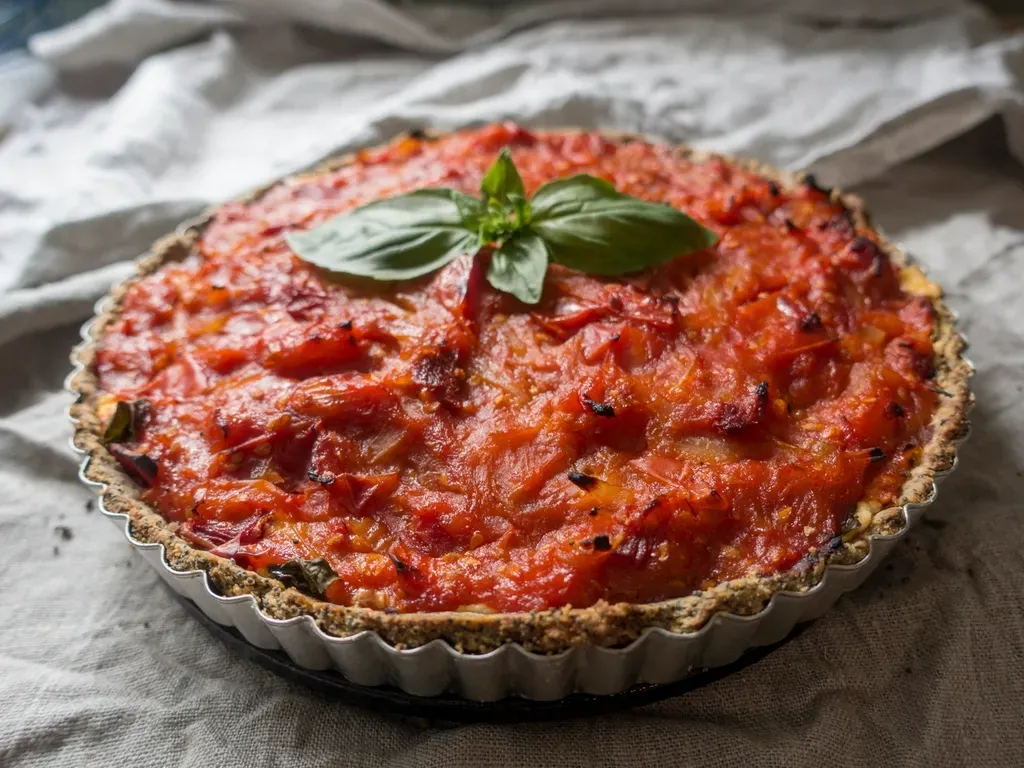
This is a classic southern food dish, sometimes called Kentucky Pie or Alabama Pie, and it screams summer goodness, perfect for those late summer ripe tomatoes and fresh garden basil. Southern Tomato Pie is a savory dish that typically consists of a pie crust filled with layers of fresh tomatoes, cheese, and herbs, with the filling often including a combination of mayonnaise and cheese, which is spread on top before baking, then baked until the crust is golden and the filling is bubbly.
Tomato pie is such a beloved dish in the South that it shows up on many lists of foods that are iconic or well known from the Southern states, yet it's increasingly rare to find it on dinner tables. The rise of convenience foods and year-round tomatoes (which, honestly, taste like cardboard) have diminished the appeal of this peak-season dish. It takes effort, fresh ingredients, and patience, commodities that feel scarce these days.
Chow Chow
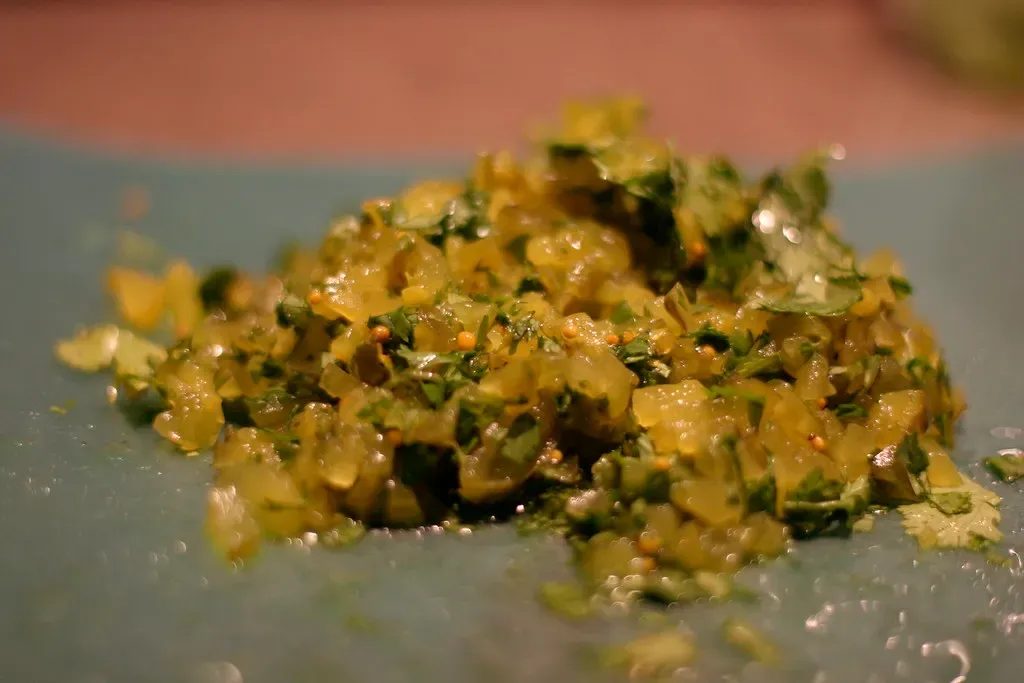
For many families, a jar of chow chow is a staple whenever peas or beans are served, and with its bold flavors and crunchy texture, chow chow sure perks up a humble meal. This is a tangy, slightly sweet pickled vegetable relish that was traditionally made from whatever end-of-season vegetables were left in the garden. Chow chow likely started as a great way to use up the ragtag assortment of vegetables from the end-of-season garden, and when there wasn't enough of any one thing to put up, resourceful cooks combined them to make batches of chow chow.
One of the defining flavors in Southern cuisine is vinegar, often delivered in tangy, judiciously spiced, and slightly sweetened pickled vegetable relishes. Fewer people garden today and even fewer people pickle and preserve. Chow chow still exists at farmers' markets and in some country stores, yet it's disappeared from most family tables, replaced by store-bought condiments that just don't hit the same.



Leave a Reply