
Food trends move fast. One month something is all over your social feed, the next it's sitting in the clearance bin at a discount store. We are firmly in 2026 now, and the verdict is rolling in on a whole wave of foods that had enormous expectations but are leaving real people feeling... underwhelmed. Honestly, some of these will surprise you.
From viral chocolate bars to protein-packed everything to faux luxury bites, the gap between hype and reality has never felt wider. If 2024 was about price shock and 2025 about reformulation fatigue, 2026 is about appetite itself. So what exactly are people side-eyeing this year? Let's dive in.
1. Dubai Chocolate: The Viral Bar That Couldn't Live Up to Its Own Legend

Few foods have crashed harder from the heights of hype than Dubai chocolate. Invented in 2021 to satisfy a pregnancy craving for knafeh and pistachio, the original Dubai Chocolate bar was created by FIX Dessert Chocolatier. The bar exploded in popularity after a TikTok video posted in December 2023 went viral, racking up over 125 million views and sending global fans into a frenzy. That's an insane launch story. The problem came later.
Most "Dubai chocolate" sold today isn't made in Dubai. It's produced everywhere from Turkey to Greece to random factories in the U.S., with zero connection to the place beyond the name. People are paying up to $50 for what one Redditor called "cheap chocolate with some pistachios wrapped up." The knock-off flood ruined the experience for many.
Throughout Europe and beyond, supermarkets, souvenir shops, and tourist hotspots stock chocolate bars bearing Dubai-themed branding. Many are cheaply made, exorbitantly priced and disappointing in flavour. Claims of pistachio or kunafa are often exaggerated, with some bars containing only trace amounts or artificial flavouring. A German consumer study found that five out of eight tested samples contained fats other than cocoa butter, and five samples were "unfit for consumption" due to contamination, containing excessive levels of a substance considered a probable carcinogen resulting from the use of low-quality palm oil.
By the time home cooks started toasting their own kataifi and mixing it into jarred pistachio cream, the trend was already starting to lose its sweetness. You may still see Dubai chocolate cluttering your feed and your favorite shops, but don't expect the trendy thrill of this played-out confection to spark the same joy in 2026 as it did in 2025.
2. Freeze-Dried Candy: The Crunchy Craze That's Already Fading

Freeze-dried candy had its moment in the sun, and it was glorious for about five minutes. Packs of freeze-dried candy are already showing up in clearance sections by the bushel. Even as M&Ms readies its own take on the trend, these crunchy bites are fading into the background. That's never a good sign for a food trend's staying power.
One reviewer who tried freeze-dried Sour Skittles a half-dozen times found that every single bag was seriously lacking the signature crunchy texture they claimed. Some bags had been properly dehydrated throughout about half of the pieces, others were almost entirely chewy. Every purchase was very disappointing. Inconsistency is a trend killer, full stop.
Freeze-dried candies are expected to continue on a downward path in 2026, doomed to become a bygone fad that shows up in 20 years as part of a nostalgia movement. To make things worse, in September 2025, the FDA issued a notice about two types of Tru Fru freeze-dried strawberry products facing a voluntary recall due to "the potential presence of metal in the product." That kind of news does not help public confidence.
3. Truffle Oil: A Decades-Long Deception Finally Under Fire

Here's the thing about truffle oil: it has been riding a luxury reputation that was never truly earned. That truffle oil in your pantry might make you feel like a gourmet chef, but it's just a culinary fraud. Most commercial truffle oils contain a synthetic chemical called 2,4-dithiapentane, which only mimics the smell of truffles, not the actual ones themselves. It also easily overwhelms the dish by masking the flavors rather than enhancing the ingredients.
When the scent hits the table before the server, something isn't right. Mostly made from cheap oils and synthetic flavoring, truffle oil has little to do with real truffles and is best left to chain brewpubs and carnival food trucks. Harsh? Maybe. Accurate? Largely, yes.
Flavored oils were a specific food item that readers widely agreed was overhyped. Readers flatly stated that "truffle oil is for charging people more for fries that taste weird." Combine that backlash with growing consumer awareness and rising food costs, and truffle oil's era of unchallenged menu dominance looks shakier than ever in 2026.
4. Protein-Packed Everything: The Obsession That's Starting to Backfire

Protein took over the food world in 2025. The protein obsession continued throughout 2025, spilling far beyond shakes and bars into everyday foods and drinks. Viral trends promoted protein lattes, clear protein drinks and even Parmesan cheese wedges as cleaner whole-food alternatives to bars and powders, even as dietitians cautioned the craze is often driven by marketing and is easy to take too far.
The global protein supplement market surged to as much as $30 billion in 2025, according to some industry analyses. That's an enormous industry, and with money that big at stake, manufacturers are cramming protein into places it simply doesn't belong. Conversations among dietitians and nutrition professionals often center on whether protein has reached saturation. Are we adding it to foods that already contain enough protein? Are we creating texture problems by fortifying products with pea protein and other supplements that make food grainy and less enjoyable?
Protein can introduce bitterness, fiber can create dryness, and sugar reduction can leave lingering off-notes. While health benefits may drive trial, taste determines loyalty. In other words, no matter how many grams are on the label, if it tastes like cardboard, consumers will walk away. And they increasingly are.
5. Faux "Caviar": Luxury Staging Without the Real Thing

Caviar became everywhere in 2025, and I mean everywhere. Breakout trends including caviar, particularly atop chicken nuggets as made famous by Simon Kim's famed COQODAQ dish, were among the top trending queries across Google in 2025. Sounds incredible in theory. The reality is much murkier.
Caviar has become another faux luxury that's gotten out of hand. When you see caviar piled generously onto a plate for less than $60 an ounce, you're almost certainly eating fish roe, not true caviar. It's the same sleight of hand as the truffle oil trick, just with fancier fish eggs on top. Think of it like buying a designer knockoff bag at a market stall and calling it couture.
Heading into 2026, the appetite for social-media-hyped foods appears to be cooling, with diners gravitating instead toward recognizable ingredients and flavors that don't require an explainer. Caviar-branded menu items are now drawing eye-rolls just as often as they draw Instagram clicks, and that shift in consumer mood is real.
6. Pickle-Flavored Everything: A Trend That Overstayed Its Welcome
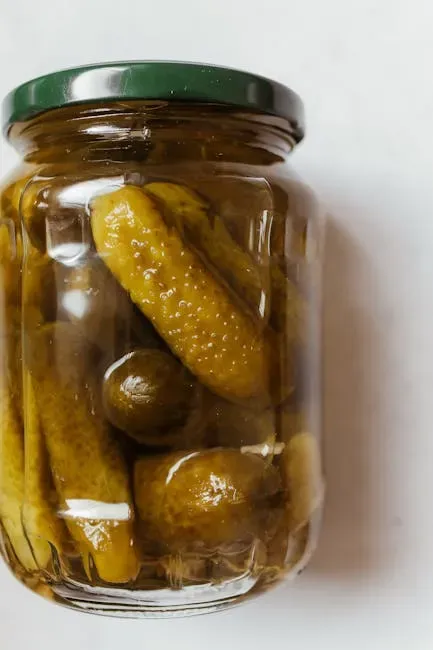
Pickles are great. Nobody is arguing otherwise. The problem is that the pickle flavor craze stopped being about pickles a long time ago and became about slapping the word "pickle" on literally any product that could hold a label. We don't need pickled lemonade, Warheads sour pickles, pickle gum or pickle-flavored potato chips. At some point, enough is enough.
The pickle craze is following the same trajectory as the early-2000s bacon boom: fun at first, then irritating, then exhausting. That comparison is almost painfully accurate for anyone who lived through bacon-flavored everything and emerged from the other side slightly traumatized. The pickle craze is following that same arc. At some point, you stop celebrating a good thing and start ruining it by forcing it into places it doesn't belong.
Food Business News data found that even among Gen Z, the most flavor-adventurous generation, a portion of respondents in flavor polls said pickles were "overrated," claiming "the flavor hasn't yet peaked." When your core fan base starts hedging, the writing is on the wall.
7. Luxury Japanese Strawberries: $20 a Berry and the Backlash Was Inevitable
Let's be real: a strawberry that costs twenty dollars is not a food item. It's a performance. A Los Angeles grocery store stunned shoppers by selling a single strawberry for $19.99. Imported from Japan, the Elly Amai strawberry is packaged in its own display case. Influencers praised its flavor, while critics dismissed the price as a "social experiment."
The backlash was predictable and swift. Luxury Japanese strawberries drew both praise and backlash after selling for nearly $20 each. In a year where food prices were already stinging, food prices in January 2026 were 2.9 percent higher than in January 2025, the idea of spending that on a single piece of fruit felt tone-deaf to a huge portion of the population.
Honestly, it's a fascinating cultural artifact of the moment. A beautiful strawberry, perfectly shaped, packaged like a jewel, carrying a price point designed to signal status. Food prices overall increased roughly 3 percent in 2025, reflecting increases in both food at home and food away from home. Against that backdrop, the twenty-dollar berry was always going to divide opinion sharply, and it did.
8. Social Media Food Gimmicks: The "Instagrammable" Plate That Tastes Like Nothing

This might be the broadest category on the list, but it is arguably the most significant. The entire ecosystem of foods designed primarily to look great in photos rather than to taste great in mouths has hit a wall. Salt & Straw's viral Tacolate, a Taco Bell collaboration pairing cinnamon ancho chile ice cream with a chocolate-coated waffle-cone taco shell and mango jalapeño sauce, was more Franken-creation than revelation. Sonic Drive-In's Unicorn Dream slush, a cotton-candy concoction crowned with shimmering sugar crystals, whipped cream and popping boba, pushed things firmly into the absurd.
Massive milkshakes and cream-topped coffees attract views but often overwhelm with sugar and artificial flavor. When the drink's toppings overshadow the drink itself, the balance is lost, and it just becomes a high-sugar dessert. Consumers are waking up to this pattern. Think of it like going to a concert where the light show is spectacular but the band can't actually play.
Circana's 2025 Innovation Pacesetters report warns that when products fail to meet expectations, consumers simply stop buying. Innovation is harder to land now. Shoppers are trying fewer new products, abandoning disappointments faster, and quietly opting out when something doesn't live up to its promise. The gimmick era is not ending dramatically. It's simply being quietly ghosted by a more discerning public.




Leave a Reply