
You spent a good chunk of money on it. You researched it, read reviews, maybe even squeezed the cushion in the store aisle. You brought that plush, beautifully padded dog bed home, set it down with a little hope in your heart - and your dog walked right past it to lie down on the cold tile floor. Sound familiar? If it does, you are absolutely not alone. This is one of the most common (and quietly maddening) experiences shared by dog owners everywhere. The reasons behind this baffling behavior, though, are far more fascinating than you might expect. Your dog isn't being ungrateful. There's real science here, rooted in instinct, biology, and even the chemistry of that bed you bought. Let's dive in.
1. Your Dog Is Naturally Built to Regulate Body Heat - and Your Bed Gets in the Way
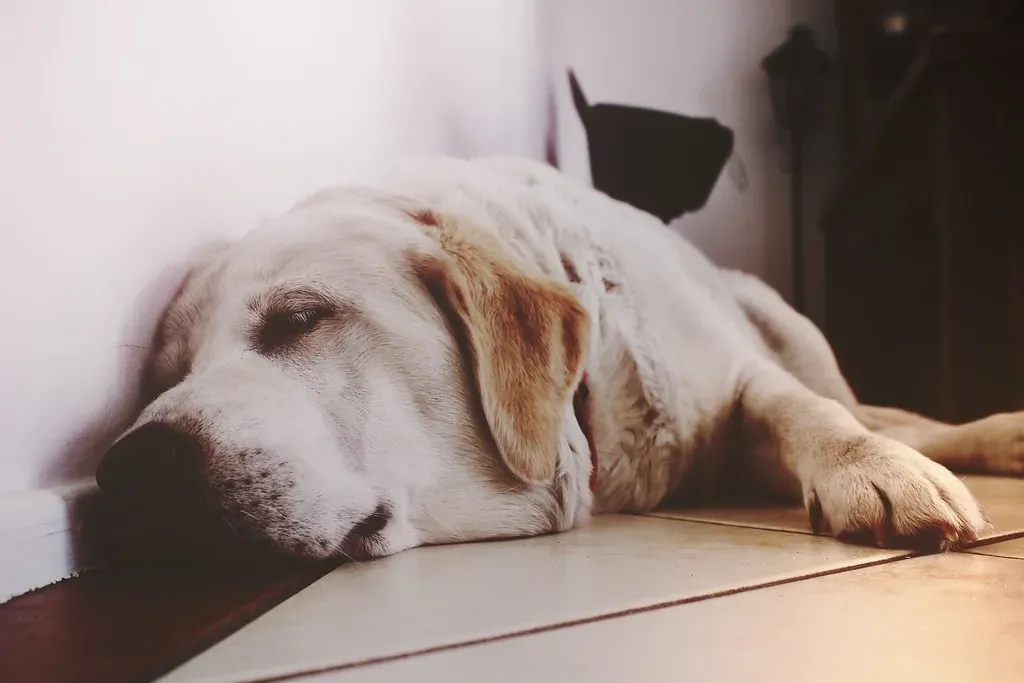
Here's something that genuinely surprised me when I first looked into it: dogs maintain a resting body temperature of 101 to 102.5°F, and their primary cooling mechanisms are limited to panting and minor sweat gland activity in their paw pads. That's already significantly warmer than a human's baseline. So when your dog crawls onto a thick, heat-trapping bed, they're essentially wrapping themselves in an insulated cocoon they never asked for.
Unlike humans, who can shed layers, sweat across their entire body, and adjust their sleeping position freely, dogs depend almost entirely on their environment, including their sleeping surface, to help manage heat during rest. The material inside your dog's bed is the single most controllable temperature variable in their sleep environment. Materials that trap heat force dogs into a cycle of overheating, waking, repositioning, cooling, returning, and never achieving the deep, restorative sleep that dogs need for health and wellbeing.
Lying on cool surfaces allows the body to release heat through direct contact. This is why dogs often lie on tiles or shade during hot weather. Think of it like this: your dog choosing the cold tile is less of a rejection and more of a smart, instinct-driven decision. The floor is basically their air conditioning unit.
Dogs, especially during the summer months, find cold wooden floorboards or chilly tiles far more appealing than a fleece-lined bed. For animals that can't sweat, they have to take every measure to keep cool that they can. Honestly, when you put it that way, the floor makes total sense.
2. Memory Foam and Plush Beds Can Actually Make Things Worse
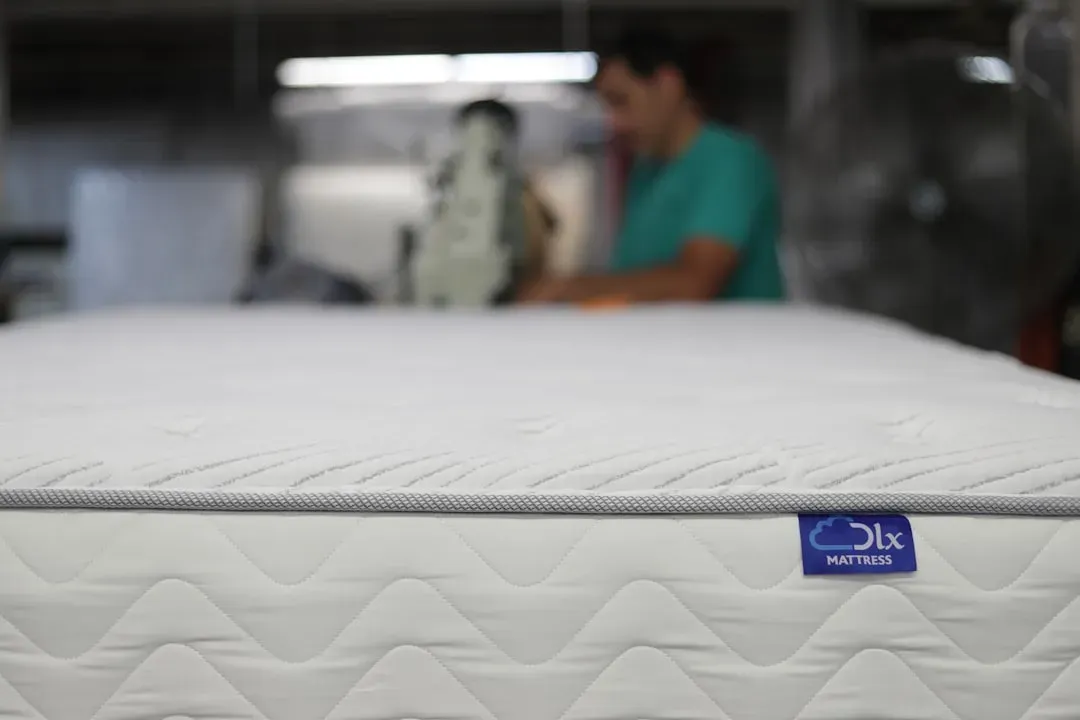
You might have spent extra on a memory foam bed specifically because it seemed luxurious and supportive. The thing is, memory foam has a very real thermal problem. Memory foam is a closed-cell polyurethane material. The same property that allows it to conform to body shape - the cells compressing and sealing under pressure - also traps air and prevents heat from escaping. Research on human memory foam mattresses has documented surface temperature increases of 3 to 5°F within 30 minutes of contact. For dogs, who start at a higher body temperature and have fewer cooling options, this heat trap is amplified.
Memory foam's closed-cell structure traps body heat, with surface temperatures rising 3 to 5°F within 30 minutes. Dogs on memory foam reposition more frequently and are more likely to abandon the bed for cooler surfaces. So your dog isn't being picky. They're actually responding to a measurable physical discomfort. The bed is getting hot fast, and the floor stays consistently cool.
A material that traps heat forces the dog into repeated compensatory behaviors - panting, position changes, or abandoning the bed entirely. Each of these disrupts the sleep cycle and prevents deep rest. It's a bit like trying to sleep on a warm electric blanket in July. You'd roll off too.
3. The Bed Simply Doesn't Fit How Your Dog Prefers to Sleep

Dogs are surprisingly particular about their sleep style, and most owners don't account for it when buying a bed. Reasons your dog may prefer sleeping on the floor include the bed not matching their preferred sleeping style. Dogs that like to sleep stretched out generally prefer floor pillows, while dogs that curl up to sleep usually like bolsters or donut-shaped beds. If your dog is a sprawler and you bought a round nest bed, there's a mismatch from the start.
Some dogs just like to stretch out, and a bed with raised edges or a smaller surface might feel too restrictive. The floor, on the other hand, offers unlimited sprawl territory with zero judgment. It's the great open prairie of sleep surfaces, and certain dogs love exactly that about it.
Dogs are not naturally inclined to sleep in elevated positions, so if your bed is too high or has a pillow that your dog can't get comfortable on, it's no wonder why they would prefer the floor. I think a lot of us pick beds that look good to us, not beds that actually make sense for the way our specific dog sleeps. That's a genuinely easy mistake to make.
Your dog's bed preference can be influenced by several factors, including their age, size, health, and sleeping style. A giant breed sprawling like a lion needs something quite different from a tiny terrier who curls into a tight donut. Size matters more than most people realize.
4. The Smell of That New Bed Is Driving Them Away
This one is easy to overlook because we barely notice it ourselves. But your dog absolutely does. Things like orthopedic dog beds made from memory foam and waterproof fabrics often have a chemical scent to them at first. The difference in scent sensitivity between humans and dogs is notable. Try airing out that new bed for 24 hours before you worry that your dog is completely and eternally rejecting it.
Many traditional dog beds are made with materials that contain toxic chemicals, synthetic fabrics, and other off-gassing chemicals that can harm your dog over time. To a dog whose sense of smell is estimated to be tens of thousands of times more sensitive than ours, a brand-new synthetic bed can smell overwhelming, even alarming. The floor, by contrast, smells neutral and familiar.
Conventional dog beds often contain synthetic materials treated with flame retardants, pesticides, or other harmful chemicals. These can cause allergic reactions, respiratory issues, or long-term health risks for dogs. It's hard to say for sure just how much the chemical smell specifically drives the floor preference, but given what we know about canine olfaction, it's more than a passing factor. The floor quite literally smells better to your dog.
5. Ancient Guarding Instincts Tell Them to Stay Alert

Your dog's sleeping location isn't just about comfort. It's also about strategy, whether they consciously know it or not. A dog with strong protective instincts may prefer to sleep on a hard surface because it allows them to sense strange footsteps in the home more easily. A thick, padded bed absorbs vibrations. The hard floor transmits them. For a dog who feels responsible for guarding the home, that difference is enormous.
Doors leak information. Scents, vibrations, and sounds drift in from outside. For dogs, this is constant stimulation. The door keeps them connected to the wider world. Many dogs choose to sleep on the hard floor near entry points, like front doors or hallways, specifically because it puts them in the best position to detect incoming threats.
Dogs often sleep by the door due to a deep-rooted protective instinct. They position themselves strategically to guard their human companions, acting as the first line of defense. Dogs exhibit guarding behavior as part of their natural inclinations. A door represents a boundary to the outside world, and by sleeping there, the dog is taking a protective stance. A plush bed in the corner of a bedroom doesn't offer any of that strategic advantage. The floor near the door, though? That's prime real estate for a dog who takes their guarding duties seriously.
6. Habit and Routine Are Stronger Than You Think
For one reason or another, your dog might not know that they are supposed to sleep in the dog bed. Dogs are creatures of habit, and if they are used to the floor, they will sleep on the floor. This is the reason that often gets overlooked when people spend money on a new bed and expect an immediate switch. If your dog has slept on tile or hardwood for months or years, that surface is simply home to them now.
Some dogs stick to what they know, and if they've always snoozed on a hard surface, it can become their go-to spot. Even with a cosy bed available, habit and routine can be hard to shake. It's a bit like when a person has slept on a firm mattress their whole life and then someone surprises them with a water bed. The novelty isn't always welcome, no matter how expensive the gesture.
Many dogs choose to sleep where their humans are, preferring to be nearby rather than on a bed in a different room. Sleeping on the floor could also be a way for them to watch over their family or respond quickly to movement. The floor near you, in other words, is more appealing to your dog than the perfect bed placed too far away. Proximity to you often beats luxury every single time.
A dog that sleeps on the floor instead of their bed is telling you something specific about their comfort. They're not being stubborn, difficult, or ungrateful. Floor sleeping in dogs is a thermoregulatory and sensory-driven behavior rooted in a dog's instinctive need to find the sleeping surface that best manages their body temperature, provides the right firmness for their joints, and doesn't overwhelm their extraordinarily sensitive nose with chemical odors. When a dog rejects a bed for the floor, the bed is the problem, not the dog.
What You Can Actually Do About It
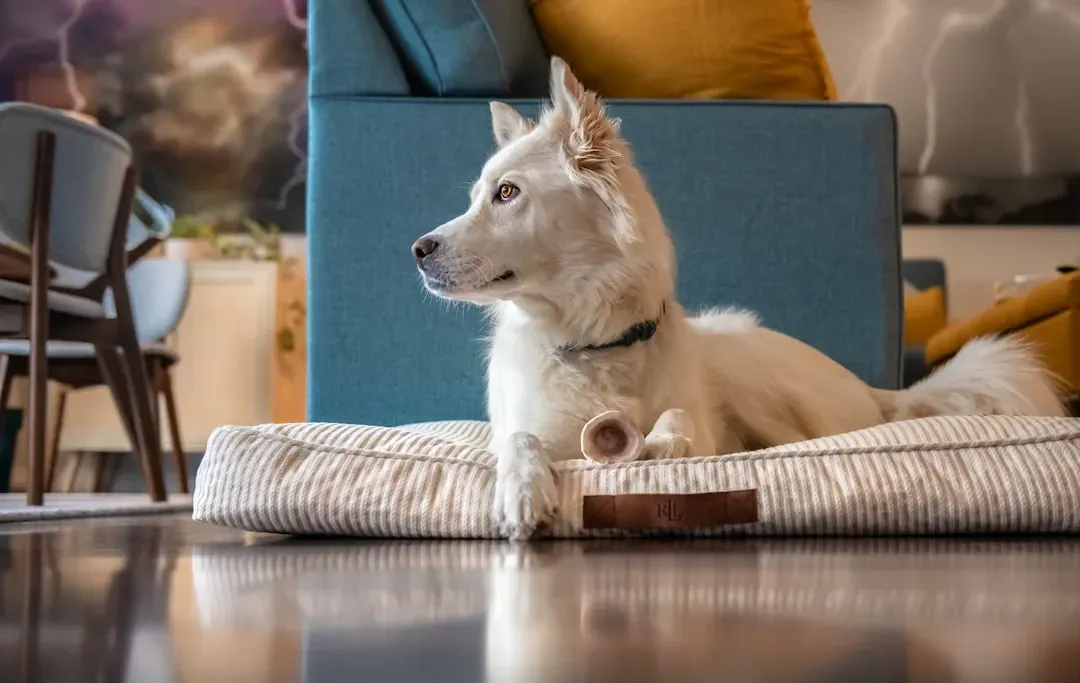
The fix isn't about forcing your dog onto the bed. It's about understanding what the floor is giving them and trying to replicate it. Indoors, many dogs pick the coolest spot in the house instinctively. If that spot is hard flooring, you can often "bring the bed to the preference" by placing an elevated orthopedic bed near that area, instead of trying to convince the dog to lie somewhere warmer. Move the bed to where your dog already chooses to sleep, not to where it looks best in the room.
Pay attention to where and how your dog sleeps, as small changes, like moving their bed or switching to a different material, might be exactly what they're after. The goal is to make their bed the best option without forcing them into it. That's genuinely good advice. It's not a battle. It's a negotiation, and your dog already knows what they want.
The next time your dog ignores that expensive bed and plops down on the kitchen floor, don't take it personally. They're following millions of years of instinct, biology, and deeply personal preference. The floor isn't just a consolation prize to your dog. In many cases, it's the whole point. What do you think - does your dog do this too? Drop your experience in the comments.




Leave a Reply