
Most of us have stood in front of the fridge at some point, holding a carton of eggs or a container of yogurt, trying to decode a tiny printed date and wondering: is this still okay to eat? It feels like it should be a simple question. Turns out, it really isn't.
The labels stamped onto our food packaging are a source of daily confusion for millions of people. The difference between "Best By," "Use By," and "Sell By" carries real consequences - for our wallets, our health, and frankly, for the planet. Let's dive in.
Quality vs. Safety: The Core Distinction Nobody Taught You
Here's the thing that most people genuinely don't know: the dates you see on almost all food packaging are about quality, not safety. According to the USDA's Food Safety and Inspection Service, manufacturers put "best by" or "best if used by" dates on their products to let retail stores and consumers know how long their products are expected to maintain their best taste and texture. That's it. It has nothing to do with whether the food will make you sick.
In simple terms: "Best By" means quality, and "Use By" means safety. Those are technically two very different things, yet most shoppers treat every date stamp on every package like it's a hard deadline. Many consumers believe date labels indicate when packaged foods are no longer safe to eat, but that's not correct. Donald Schaffner, a food safety expert at Rutgers University, says those dates are "really there for food quality" and not for safety.
What "Best By" Actually Means on Your Food

A "Best By" or "Best If Used By" label is essentially a manufacturer's estimate of peak freshness. A "Best if Used By/Before" date indicates when a product will be of best flavor or quality, and it is not a purchase or safety date. Think of it like a recommendation, similar to how your doctor might suggest getting a flu shot before flu season really kicks in. It's helpful guidance, not a command.
Foods not exhibiting signs of spoilage should be wholesome and may be sold, purchased, donated and consumed beyond the labeled "Best if Used By" date. With the exception of infant formula, if the date passes during home storage, a product should still be safe and wholesome if handled properly until the time spoilage is evident. So that box of crackers or can of tomatoes sitting in your pantry? Probably just fine.
What "Use By" Really Signals
Honestly, "Use By" gets a bit more complicated. A "Use-By" date is the last date recommended for the use of the product while at peak quality - and it is not a safety date, except when used on infant formula. That exception is critical and something very few shoppers actually know about. For nearly every product you encounter at the grocery store, even a "Use By" label is still primarily a quality indicator.
According to Carla Schwan, a food safety specialist at the University of Georgia, the "use by" date indicates when the manufacturer believes the product will be at its best. That doesn't mean if you eat it a day or two later, you'll get sick - you might just notice changes in texture, taste or freshness. It's a softer boundary than most people assume.
The One Exception That Actually Matters: Infant Formula

There is one case where a "Use By" date is genuinely and legally a safety date, and it involves the most vulnerable consumers imaginable: babies. The one exception is infant formula. By law, it's required to have a "use by" date because its nutrient value declines over time, which could put infants at risk of nutritional deficiencies. This is mandated under federal regulations, unlike the voluntary dates on other foods.
Federal regulations require a "Use-By" date on the product label of infant formula under inspection of the U.S. Food and Drug Administration. Using formula by this date ensures that it contains each nutrient in the quantity listed on the label, and the formula must maintain an acceptable quality to pass through an ordinary bottle nipple. If you have a baby, this is the one date you should never ignore.
The "Sell By" Label and Why It's Not Meant for You
You've seen "Sell By" dates on practically everything. Surprise: that label was never designed for consumers in the first place. The "Sell By" date tells the store how long to display the product for sale and is useful for inventory management - it is not related to food safety and does not mean the food is spoiled. It's a logistical tool for retailers, not a warning for shoppers.
Milk is generally good for at least five to seven days after its "Sell By" date, though exactly how long will depend on factors including proper storage and pasteurization methods. Ground meat and poultry should generally be cooked or frozen one to two days past the purchase date. Eggs can stay good for up to three to five weeks past the "Sell By" date if stored properly in a refrigerator. That's a lot more runway than most people give themselves.
The Staggering Scale of Confusion-Driven Food Waste
Let's be real about the size of this problem. Research has found that the vast majority of consumers - the equivalent of roughly eight in ten - toss out food at least some of the time because of the date label, and more than a third say they do it most of the time. That's an enormous amount of perfectly edible food landing in the trash.
The USDA estimates that the average family of four spends at least $1,500 each year on food that ends up uneaten. Other estimates suggest that, with food prices so high these days, an average household of four is now spending more than $3,000 a year on food that gets tossed out. That's money going directly into landfills. Between roughly 30 and 40 percent of the food supply in the United States is wasted according to the USDA, and a portion of that stems from consumer misunderstanding of food labels.
The Wild West of Date Label Phrases
Part of what makes this so confusing is that there is no single standard in the United States for how manufacturers write dates. There are no uniform or universally accepted descriptions used on food labels for open dating in the United States, and as a result, there is a wide variety of phrases used on labels to describe quality dates. You might see "Best By," "Better if Used By," "Enjoy By," "Fresh Through" - all on different packages in the same shopping cart.
Nearly 60 types of date labels appear on food and drinks in U.S. grocery stores, but few convey useful information about quality or safety. Imagine if speed limit signs said "kind of fast" or "probably slow" depending on which state paved the road. That's roughly the level of clarity we're dealing with here. Currently, there are about 50 different types of date labels in use in the United States and they are not regulated.
California's Landmark Law and the Push for National Standards
The state of California made a genuinely historic move in 2024. On September 28, 2024, California Governor Gavin Newsom signed AB660 into law. This bill was the first in the nation to ban the use of certain date labels on food products, creating uniformity by prohibiting the use of any date labels other than "best if used by" for quality and "use by" for product safety. It also bans the consumer-facing "Sell By" label entirely.
California's new law will take effect for foods manufactured on or after July 1, 2026, and it will require food manufacturers and packagers to use precise phrases if they date stamp the food. Other states are watching closely. New Jersey also proposed a food label standardizing bill in January 2024, and this bill has made more progress than similar proposals in Massachusetts and Illinois, while also prohibiting consumer-facing "Sell By" dates. The momentum is clearly building.
What the FDA and USDA Are Doing Right Now
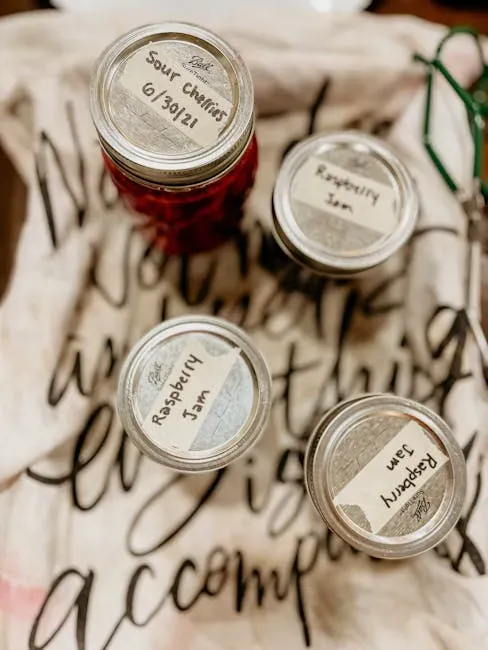
At the federal level, 2024 marked a significant moment of action. In December 2024, the U.S. Food and Drug Administration and the U.S. Department of Agriculture announced a joint Request for Information about food date labeling, which includes the usage of terms such as "Sell By," "Use By" and "Best By." They sought public input on how these labels are used and how consumers understand them.
It has been estimated that confusion over the multitude of different date labeling terms on food products accounts for about 20 percent of food waste in the home. ReFED's analysis shows that standardizing food date labels has the potential to divert 425,000 tons of food from going to waste every year in the United States, creating a net financial benefit of $1.82 billion. The financial case alone is enormous, separate from any environmental argument.
How to Trust Your Senses Over the Stamp
I know it sounds crazy, but the best food safety tool you have isn't a printed date - it's your nose. Spoiled foods will develop an off odor, flavor or texture due to naturally occurring spoilage bacteria, and if a food has developed such spoilage characteristics, it should not be eaten. That's pretty intuitive once you stop treating dates like expiration countdowns.
Food safety depends more on storage conditions than a printed date. If you aren't going to be able to eat something in your fridge before it goes bad, consider tossing it in the freezer. You can safely freeze almost any food at or below zero degrees Fahrenheit, with the exception of canned food and eggs in their shells, and it will not significantly reduce the amount of nutrients in that food. Freezing is essentially a pause button for spoilage, and it's one of the most underused tricks in the average kitchen.
The Environmental Cost We're All Paying

This isn't just a household budget issue. The date-label confusion problem feeds directly into one of the most significant environmental challenges we face. Food waste ends up in landfills, where it is a major source of methane, a powerful greenhouse gas, and it has a really significant environmental impact. Every time someone throws out a perfectly good container of leftovers because a date passed, that food enters a chain of waste that ends in climate-damaging emissions.
The U.S. Environmental Protection Agency estimates that in 2019, 66 million tons of wasted food was generated in the food retail, food service, and residential sectors, and most of this waste - about 60 percent - was sent to landfills. An additional 40 million tons of wasted food was generated in the food and beverage manufacturing and processing sectors. According to the nonprofit Feeding America, 126 billion pounds of food is wasted each year in America, a staggering number that prompted the USDA and EPA to challenge producers, manufacturers and consumers to help reduce food loss and waste by 50 percent by 2030. That goal, ambitious as it is, starts with something as simple as understanding the difference between a quality date and a safety date.
The bottom line is surprisingly simple once you see it clearly: nearly every date stamped on your food is telling you about freshness and flavor, not danger. The label system we've all been trusting for decades is largely voluntary, inconsistent, and deeply misunderstood. Real change is on its way through legislation, but in the meantime, learn to trust your senses and understand what those tiny printed words actually mean before your next grocery haul. What would you have guessed - that nearly 60 different date label phrases exist on American grocery shelves?



Leave a Reply