
Something dramatic is unfolding across America's shopping malls, strip centers, and main streets. Store after store, brand after brand - names you've shopped at for decades - are hanging "Closed" signs on their doors. It's not just a slow trickle anymore. It's becoming a flood.
More than 1,400 U.S. retail stores and restaurants are set to close by the end of 2026. The numbers are staggering, and the names involved will surprise you. From fast food chains to luxury department stores, no corner of American retail is untouched. Let's dive in.
The Big Picture: Where Things Stand Right Now
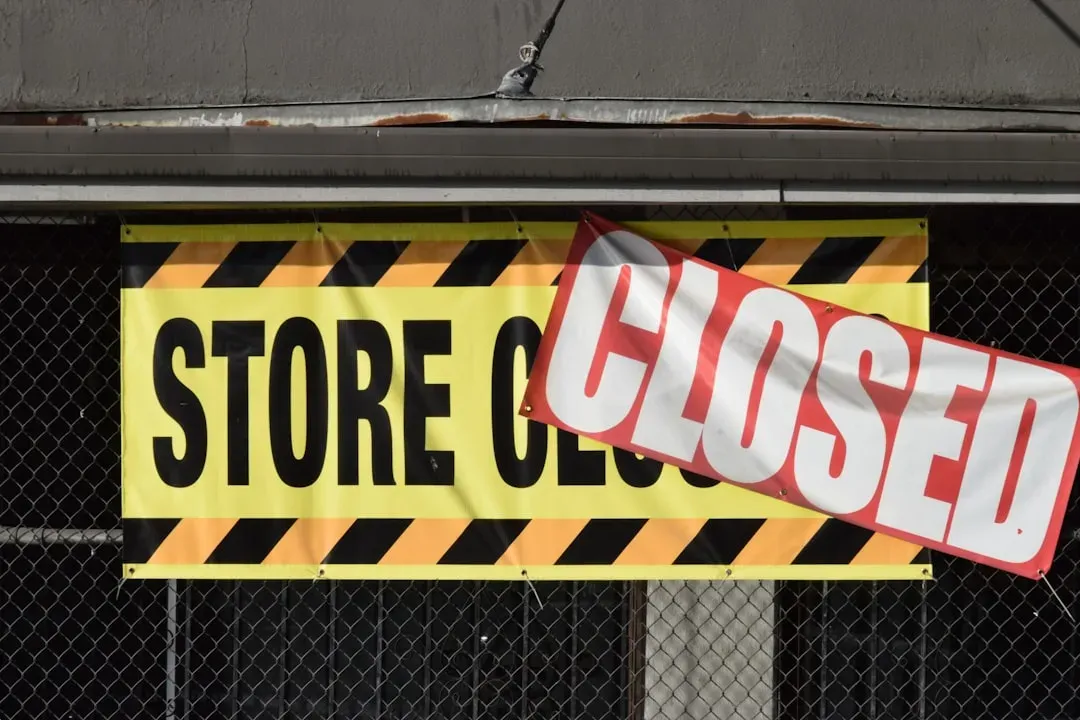
A fresh wave of store closures is set to reshape shopping centers and high streets across the United States in 2026, as major retailers and restaurant chains continue to shrink their physical footprints amid rising costs, shifting consumer habits, and a prolonged move toward online commerce.
Store openings in the U.S. are expected to rise and store closures fall this year compared to 2025, with value retailers leading the growth. Overall, Coresight projects that U.S. retailers will close about 7,900 stores in 2026, a 4.5% drop year over year - the lowest number of store closures in the past three years.
Still, "lowest in three years" is a relative phrase. The final tally in 2025 came in at 8,270 closures, down from 8,825 in 2024 and 9,700 in 2020. We're still talking about a massive and ongoing reset of the American retail landscape.
Francesca's: Nearly 460 Stores Gone for Good
Honestly, this one stings. Francesca's was a fixture in malls across the country, the kind of store that always had something quirky and affordable. Now it's all over.
After filing for Chapter 11 bankruptcy protection in February, apparel retailer Francesca's said it will conduct going-out-of-business sales at all of its roughly 400 stores across the U.S. Francesca's previously filed for bankruptcy protection in 2020 before being acquired by TerraMar Capital and Tiger Group.
Women's fashion chain Francesca's, which sells clothing and accessories, is closing its nearly 460 stores as the company liquidates its business after its bankruptcy filing. This complete liquidation marks the end of the road for the chain, which struggled with high debt and shifting consumer habits. If you frequent malls where Francesca's operates, expect to see "going out of business" signs soon. The closures are comprehensive, meaning no physical locations are expected to survive this bankruptcy process.
Walgreens: 1,200 Stores on the Chopping Block
Few retail stories have been as drawn-out and painful as Walgreens. The pharmacy giant built its empire on the corner of almost every American town, and now those corners are emptying out - fast.
Walgreens is in the process of closing about 1,200 locations around the U.S. as part of a three-year plan that kicked off in October 2024. The pharmacy chain and others like it have announced rolling closures over the past several years, citing issues with theft and a shift toward more online shopping. Walgreens didn't release a full list of all stores that would close, but said it would start with poor-performing stores with leases that are expiring, or where the company owns the property location.
Walgreens is also laying off hundreds of employees as the pharmacy chain continues to struggle with increased competition and higher-than-desired costs. On top of this, the newly private company is expected to close at least another few dozen retail stores in 2026. It's a telling sign of just how fundamentally the drugstore model has broken down in the digital age.
GameStop: Hundreds More Stores Shutting Down
Let's be real - most people saw this coming. Even a viral meme-stock moment couldn't save GameStop's physical footprint from the relentless march of digital gaming downloads.
Video game retailer GameStop plans to shutter hundreds of locations, following a significant wave of previous closures. GameStop is a major video game retailer that shut down 590 stores in 2024. The company isn't done scaling back yet, as it's now pushing ahead with the closure of roughly another 400 stores. These closures would reduce GameStop's retail footprint of about 2,000 stores in the U.S. by up to 30%.
The move is taking place as the first meme stock of 2020 shifts more of its resources toward selling trading cards and promoting Bitcoin. GameStop, Francesca's and Walgreens lead the way with the most planned closures in 2026, according to Coresight Research.
Macy's: A Department Store Giant Shrinks Its Empire
There was a time when a Macy's store was the anchor of every major mall in America. That era is definitively closing - in more ways than one.
Closures continue for department store Macy's, which is in the process of closing 150 stores by the end of 2026. The move was announced in 2024 as part of its "Bold New Chapter" strategy, focusing on closing "underproductive" stores while investing in its "go-forward" locations. Macy's owns the Bloomingdale's and Bluemercury brands, which it described as "outperformers" in 2024.
After the closures are complete, about 350 Macy's stores are expected to remain. Macy's closed at least 66 stores in 2025 alone. The strategy is to go leaner, invest more online, and stop dragging along locations that simply aren't pulling their weight anymore.
Saks Global: Luxury's Biggest Collapse
Nobody expected the high-fashion world to take such a brutal hit. Saks Global's bankruptcy filing in January 2026 sent shockwaves through the entire luxury retail sector.
Saks Global, the parent company of Saks Fifth Avenue and Neiman Marcus, filed for Chapter 11 bankruptcy between January 13 and 14, listing assets and liabilities of $1 billion to $10 billion. Saks Global is in the process of shuttering 20 Saks Fifth Avenue stores, four Neiman Marcus doors, 57 Off 5th locations, all five Last Call clearance centers, and the Horchow catalogue.
Saks Global bought the Neiman Marcus Group for $2.7 billion in December 2024, but mounting debt, unpaid bills, losses, and negative sales trends pushed the business into insolvency. More than 1,200 jobs are being cut at Saks Fifth Avenue locations across the U.S. as the luxury retailer prepares to close a dozen stores as part of its reorganization plan. According to multiple Worker Adjustment and Retraining Notification filings submitted in March, Saks plans to close multiple stores in May, resulting in permanent job cuts.
Pizza Hut and Wendy's: Fast Food Feels the Heat Too
It's not just retailers feeling the squeeze. Two of America's most recognizable fast food chains are also pulling back in a big way, and the numbers are hard to ignore.
Restaurant chain Pizza Hut is set to close 250 underperforming stores in the U.S. during the first half of 2026, its parent company Yum! Brands said in February. The reduction comes as part of a program to accelerate the Pizza Hut brand in the long term.
In a February 13 earnings call, Wendy's interim CEO Ken Cook said the company planned to close underperforming restaurants in the U.S., representing 5% to 6% of its roughly 6,000 locations. That totals about 300 stores, with closings expected to take place in the first half of 2026. Think about it - nearly 550 fast food locations combined. That's a lot of empty drive-throughs.
Eddie Bauer and Orvis: Outdoor Brands Hit Hard
Even the outdoors retail space isn't safe. Two brands beloved by hikers, fishermen, and nature lovers are facing severe setbacks in 2026 - and the reasons behind their struggles tell a broader story about America's current economic climate.
Outdoor apparel retailer Eddie Bauer has filed for bankruptcy and is on the verge of disappearing from the physical retail map. The company announced that all 175 of its stores in the U.S. and Canada will close by April 30, 2026, unless a buyer steps in to save them. The bankruptcy filing is a protective measure to wind down operations while seeking a potential savior, but the default plan is a total liquidation of brick-and-mortar assets.
Vermont-based outdoor goods chain Orvis is closing 31 stores and five outlets out of its 71 locations in early 2026. The decision to slash its U.S. presence to just 33 stores and two outlets was made at least partly due to tariffs. Tariffs, it turns out, are hitting retailers in ways the average shopper never sees - until the store simply vanishes.
Kroger, Carter's, and the Grocery-and-Kids Crunch
You wouldn't normally put grocery stores and children's clothing in the same sentence, but in 2026 they share something important: both sectors are seeing significant, deliberate cutbacks driven by cost pressure and import tariffs.
Grocery giant Kroger has announced plans to close about 60 underperforming supermarkets nationwide through 2026 as part of an 18-month restructuring strategy. Of those 60 stores, 39 were closed or slated to be shuttered in 2025. That leaves another 21 stores facing potential closure in 2026.
Atlanta-based children's clothing retailer Carter's will shut down 150 of over 1,000 of its stores in North America over the next three years. Of those 150 stores, up to 100 will be shuttered by the end of 2026. This is on top of the approximately 300 office workers Carter's had planned to lay off at the end of 2025. Carter's needs to cut costs after being hit with steep tariffs. The tariff impact on children's clothing is particularly sharp, since so much of it is manufactured overseas.
Amazon Fresh, IKEA Memphis, and Smaller but Symbolic Closures
Some of the most telling closures in 2026 aren't the biggest ones by number. They're the ones that signal broader shifts in where retail is heading - or more precisely, where it's retreating from.
Amazon said it will shutter all Amazon Fresh and Amazon Go locations and turn some of those into Whole Foods Market stores, marking the end of the e-commerce giant's latest brick-and-mortar experiment in the grocery industry. Even the world's largest online retailer couldn't make its physical grocery stores work.
IKEA announced plans to permanently close its Memphis, Tennessee, location on May 3, 2026. The company stated this decision is part of a "strategic shift" to modernize its U.S. footprint, though it remains committed to expansion elsewhere. Yankee Candle will close 20 stores in the U.S. and Canada beginning in January 2026 as part of a productivity plan to enhance efficiency. Small numbers, yes - but these are household names, and their exits leave real gaps in real communities.
What's Really Driving All These Closures?
Here's the thing: it would be easy to chalk all this up to one villain - the internet, or the pandemic, or tariffs. But the truth is messier and more interesting than that.
E-commerce dominance continues to lure consumers away from physical stores, while persistent inflation and shifting consumer spending habits have strained retailers' profitability. Overexpansion and debt have left some companies without sustainable strategies, and a retreat of private equity investments in retail has left some companies without crucial financial support.
Consumer shopping habits are changing, with more shoppers opting for online purchasing or curbside pickup, which keeps them out of physical stores. Operating costs continue to rise, including rent, utilities, and labor, making underperforming stores a drag on profitability. Companies are putting more money into developing online shopping apps and faster delivery - at the expense of keeping many of their physical stores open.
Other retailers are expanding in 2026, with well-performing brands like Dollar General, Ollie's Bargain Outlet, and Uniqlo announcing new store openings even as others shut doors. The retailers winning right now are the ones who kept their balance sheets lean and understood where their customers actually wanted to shop. The ones losing? Many bet big on a physical retail world that quietly moved on without them.
What do you think - is the American shopping mall truly a relic of the past, or can brick-and-mortar retail reinvent itself in time? Tell us your thoughts in the comments.



Leave a Reply