You spent real money. A lot of it. The bottle sits in your cellar, perfectly still, looking exactly like it should. The label is beautiful. The capsule gleams. Everything feels right. So why should you hesitate before pulling that cork?
Here's the uncomfortable truth: what's inside may not be what you paid for. Wine fraud is not some niche crime from the 1980s. It's alive, organized, and shockingly widespread in 2026. Before you open that rare bottle, there are things you absolutely need to know. Let's get into it.
The Scale of Wine Fraud Will Genuinely Shock You
Most people assume wine counterfeiting is a problem for the ultra-rich, reserved for bottles worth hundreds of thousands at auction. That's a comfortable myth. It's commonly estimated that roughly one in five bottles of wine in circulation is counterfeit, and although this is a well-documented problem in the luxury sector, it's also very easy to fake $100, $50 or even $30 wines at scale and turn a tidy profit.
The losses are staggering when you look at specific regions. A 2017 study estimated that Australia alone lost over A$300 million to wine fraud that year, while in Italy, annual losses are reported to be as high as €406 million. Those aren't rounding errors. Those are economies of crime.
In 2024, an international fraud ring operating in France and Italy was dismantled for selling cheap wine as famous French vintages, with prices reaching up to €15,000 per bottle. These aren't desperate amateurs slapping a new sticker on a cheap bottle of table wine. These are professional criminal operations with supply chains, lab equipment, and global distribution.
How Sophisticated Forgers Actually Build a Fake Bottle
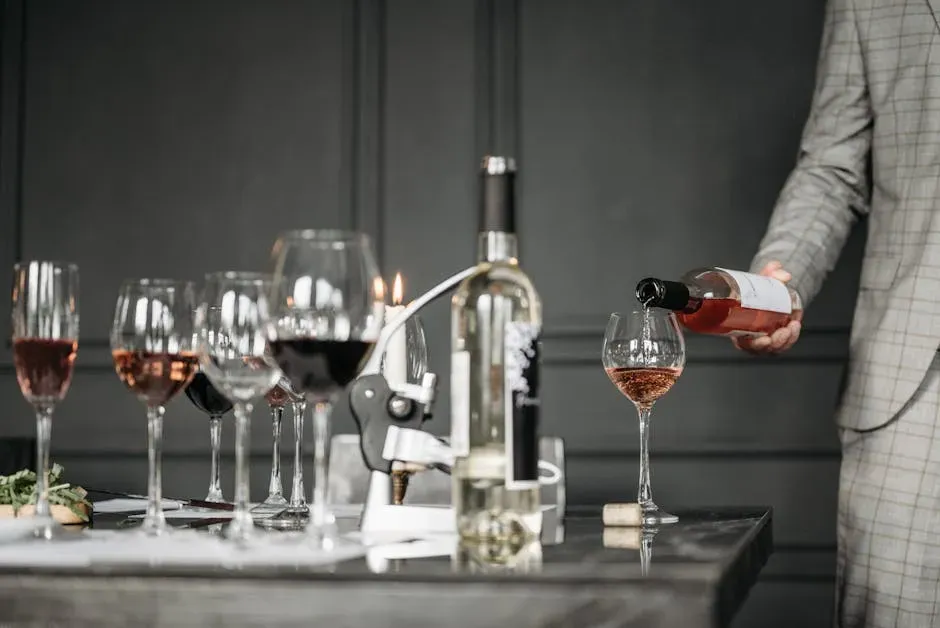
I think a lot of people imagine a counterfeiter as someone working in a dingy garage, armed with a glue stick and a printer. The reality is far more chilling. Today's counterfeiters are sophisticated, global actors with access to mass production capabilities, authentic-looking packaging, and forged documentation. Some even refill empty authentic bottles and resell them with convincing provenance.
Forgers use aged paper stock, period-accurate fonts, and ink that matches the era. Some go so far as to stain labels with tea or wine to give them that lived-in look. Others try to mimic wear patterns expected on older bottles, including frayed edges or faded printing. Think about that. Someone deliberately aged a label to fool you.
Gone are the days of misspelled labels and wrong bottle shapes. Modern counterfeiters use period-correct glass, aged paper, and even refill authentic empty bottles with cheap wine, a technique known as refilling. The bottle is real. The glass is correct. Only the wine inside is a lie.
Read the Label Like a Detective, Not a Wine Lover
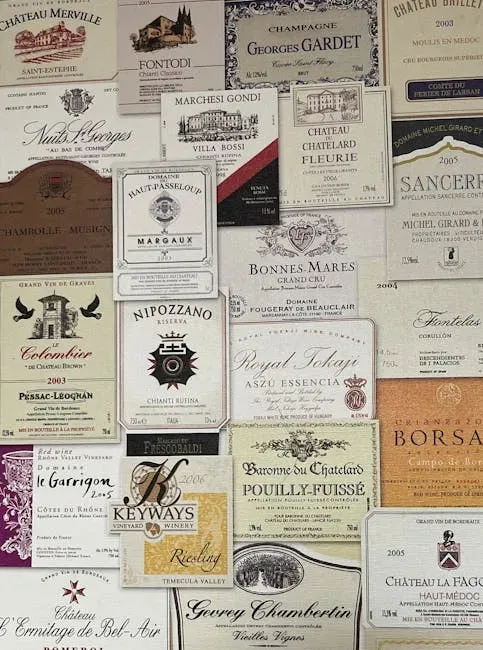
Put your sommelier instincts aside for a moment. When you're checking authenticity, the label is a document, not a decoration. Labels are an important area requiring much attention in the authentication process, and they often expose counterfeiting practices. The size of the labels must be accurate for the period, with appropriate aging characteristics, and different labels on a bottle must be consistent with each other.
Under UV light, some treatments used to brighten wine paper labels might appear to glow. If you have a bottle that shines brightly under UV light, take note: "Ultra White" is a chemical patented in 1957, so old labels should not light up under UV. This is a brilliant and simple trick that any collector can try at home with a cheap UV torch.
Guaranteeing wine authenticity involves label analysis: checking for the correct paper stock, printing method such as dot matrix versus offset, and natural aging patterns like foxing and staining that are consistent with the wine's age. A label in suspiciously perfect condition on a 30-year-old bottle is not a good sign. Ironically, too much perfection should alarm you.
The Cork and Capsule Tell Their Own Story
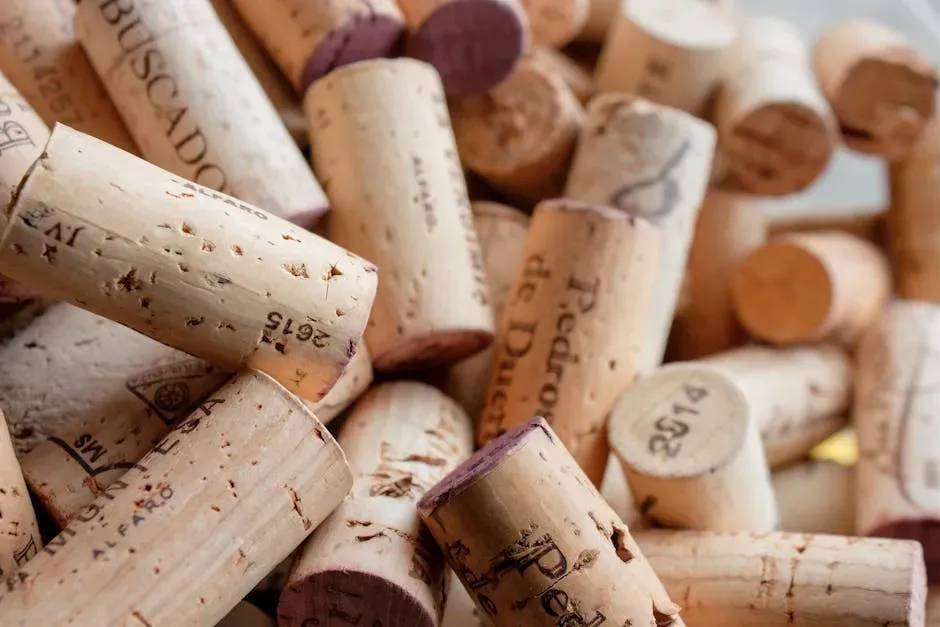
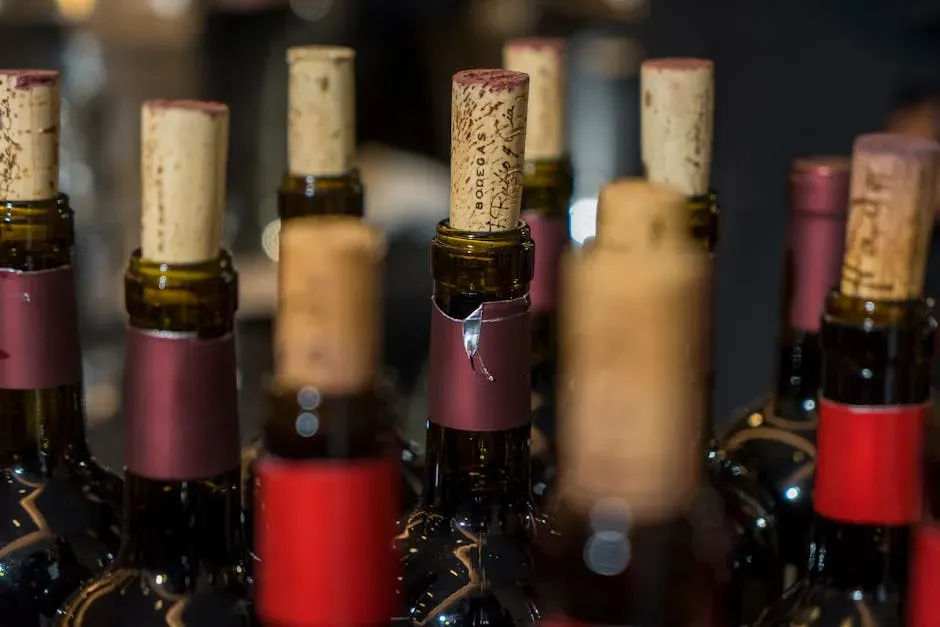
The cork is one of the most revealing parts of the bottle, and it's one most people never think to examine properly. The cork and capsule can reveal important clues about authenticity. Inspecting a cork for branding, condition, and any signs of tampering is essential. Genuine bottles often have corks that are branded with the winery's name or logo, and these should match the branding on the label and capsule.
Before opening, remove the entire capsule and read the vintage on the cork itself to determine whether the correct vintage on the cork matches that on the label. This one step alone can catch an entire category of fraud where forgers simply change the vintage date on the label without touching the cork.
If the capsule on your recently acquired bottle has many folds, it has likely been reassembled. Fingerprints on wax capsules, remnants from a prior closure, and a recyclable symbol on an old bottle are all things to check for. Honestly, these clues are sitting right there in plain sight. You just need to know what to look for.
Check the Sediment, the Fill Level, and the Glass Itself
Wine tells a physical story as it ages. A vintage red wine should have sediment. If a 40-year-old bottle is crystal clear, it is suspicious. Sediment is almost impossible to fake convincingly. It's one of the few things a counterfeiter simply can't manufacture easily. No sediment in a very old bottle? That's a red flag the size of a Magnum.
Begin by checking the fill level, also known as ullage. Older wines will naturally evaporate slightly over time, but extreme gaps between the cork and the liquid may indicate leakage or refilling. A bottle from 1990 with a fill level sitting at the neck is worth questioning. Some natural evaporation is expected and even a sign of honest aging.
The bottle shape and weight can also be revealing; many counterfeits use standard bottles instead of the heavier glass typically used for high-end wine. Pick it up. Feel the weight. Prestigious producers like Domaine de la Romanée-Conti use custom glass that has a distinctly different heft compared to off-the-shelf bottles.
The Famous Cases That Changed How We Think About Wine Crime
No discussion of wine fraud is complete without Rudy Kurniawan. Rudy had set up a veritable wine forgery lab in his home, complete with printers, glue, typewriters, and hundreds of empty bottles sourced from restaurants and collectors. He would mix older wines to mimic the taste profile of sought-after vintages, top them up with a splash of something impressive, then dress the bottles in custom labels and reseal them.
Businessman Bill Koch went to the FBI after discovering he'd invested in more than 200 bottles of what he believed was rare wine at auction, but soon learned his bounty was mostly liquid knockoffs mixed and bottled by Kurniawan. Koch wrote that he spent more than $2 million on worthless counterfeit bottles and millions more uncovering the widespread fraud.
It gets worse. To this day, Rodenstock's wines are still being circulated, as are Kurniawan's fakes, which federal investigators are tracking to help satisfy the court's restitution order. Investigators learned that high-end wine vaults and auction houses, including Christie's, were still in possession of Kurniawan's wines. These bottles are still out there. Right now. Possibly in someone's cellar.
The New Science That Can Read a Bottle Without Opening It
Here's where things get genuinely exciting, and where science is starting to catch up with fraudsters. Using only a single near-infrared optical excitation source operating at a wavelength of 785 nm, combined with a bespoke geometry to bypass the confounding signal of the glass, researchers demonstrated that through-bottle fluorescence spectra can distinguish between twenty different red wines in their original, intact bottles. All twenty wine bottles were correctly classified.
Think of it like an X-ray for your wine collection. This non-invasive and rapid technique has the potential to enable on-site, routine wine authentication to combat the growing issue of wine fraud. You wouldn't need to open a single bottle. No destruction of the very thing you're trying to protect.
Beyond spectroscopy, the industry is embracing digital tracking too. The next evolution in wine authentication brings the product online, using the Internet of Things to link each bottle to a secure digital identity. That identity, in some cases, even includes scientific verification of the contents, made possible through microscopic extraction, molecular profiling, and AI-powered comparison against known reference samples. A $1,500 bottle deserves at least a $1,500 level of scrutiny.
Wine collecting at the high end has always been part passion, part detective work. The gap between an authentic bottle and a brilliant fake can be invisible to even the most experienced eye. The stakes are real, the fraud is organized, and the tools to fight back are improving fast. So before you reach for that corkscrew, take five minutes to examine your bottle as if you were investigating it. Because in a way, you are. What would you find if you looked closer?



Leave a Reply