
You've pushed hundreds of grocery carts without thinking twice. You grab one at the entrance, roll it through the aisles, and load it up. Simple, routine, forgettable. Except there's nothing random about that cart at all. Its size, its handle design, even the digital screen quietly glowing at the front - all of it is working on your brain in ways most shoppers never suspect.
The grocery cart is one of the most quietly powerful retail tools ever invented. Retailers, researchers, and now even Amazon have studied it obsessively. What they've discovered is genuinely surprising. Let's dive in.
The Cart Was Never Designed for Your Convenience
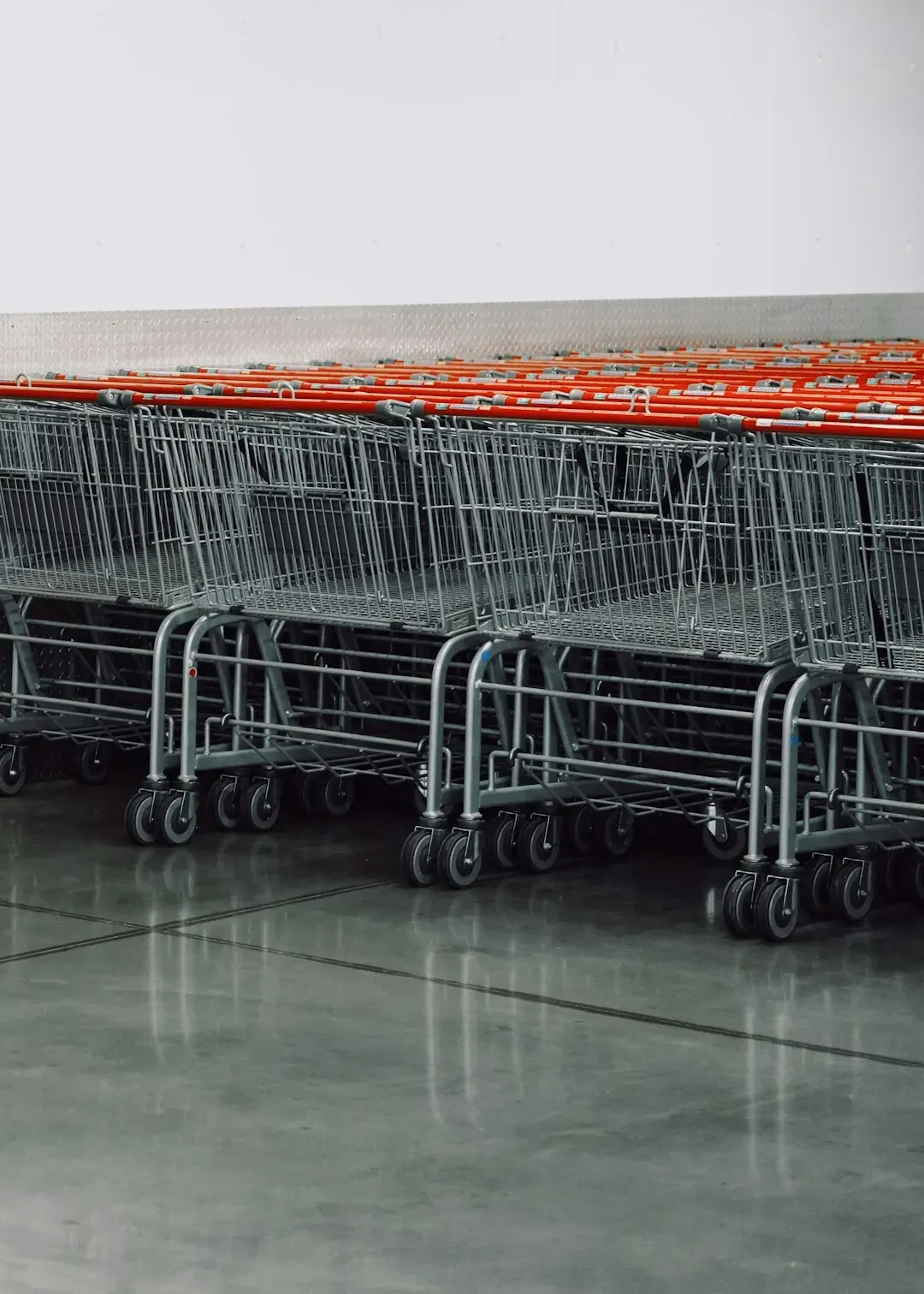
Let's get something straight right away: the shopping cart was not invented to make your life easier. It was invented to make you buy more. The American shopping cart did not evolve for convenience alone - it evolved to guide how much people buy, how they move, and how long they stay in a store.
Before rolling carts existed, shoppers carried baskets. Early grocery stores did not use carts at all. Shoppers carried baskets, and those baskets imposed limits. Weight mattered. Fatigue arrived quickly. Purchasing stopped when arms did. The physical constraint acted as a natural brake on consumption.
The introduction of the rolling cart in the mid twentieth century removed that barrier entirely. Wheels shifted effort from lifting to pushing, extending how long shoppers could continue. The cart increased capacity without calling attention to the change. Buying more felt easier because it was.
Honestly, it's a bit of a genius trap when you think about it. The inventor wasn't trying to help you haul your eggs home safely. He was trying to solve a revenue problem. Everything that came after - every design tweak, every size upgrade - followed that same quiet logic.
Carts Have Quietly Tripled in Size Since 1975
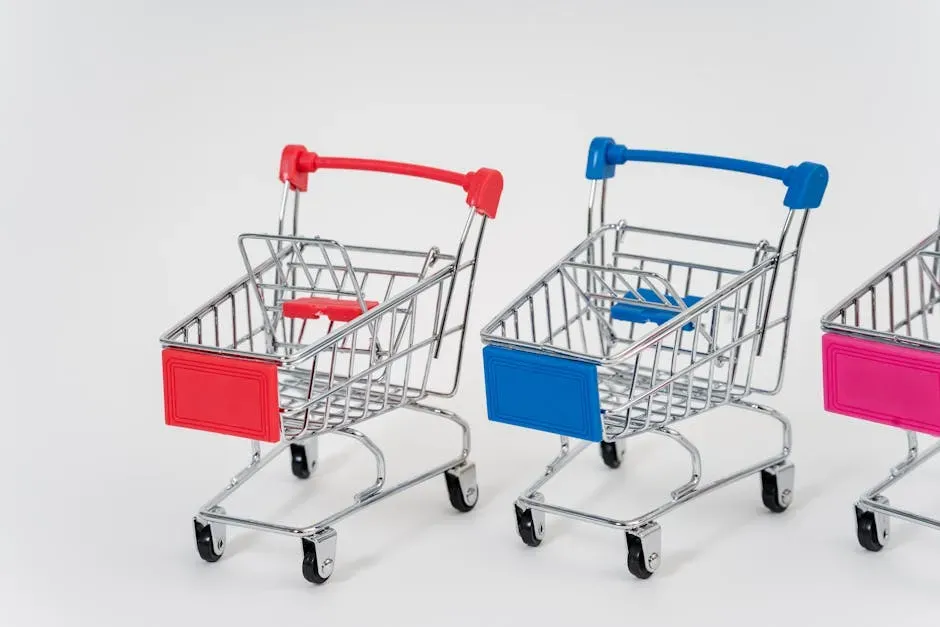
Here's something that might genuinely stop you mid-aisle: the cart you're pushing today is not the same cart your parents used. The average shopping cart has almost tripled in size since 1975. That's not an accident, and it's not driven by changing family sizes or wider aisles. It's driven by data.
There could be a more subliminal reason behind the growth: to trick the consumer into spending more. Marketing consultant Martin Lindstrom found that when the shopping cart was doubled in size in an experiment, shoppers would buy roughly forty percent more merchandise.
The reason stores are increasing the size of their shopping carts isn't to facilitate a better customer experience. It has more to do with profit. The size of a shopping cart is proven to correlate to how much people are willing to spend at the store.
There is a clear psychological aspect to larger carts. A bigger cart may subconsciously signal to the shopper that they have not bought enough, prompting them to continue shopping. Think of it like pouring cereal into a giant bowl. Even if you planned to eat a small amount, the empty space almost begs to be filled.
The Handle You Never Noticed Is Changing What You Buy
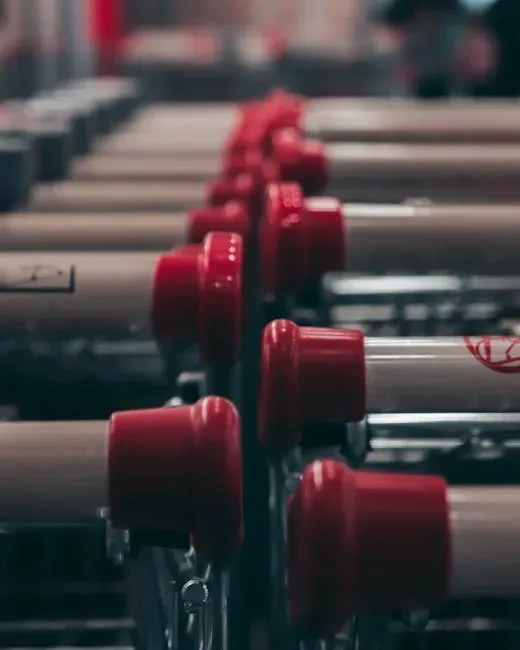
This is where things get genuinely weird. Most grocery carts use a single horizontal bar across the back. Completely standard. You've never questioned it. Still today, just as it was then, the standard shopping cart is pushed via a horizontally oriented handlebar. That design choice, it turns out, may be costing you money - or saving it.
A newer design of shopping cart, already rolled out in some U.K. grocery stores, features two separate handlebars, one for each hand, forcing you to push the cart similar to the way you would push a wheelchair. According to a study conducted by Bayes Business School, this seemingly simple handle repositioning causes customers to spend roughly twenty-five percent more on their groceries.
Research in the field of ergonomics has documented that the orientation of handles affects muscle activation while grasping and pushing. Separately, research in psychology has shown that muscle activation affects attitudes and hypothetical product choices. Together, these findings yield a surprising hypothesis: standard shopping carts, which are pushed via a horizontal handlebar, are suboptimal for stimulating purchases.
In a field experiment, parallel-handle shopping carts significantly and substantially increased sales across a broad range of categories, including both vice and virtue products. In a simulated shopping experiment, parallel handles increased purchasing and spending beyond both horizontal and vertical handles. These results were not attributable to the novelty of the shopping cart itself, participants' mood, or purely ergonomic factors. So it really is the handle. Wild.
Cart Partitions: The Divider That Guides Your Whole Shop
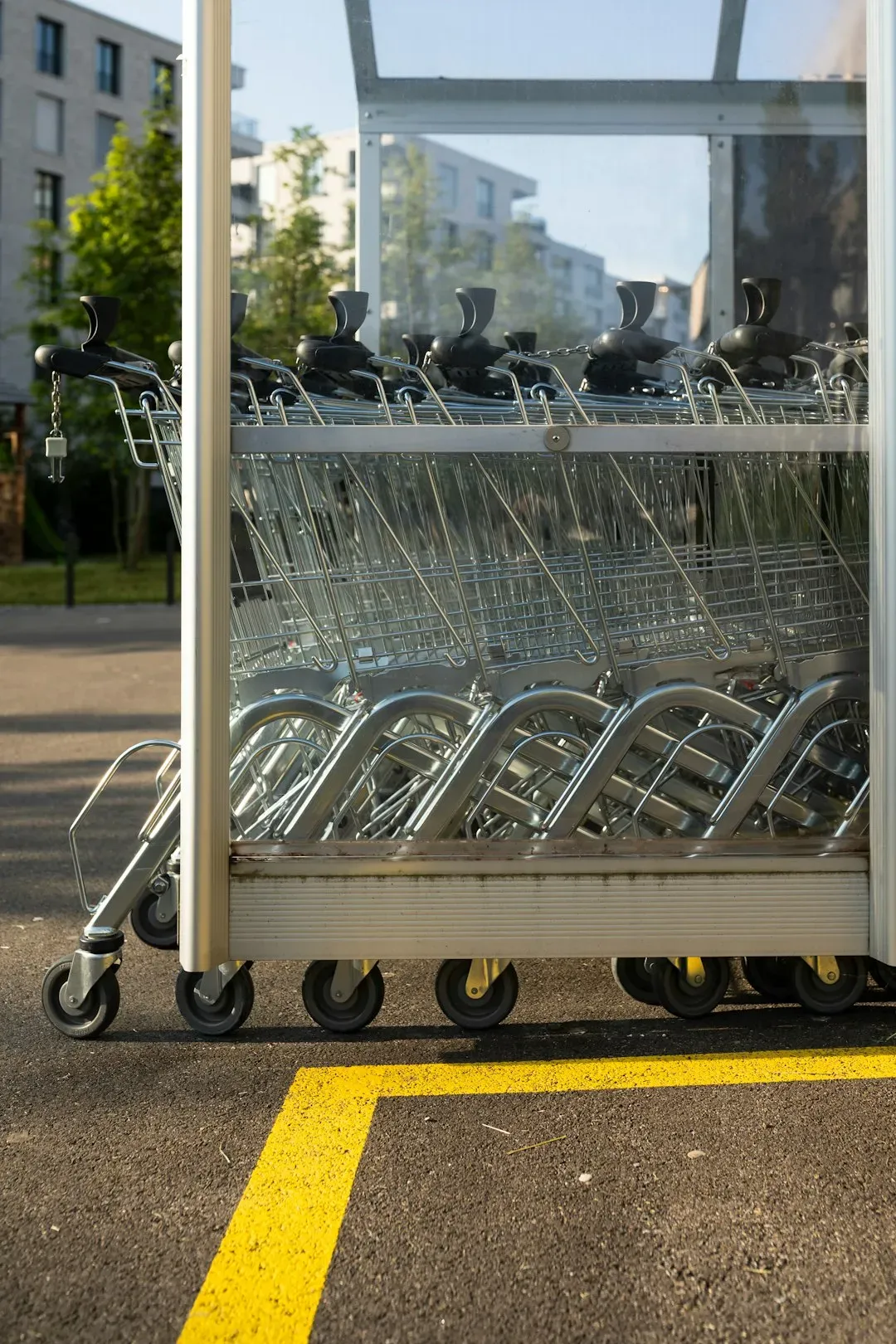
Some stores have introduced carts with a built-in divider - a section physically set apart inside the basket. Seems practical at first glance. Maybe it helps you organize your groceries. In reality, the research shows it shapes your behavior in a far more targeted way.
Building on the notion of implied social norms, research proposes that allocating or partitioning a section of a shopping cart for fruits and vegetables may increase their sales. A concept test showed that a large produce partition led people to believe that purchasing larger amounts of produce was normal. An in-store study showed that the amount of produce a shopper purchased was in proportion to the size of this partition - the larger the partition, the larger the purchases.
Real-time balance information provided by the shopping basket affects spending behavior. Surprisingly, researchers identify a diverging impact of balance information on spending for people who are budget-constrained and those who are not. Balance information stimulates budget shoppers to spend more by buying more national brands, whereas such feedback leads non-budget shoppers to spend less by replacing national brands with store brands.
The same visual cue, the same cart feature, produces opposite effects depending on your financial state of mind. That's not intuitive at all. It's the kind of finding that makes you realize just how nuanced the grocery game actually is.
The Real "Hidden Button": Smart Cart Technology and Real-Time Spending Trackers
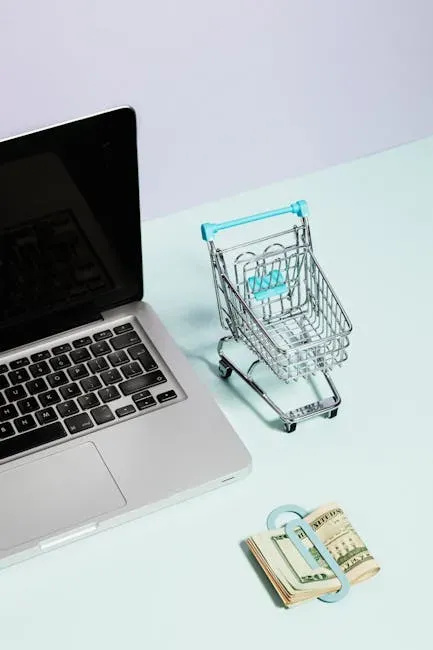
This is the chapter most people don't know about yet. The "hidden button" that this article teased at the top isn't a literal button in the old sense. It's a screen. A glowing, live-updating, spending-tracking screen now attached to a new generation of smart grocery carts. The Dash Cart's built-in screen displays prices and maintains a running total as customers shop. This feature helps customers stick to a budget by showing exactly how much they're spending before checkout.
The latest version of Amazon's smart carts, which includes a real-time savings tracker, is set to expand to more than twenty-five Whole Foods locations in 2026. One of the biggest upgrades is the built-in screen on the smart cart that shows your running total as you shop the store. If your total starts edging above what you planned to spend, you can remove items immediately and stick to your budget.
Based on positive customer response, Amazon plans to implement the redesigned cart, which is twenty-five percent lighter but has forty percent more capacity than the previous model, in dozens of locations across the U.S. by the end of 2026. Dash Cart also offers an Alexa shopping list integration, which allows customers to add items to their list at home or on the go, then check off items directly on the screen. The Dash Cart also helps customers navigate the store with an interactive map and discover personalized deals on nearby products curated specifically for them.
I think this is one of those rare moments where technology is genuinely working in the shopper's favor - even if, as we'll see in a moment, retailers are still finding clever ways to benefit too.
What the Smart Cart Data Actually Reveals About Spending

Here's the twist that you didn't see coming. Even with a live spending tracker right in front of their eyes, shoppers using smart carts still spend more. Not less. Dash Cart shoppers spend ten percent more than non-Dash Cart shoppers at Amazon Fresh stores, and over eighty percent of daily Dash Cart transactions are from repeat users thanks to its ninety-eight percent customer satisfaction rating.
In grocery and large-format stores where the number of items purchased and total spend is often higher, customers say a running tally of purchases is more important to them. Customers want to manage their budget during their shopping journeys in real time, including the ability to weigh produce and understand cost, before they check out.
The market size of smart shopping carts is projected to be USD 1.78 billion in 2024, with an anticipated increase to nearly USD 9.74 billion by 2030, reflecting a compound annual growth rate of over twenty-seven percent throughout that forecast period. That's not a niche tech experiment. That's a full-blown industry transformation underway.
Findings from research on smart carts indicate a positive impact associated with stimuli originating from the smart shopping cart. Results suggest that the presentation of real-time, dynamic, and personalized data through smart technology within a physical grocery retail setting holds the potential to surpass the effectiveness of traditional static approaches.
How to Use the Cart Against the Store's Own Strategy
Knowing all of this, there are real, practical moves you can make. The science cuts both ways. If retailers can use cart design to nudge you toward spending more, you can use that same knowledge to push back. Most consumers - roughly three quarters - report feeling in control over their grocery spending. The truth is, that confidence may be slightly misplaced if you're ignoring what the cart itself is doing to your brain.
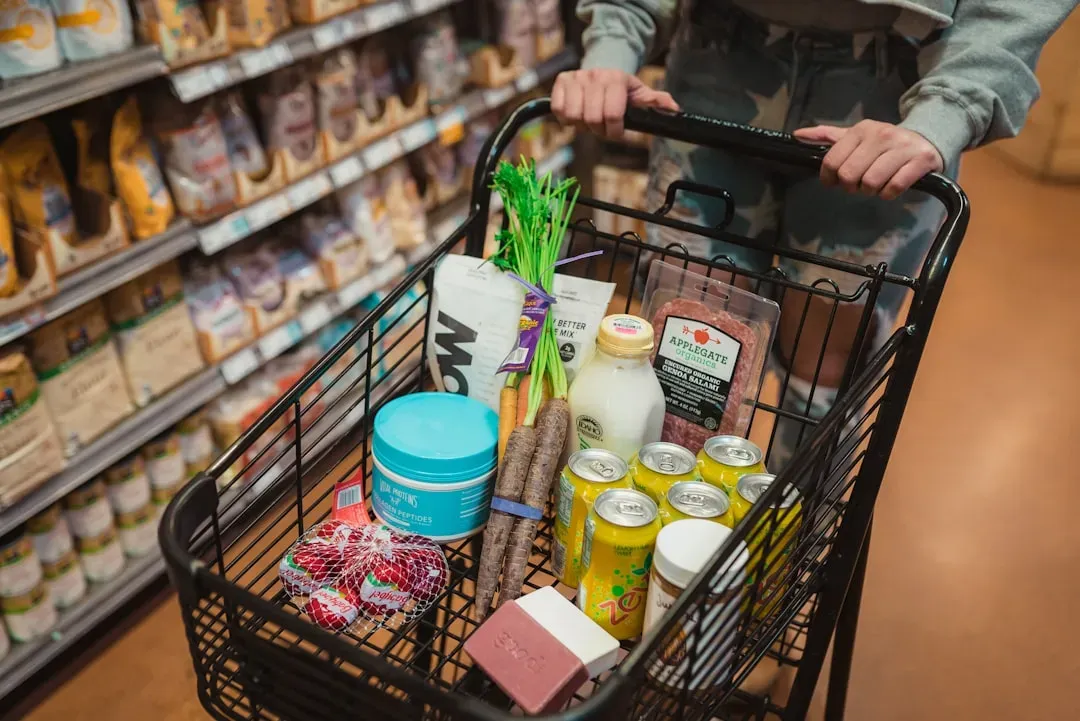
The single most effective low-tech move: grab a basket instead of a cart when possible. If the first thing you do anytime you go to a grocery store is reach for a cart, you may want to consider changing your approach. Instead, try to opt for a basket whenever you can. If the items on your list can fit just fine in a basket, grabbing a cart may not be the best idea because it could easily lead you to buy more than you actually need.
In response to rising costs, shoppers are using various strategies to stretch their food budget further. Traditional methods like list-making, taking household inventory, meal planning, and seeking out coupons or discounts remain the most common and effective approaches. None of those cost a dime, and they work exactly because they counteract the environmental nudges the store is quietly running on you.
If you do use a smart cart, use the real-time tracker actively. Real-time spending feedback prevents overspending and significantly reduces underspending, allowing budget shoppers to remain within and fully utilize their budget more effectively. That screen isn't just a gadget. Used with intention, it's actually your best weapon in the store.
Conclusion
The humble grocery cart is one of the most psychologically loaded objects in everyday life. Its size, its handles, its partitions, and now its built-in screens have all been engineered - in some cases with peer-reviewed science behind them - to shape how you move, linger, and ultimately spend. None of it feels manipulative in the moment because that's exactly the point.
The gap between what shoppers think they're doing and what they're actually doing inside a supermarket is genuinely fascinating. The shopping cart feels neutral. It waits by the door, rolls easily, and asks nothing of the customer except to be pushed. Yet its size, shape, and behavior are the result of deliberate choices.
The next time you walk into a grocery store, pause for a second before you grab a cart. You now know something most shoppers don't. The question is: will knowing it actually change what ends up in your basket? What do you think - do you believe awareness alone can beat a well-designed cart? Drop your thoughts in the comments.



Leave a Reply